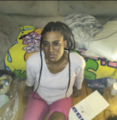
On May 20, 1982, 17-year-old Kellie Marie Brownlee vanished after being last seen at the Twelve Oaks Mall in Novi, Michigan. A student at Walled Lake Western High School, the young female with brown hair and brown eyes had decided to skip school that day. She was focused on getting a head start on finding a summer job before college students returned to the area. That morning, she and her boyfriend took a bus to school, but Kellie didn't go to class.
Instead, she hitchhiked to the mall, a distance of about five miles, to fill out job applications. At approximately 11 a.m., a friend's mother saw Kellie at the mall and offered her a ride home. Kellie declined the offer, explaining that she wanted to submit more applications before she left. This interaction was the last confirmed sighting of Kellie. At the time of her disappearance, she was wearing white pants, a halter top with another shirt over it, and high-heeled shoes.
In the weeks leading up to her disappearance, Kellie had been facing significant personal challenges. She had recently moved out of her family's home in West Bloomfield and was staying with her boyfriend, Mark Graves, and his family in Walled Lake. Friends reported that Kellie had confided in them that her stepfather, Paul Brownlee, was abusing her, and they had seen bruises on her body. This was not the first instance of such accusations against him; in 1977, Kellie's older sister had accused him of sexual abuse, which resulted in him pleading guilty to fourth-degree criminal sexual misconduct. Following that, her sister moved to California to live with their biological father. Despite the difficult home environment, Kellie maintained a close relationship with her mother, Loretta, and had planned to move back home once her mother separated from her stepfather. When Kellie did not return to her boyfriend's apartment or call him by 9:00 p.m. on the day she was last seen, he reported her missing, prompting the start of an investigation that has now spanned decades.
The investigation into Kellie Brownlee's disappearance began with West Bloomfield police, as her permanent residence was in their jurisdiction. Her boyfriend was quickly ruled out as a suspect. Over the years, the case has seen few significant leads. However, in 2018, authorities announced a potential link between Kellie's case and Arthur Ream, a convicted murderer and suspected serial killer. Ream was convicted of the 1986 murder of 13-year-old Cindy Zarzycki and had reportedly told cellmates he had other victims. Police conducted a search for human remains on a property where Zarzycki's body had previously been found, hoping to find evidence related to Kellie and other missing girls, but the search yielded no results. While law enforcement explored this lead, one of Kellie's close friends has publicly stated she does not believe Ream was involved in Kellie's disappearance. The case remains an active investigation, a painful and unresolved mystery for a family and community that has waited over four decades for answers.
Kellie Marie Brownlee was a 17-year-old female who was last seen on May 20, 1982, at the Twelve Oaks Mall in Novi, Michigan. That morning, she and her boyfriend, Mark Graves, reportedly took a bus together to their high school, but Kellie did not attend her classes. Instead, she hitchhiked to the mall, intending to apply for summer work at several stores. She completed multiple job applications and used her family’s West Bloomfield address on them. At approximately 11:00 a.m., the mother of one of Kellie’s friends encountered her inside the mall and offered to drive her home. Kellie declined, explaining that she wanted to submit more applications before leaving. That conversation became the last confirmed contact anyone had with her.
At the time, Kellie was staying with Mark and his family at their apartment in Walled Lake. She had moved away from her mother’s home in West Bloomfield after telling friends that she was being mistreated by her stepfather, Paul Brownlee. Friends later said they had previously noticed bruises on her body. Despite the difficulties surrounding her home life, Kellie remained close to her mother, Loretta, and there had reportedly been discussions about Kellie returning home after her stepfather moved out. When Kellie told the friend’s mother at the mall that she planned to go home after finishing her applications, it was never made clear whether she meant the Walled Lake apartment or her family’s West Bloomfield residence.
As the afternoon faded into evening, Kellie never arrived at either home. Mark became alarmed when she had not returned to his family’s apartment or contacted him by approximately 9:00 p.m., and her disappearance was reported. Investigators began searching for the teenager, but the mall offered few clues about where she had gone after declining the ride. No publicly documented witness could confirm seeing her leave Twelve Oaks, entering a particular vehicle, meeting anyone, or walking toward a specific destination. Mark cooperated with investigators and was ruled out as a suspect early in the inquiry.
Kellie was described as a white teenager who stood about 5 feet 7 inches tall and weighed approximately 125 to 135 pounds. She had brown hair and brown eyes, double-pierced ears, and a capped upper-left front tooth that could assist with identification. Some records also note that she had a slight heart murmur. Clothing descriptions vary slightly among the available records, but she was generally described as wearing white pants, a peach-colored or halter-style top with another shirt over it, and burgundy or other high-heeled shoes. She was also reportedly carrying a wine-colored purse. Photographs showing how Kellie might have appeared at older ages have been produced and circulated as the years have passed.
The early investigation examined whether someone within Kellie’s family circle might have known more about her disappearance. Attention was directed toward her stepfather because of the allegations Kellie had shared with friends and because her older sister had previously accused him of sexual misconduct. He denied abusing Kellie and denied involvement in her disappearance, saying that on the day she vanished he had visited his father-in-law’s grave and gone to a gym. He agreed to an interview with police but later obtained an attorney and declined a polygraph examination. He also offered a reward for information about Kellie. Authorities did not obtain sufficient evidence to charge him, and no arrest was made in connection with the disappearance.
Investigators also explored whether convicted counterfeiter and suspected serial offender James Mitchell DeBardeleben could have encountered Kellie. His known interest in young brunette women and hitchhikers appeared troubling because Kellie fit that general description and had hitchhiked to the mall. After federal agents searched his property and recovered photographs and other disturbing material, Kellie’s mother was asked to examine images in hopes of recognizing her daughter. No connection was established, and DeBardeleben was eventually ruled out in Kellie’s case.
Decades later, the investigation took another unsettling turn when authorities considered convicted murderer Arthur Ream as a possible suspect. Ream had killed 13-year-old Cindy Zarzycki in 1986 and eventually led police to the Macomb Township property where he had buried her. Investigators came to believe that he might have been responsible for additional disappearances, including those of Kellie and several other girls and young women in Michigan. In 2018, authorities conducted an extensive search of the wooded property where Cindy’s remains had been found, hoping that other victims might also be buried there. The search did not recover additional human remains, and no evidence publicly released afterward conclusively connected Ream to Kellie. Ream died in prison in 2024 without being charged in her disappearance.
Kellie’s family and friends have lived with the uncertainty of that May morning for more than four decades. One of her high school friends remembered her as joyful, affectionate, energetic, and impossible to overlook when she entered a room. They recalled ordinary moments together—visiting an arcade, listening to music, sharing coffee—and the easy laughter of teenagers who expected to have many more years of friendship ahead of them. Instead, Kellie’s loved ones were left with an unresolved grief, repeatedly returning to the same last image of her moving through a busy mall, filling out applications and trying to plan for her future.
The National Center for Missing and Exploited Children continues to list Kellie as missing and states that foul play is suspected. Her information is also maintained in the National Missing and Unidentified Persons System under case MP2566, and family DNA profiles have been entered into national databases to assist with comparisons to unidentified remains. The West Bloomfield Police Department remains the investigating agency, and no person has been arrested or formally charged with causing her disappearance. In overview, Kellie Marie Brownlee vanished after traveling to Twelve Oaks Mall to seek summer employment, was last confirmed alive when she declined a ride at about 11:00 a.m., and has never been found; despite scrutiny of several possible suspects and searches connected to a convicted murderer, her fate and the circumstances of her disappearance remain unknown.Last Seen: May 20, 1982