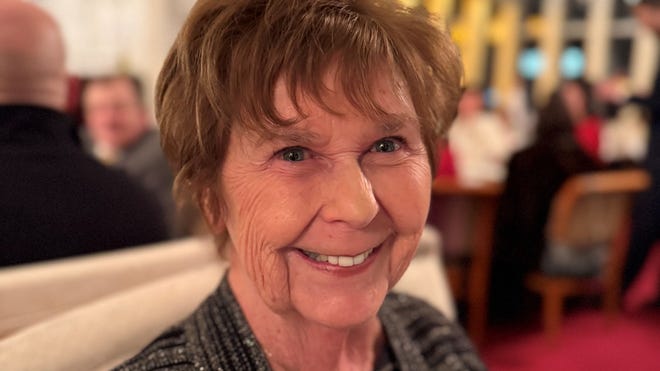
Joan Phyllis Shelton was a 65-year-old woman when she was last seen on February 7, 2004, in the Catalina Foothills area of Pima County, Arizona. Publicly available case information describes Joan as a White woman with gray or partially gray hair and brown eyes. She stood approximately 5 feet 3 inches tall and was described as weighing about 103 pounds; another public missing-person directory also notes that she may have had piercings in both ears.
Most importantly to the circumstances surrounding her disappearance, Joan was known to be an avid hiker, an important detail given the rugged desert and mountain country surrounding the Catalina Foothills. On the day she vanished, Joan was seen walking away from an assisted-living facility in the area. That departure became the last publicly documented sighting of her. Her disappearance was subsequently recorded with the National Missing and Unidentified Persons System as NamUs case MP4295, which confirms Catalina Foothills as the location of her disappearance and February 7, 2004, as her date of last contact.
The circumstances immediately following Joan's departure remain unusually sparse in the public record. Online case summaries consistently state that she walked away from the assisted-living facility, but they do not provide a confirmed destination, describe anyone accompanying her, or identify a vehicle associated with her disappearance. Her reputation as an avid hiker offered an understandable avenue of concern because Catalina Foothills lies against a landscape of desert foothills and mountainous terrain, but the available case records do not establish that she was actually witnessed entering a particular trail or wilderness area that day. There is likewise little publicly documented information about what she was wearing, what belongings she may have carried, or what plans she had made before leaving. Those gaps have left the final portion of Joan's movements difficult to reconstruct: what is firmly established is that she left the facility on February 7 and then disappeared from documented view. For those who cared about her, the lack of a clear trail would have meant living with questions about where Joan was headed and what happened after she walked away.
Several years later, the case took a deeply significant and painful turn when partial remains belonging to Joan were recovered. Public summaries based on NamUs information state that partial remains were found in 2008, while The Charley Project specifies that Joan's skull was located in January of that year. The publicly accessible sources reviewed do not provide an exact day of recovery or a detailed account of the location and circumstances in which the skull was discovered. The Charley Project further reports that the remainder of Joan's body has not been found. The discovery therefore answered an important question about at least part of what had become of her while leaving substantial uncertainty about the path she took after leaving the assisted-living facility and where the rest of her remains may be. The limited information released publicly also makes it impossible to responsibly reconstruct how she reached the place where the recovered remains were ultimately located, and there is no basis in the available records for assigning a cause or sequence of events beyond the facts authorities and missing-person databases have made public.
Joan's case has consequently endured as a story with a clear beginning but many missing pieces in between. She was a 65-year-old woman and enthusiastic hiker who walked away from an assisted-living facility in Catalina Foothills on February 7, 2004, and was not seen again in the publicly documented record. Years passed before the recovery of partial remains in 2008 provided a major development, with later case summaries identifying the recovered remains as Joan's skull and reporting that the rest of her body remained missing. Beyond those facts, the surviving public record is restrained: it does not establish where Joan went after leaving the facility, whether she intended to hike, what route she followed, what circumstances she encountered, or precisely where and how the recovered remains were found. In overview, Joan Phyllis Shelton's case is one marked by a quiet disappearance from Catalina Foothills, years of uncertainty, the eventual recovery of only part of her remains, and lingering unanswered questions about the final journey of a woman remembered in the case record for her love of hiking.Last Seen: Feb 7, 2004