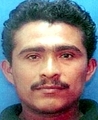
Daniel Aguilar Garcia was a 79-year-old Hispanic/Latino man when he was last seen on May 6, 2005, at his home in Phoenix, Arizona, in the area of 14th Place and Campbell Avenue. Public missing-person information describes him as approximately 5 feet 2 inches tall, about 160 pounds, with gray or partially gray hair. What began that day as the disappearance of an elderly Phoenix resident would eventually develop into a deeply troubling case involving his own household, a remote location hundreds
of miles from Phoenix, and a search for physical evidence that has never conclusively established what became of his remains. Daniel had been married to his wife, Larisa Garcia, for about ten years, and Phoenix police later said he was the father of at least 30 children. His absence therefore extended far beyond a simple missing-person report, affecting a very large family while investigators tried to determine why a 79-year-old man had vanished from his home without a confirmed trace.
For years, investigators did not have enough evidence to explain Daniel's disappearance or bring charges against anyone. Phoenix police later said Larisa had been considered a person of interest during the investigation, but authorities initially lacked sufficient evidence to proceed against her. The case changed dramatically in 2010 when the Phoenix Police Department's missing-persons detail developed new evidence and confronted her. According to police accounts subsequently reported by local media, Larisa admitted that she had killed Daniel by smothering him at their Phoenix residence. Investigators said she then transported his body from Phoenix to the Chinle area of the Navajo Nation in northeastern Arizona, where she reportedly attempted to destroy the remains by burning them. Phoenix police also stated that they believed the killing was financially motivated. Her account transformed the case from a prolonged unexplained disappearance into an investigation centered on recovering Daniel's remains and establishing, through physical evidence, what had happened after he was taken from his home.
The effort to locate Daniel presented investigators with an additional challenge because the place Larisa identified was on Navajo Nation land, where outside law-enforcement agencies cannot simply conduct searches without the appropriate legal authority and cooperation. A later Arizona Family investigation reported that Phoenix detectives were able to obtain a warrant and work with the FBI after Larisa agreed to lead authorities to the area in Chinle where she said Daniel's body had been left. Detectives searched the location she identified and recovered very small bone fragments. Those discoveries were potentially significant, but they did not provide the certainty Daniel's family and investigators needed. The fragments were so degraded that DNA testing could not conclusively establish that they belonged to Daniel. Consequently, even though investigators recovered human remains or suspected bone material in an area connected to Larisa's account, there was never a definitive forensic identification establishing those fragments as Daniel Garcia's remains. That distinction has continued to be important to the case: investigators obtained a confession and evidence consistent with the account they were given, yet the physical search did not produce remains that could be scientifically and conclusively identified as Daniel.
Larisa Garcia was arrested in connection with Daniel's death and ultimately pleaded guilty to manslaughter in 2011. In November 2011, Maricopa County Superior Court Judge Kristin Hoffman sentenced her to ten years in prison, which contemporary reporting described as the maximum sentence available in the case. More recent reporting states that she served the ten-year term. The manslaughter conviction brought a measure of legal accountability, but it did not solve the forensic problem at the heart of Daniel's disappearance: his remains were never conclusively identified. A NamUs-derived case listing states that Daniel's DNA profile was entered into CODIS so it could be compared with remains that might be recovered and suitable for testing in the future. That precaution reflects the unusual and painful position in which the case has remained—law enforcement obtained an admission describing Daniel's death and disposal, a defendant was convicted and imprisoned, and investigators even recovered tiny bone fragments from the location associated with that account, yet science could not establish that those fragments were Daniel.
Daniel Garcia's case is therefore a story with substantial answers but without the final physical confirmation that families often hope will bring certainty. He disappeared from his Phoenix home on May 6, 2005, at the age of 79; five years later, the investigation led to his wife's admission that she had smothered him and taken his body to the Chinle area of the Navajo Nation. Her cooperation helped authorities identify and search a remote location, where investigators recovered tiny, badly degraded bone fragments, but DNA testing could not prove they were Daniel's. Her later manslaughter conviction and ten-year prison sentence resolved the criminal prosecution, while Daniel's DNA profile was preserved for possible comparison should identifiable remains ever be located. In overview, the case progressed from the unexplained disappearance of an elderly Phoenix man, through years of uncertainty and a major investigative breakthrough, to a confession, a remote search, the recovery of inconclusive physical evidence, and a manslaughter conviction—leaving Daniel's family with an account of what authorities believe happened to him, but without the definitive identification of his remains that would fully close the final unanswered chapter of his disappearance.Last Seen: May 6, 2005