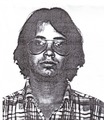
In the early morning hours of March 7, 1983, 18-year-old David Robert Gionet vanished from Interlochen, Michigan. He was last seen after leaving a party at a residence in Green Lake Township. David, known to his friends as Dave, had brown, longer-length hair, hazel eyes, and wore prescription glasses. He had a scar on his left wrist and a tattoo on his abdomen. At the time of his disappearance, he was described as being between 5'3' and 5'5' tall and weighing between 125 and 135 pounds. The last sighting of David placed him walking along M-137, in the vicinity of the Interlochen Center for the Arts.
Initial theories surrounding David's disappearance centered on the possibility that he had attempted to take a shortcut home by walking across the partially frozen Green Lake. This idea stemmed from conversations he had at the party before he left. In the days following his disappearance, law enforcement, including dive teams from the Michigan State Police and the Grand Traverse County Sheriff's Office, conducted extensive searches of the lake, but their efforts yielded no signs of the missing teenager. As the investigation progressed, the theory of him falling through the ice became less likely. It was reported that David had a fear of water and was not a swimmer. Furthermore, friends and family noted that due to unseasonably warm weather, he had already removed his ice shanty from the lake, deeming the ice unsafe.
Decades have passed since David Gionet was last seen, and his case remains an unsolved and painful mystery for his family and community. The Michigan State Police reopened his case in late 2022, citing new information, though the details of that information have not been publicly disclosed. His disappearance is classified as an endangered missing person case. The circumstances of what happened to David after he left the party that March morning are still unclear. Investigators continue to seek any information that might finally shed light on his whereabouts and bring closure to those who have waited so long for answers. The Michigan State Police - Cadillac Post is the investigating agency for this long-standing cold case.
David Robert Gionet, known as "Dave," was an 18-year-old White male when he disappeared from Interlochen, Michigan, on March 7, 1983. His final confirmed sighting placed him walking along M-137 near the Interlochen Center for the Arts in Grand Traverse County. It was an ordinary stretch of roadway in a community surrounded by lakes and heavily wooded land, but after David was seen there, his trail abruptly ended. No publicly documented sighting has established where he went next, who he may have encountered, or whether he ever reached an intended destination. What began with a young man traveling on foot became a disappearance that has remained unresolved for more than four decades.
David was between five feet three and five feet five inches tall and weighed approximately 125 to 135 pounds. He had hazel eyes and brown hair that extended below his ears, and he was described as having scruffy facial hair. He wore prescription eyeglasses, which would have been important to his daily life and could have helped witnesses recognize him. David also had a scar on his left wrist and a tattoo on his abdomen. Investigators retained a photograph of him taken in 1982, not long before his disappearance, preserving an image of how he appeared during the final year in which he was known to be alive.
The public record does not provide a detailed account of David's activities earlier on March 7 or explain why he was walking near the Interlochen Center for the Arts. It is unclear whether he was going to visit someone, returning home, looking for transportation, or simply walking through the area. There is also no publicly available description of the clothing he wore beyond the fact that he had his prescription glasses. Without a complete clothing description, investigators lost one of the details that might have helped distinguish him from other young men seen along the highway that day.
A green 1969 Pontiac LeMans has been listed in connection with David's case, although the surviving public information does not clearly explain its role. It is not stated whether David owned or regularly drove the car, whether it had become disabled, or whether it was found somewhere after he vanished. No license plate information or exact recovery location is publicly provided. The presence of the vehicle in his case record suggests that it may have been relevant to his movements, but the available details are too limited to establish whether David left it behind before walking on M-137 or whether another person had access to it.
M-137 served as a route through the Interlochen area near the arts campus and surrounding rural property. In 1983, a person traveling on foot along such a roadway could have accepted a ride without leaving the digital or surveillance evidence that might exist today. There were no mobile-phone location records, widespread roadside cameras, electronic payment trails, or automated systems documenting passing license plates. If David entered a vehicle, investigators would have depended almost entirely upon witness memories and voluntary reports from people who happened to see him.
The landscape surrounding Interlochen also presented difficult possibilities for searchers. The area contains forests, waterways, wetlands, undeveloped land, and seasonal properties. If David left the road because he was injured, disoriented, or trying to take a shortcut, locating him could have been extremely challenging. At the same time, nothing in the publicly available information confirms that he suffered an accident or entered the wilderness. The possibility that he met another person along the road also cannot be established from the known evidence. His last sighting tells investigators where he was, but not what caused him to disappear.
No publicly identified suspect has been named in David's case, and available records do not report an arrest or criminal charge related to his disappearance. There is no disclosed evidence showing that he was abducted, harmed, or voluntarily left the area. The lack of a confirmed crime scene, recovered personal belongings, or reliable later sighting has left investigators unable to determine which explanation is most likely. Even the circumstances under which he was reported missing and the precise sequence of the original search have not been described in detail in the public case record.
As the years passed, David's family provided DNA samples so that unidentified remains could be compared with his relatives. Samples from his brother and mother were processed through the University of North Texas Center for Human Identification. Complete genetic profiles were uploaded into the national DNA database, and mitochondrial DNA from his brother was also entered for comparison. These records allow investigators to test unidentified remains found anywhere in the country, including remains recovered long ago and only recently entered into modern databases.
The DNA profiles do not indicate that remains believed to be David's have been located. Instead, they ensure that a scientific means of identifying him is available should a possible match emerge. This is especially important in a case from the early 1980s, when DNA analysis was not yet available to investigators. Unidentified-person cases once separated by county or state boundaries can now be compared nationally, preserving a path toward an answer even after witnesses have died and physical evidence has deteriorated.
The Michigan State Police's Cadillac Post remains associated with the investigation into David's disappearance. His case has endured with only a small number of publicly known facts: he was seen walking along M-137 near the Interlochen Center for the Arts, a green 1969 Pontiac LeMans was listed in connection with him, and he was never reliably seen again. There is no public indication that investigators determined whether he accepted a ride, left the roadway, encountered foul play, or deliberately traveled away from the area.
For David's family, the uncertainty has meant living without the finality of knowing whether he survived the night he vanished or what circumstances prevented him from returning. The image of him walking along the road remains the last known moment in a life interrupted at only 18 years old. In overview, David Robert "Dave" Gionet disappeared from Interlochen on March 7, 1983, after being seen on foot along M-137 near the Interlochen Center for the Arts; no confirmed later sighting, identified suspect, arrest, or recovery has explained what happened, leaving his case an unresolved search for the young man who walked into the distance and never came home.
Last Seen: Mar 07, 1983