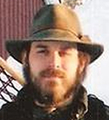
On a late winter's day in Michigan's Upper Peninsula, 30-year-old Christopher Charles Hallaxs vanished into the sprawling wilderness he so deeply cherished. It was March 17, 2004, when Christopher, a male known for his love of the outdoors, was last seen in the small village of Paradise, Michigan. An acquaintance, a clerk at the local BP Gas Station, recalled Christopher purchasing some soda and snacks before mentioning he was heading out to his camp. This was the last known interaction anyone had with him. Christopher, an experienced outdoorsman who often journeyed alone, preferred the less-traveled paths and frequently moved at night. He was known to travel light, possessing the skills to live off the land when his supplies ran low. His disappearance would trigger an extensive search, yet yield no answers, leaving only a trail of snowshoe tracks that faded into a dense and unforgiving swamp.
The search for Christopher began shortly after he was reported missing. Law enforcement from the Michigan State Police and the Chippewa County Sheriff's Office initiated a search and rescue operation. They discovered what they believed to be Christopher's snowshoe tracks and followed them for miles. The trail led them deep into a thick, tangled swamp, a hazardous environment that ultimately forced them to abandon the search in the early morning hours. Despite their efforts, no sign of Christopher was found. He was well-equipped for the wilderness, reportedly carrying items such as wooden Alaskan-style snowshoes, a nylon backpack, a multi-tool, knives, a compass, and matches. He was also known to create well-camouflaged encampments and keep stashes of supplies in various remote locations within the Lake Superior State Forest. This knowledge of his preparedness and skill fueled speculation that he may have simply chosen to remain in the wild, living off the grid.
Christopher Hallaxs was born in Battle Creek, Michigan, and was a graduate of Bellevue Community Schools. He later attended Lake Superior State University in Sault Ste. Marie. Described as someone who preferred solitude and the tranquility of nature over the confines of civilization, he worked various jobs, often on the night shift, and never married. The official classification of his case is that of a lost or injured missing person. The mystery of what happened to Christopher endures, with some holding onto the hope that this avid outdoorsman is still alive, living a life of solitude deep within the northern woods he so loved. The case remains an open and perplexing chapter in the annals of missing persons in Michigan's vast wilderness, a story of a man who walked into the forest and seemingly vanished without a trace.
Christopher Charles Hallaxs was a 30-year-old man who disappeared from Paradise, Michigan, on March 17, 2004, after setting out for what appeared to be another solitary journey into the wilderness of Michigan's eastern Upper Peninsula. Known as Chris and sometimes by the nickname "ShadowStrider," he was last seen at a BP gas station in the small community of Paradise, where he purchased soda and snack foods. The clerk knew him personally, and Chris explained that he was heading out to his camp. Nothing about the brief encounter was reported as alarming. For Chris, traveling into the woods alone was familiar rather than unusual. After leaving the station, however, he was never seen or heard from again.
Chris was an experienced outdoorsman who preferred solitude and regularly explored the northern Michigan wilderness without companions. He was especially familiar with the Lake Superior State Forest and often avoided established routes in favor of remote, less-traveled trails. He liked moving through the woods at night, carried relatively little equipment and reportedly possessed the skills necessary to live from the land after his provisions ran low. He maintained hidden caches of supplies in different locations and had been known to construct simple, carefully concealed lean-to shelters deep in the forest. These habits complicated the effort to determine where he intended to go on the night he disappeared because his "camp" may not have been a conventional campsite or a place known to anyone else.
An extensive search was mounted in the wilderness surrounding Paradise. Searchers found what were believed to be Chris's snowshoe tracks and followed them for miles into a dense, tangled swamp. The trail ultimately failed to lead rescuers to him, and no campsite, clothing, equipment or other confirmed personal property was recovered. The terrain presented a formidable challenge. The region around Paradise contains thick forests, wetlands and isolated stretches where a person could become injured, disoriented or concealed from view even during a coordinated search. Because Chris deliberately traveled off-trail and was comfortable venturing into difficult country, investigators and search teams faced an enormous area with no clearly documented destination.
At the time he vanished, Chris may have been equipped with wooden Alaskan-style snowshoes, an olive-colored nylon backpack, a high-quality compass, knives, a multitool and several methods for starting a fire. He was also believed to carry matches in a waterproof container, a lighter, homemade fire starters, a candle, a small LED light, a handmade copper whistle and a long wooden walking staff. His clothing was suited for the outdoors and may have included a dark flannel shirt, a camouflage windbreaker, light-colored wind pants, wool socks, gloves, a wide-brimmed wool hat and either rubber boots or leather hiking boots with gaiters. These supplies suggested that he was prepared to spend time outside, but they also made it difficult to know whether his disappearance resulted from an immediate emergency or whether he survived for an unknown period after walking into the forest.
Chris was approximately six feet to six feet one inch tall and weighed about 185 pounds. He had brown hair that was thinning on top and longer along the sides and back, blue eyes and a full brown beard at the time of his disappearance. He was nearsighted and wore contact lenses. Born in Battle Creek, Michigan, he graduated from Bellevue Community Schools and later attended Lake Superior State University in Sault Ste. Marie. He never married and had worked at several different jobs, often favoring nighttime shifts, a preference that reflected the same comfort with darkness and solitude that characterized his travels through the woods.
No publicly confirmed evidence has established that Chris encountered another person after leaving the gas station, and no identified suspect has been connected to his disappearance. The available information has not revealed any known vehicle associated with his final trip, nor has it established that he intended to leave Michigan or permanently abandon his previous life. Some have wondered whether an accident, exposure, an injury or the dangerous terrain prevented him from returning. Others have considered the possibility that a man with his survival abilities could have deliberately withdrawn farther into the wilderness, although no verified sighting or communication has supported that theory. His familiarity with concealed camps and isolated routes has allowed speculation to persist, but it has not produced a confirmed explanation.
The Michigan State Police have remained responsible for the investigation, and Chris's NamUs record continues to be published as an unresolved missing-person case. A maternal DNA reference sample was submitted to assist with future comparisons should unidentified remains be recovered, but no match publicly linked to Chris has been announced. His disappearance remains especially painful because the circumstances began with such an ordinary moment: a stop for drinks and snacks, a few words to an acquaintance and the simple statement that he was going to his camp. From there, the trail extended into a remote swamp and then disappeared, leaving his loved ones and investigators without a definitive answer. In overview, Christopher Hallaxs was a capable and independent outdoorsman who entered the northern Michigan wilderness on March 17, 2004, and never returned; despite extensive searching, no confirmed trace of him has been found, no suspect has been identified and the question of what happened beyond those final snowshoe tracks remains unresolved.
Last Seen: Mar 17, 2004