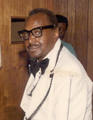
Marland Dewayne Jones was a 24-year-old Black man when he was last seen in Chattanooga, Tennessee, on June 27, 2005. Known to some by the nickname “Fat Man,” Marland was described as approximately six feet to six feet one inch tall and weighing between 195 and 230 pounds. He had black hair and brown eyes, sometimes wore his hair in a short Afro or cornrows, and was known to wear a neatly trimmed beard or mustache. A scar on his right wrist was among his identifying features.
Nothing publicly documented about that day suggested that his loved ones were witnessing the beginning of a disappearance that would remain unresolved for approximately two decades. After June 27, Marland stopped communicating with the people who knew him, and no confirmed sightings or contacts were reported.
Concern deepened as the silence continued. Approximately two weeks after Marland’s last known contact, his estranged wife and his sister reported him missing. Investigators and relatives regarded the circumstances as especially troubling because his disappearance appeared abrupt and was followed by a complete absence of communication. Searches and investigative efforts produced no publicly reported evidence establishing where he had gone or what had happened to him. Authorities and family members came to suspect that he had met with foul play, although the publicly available case information did not identify a suspect, describe a confirmed crime scene, or explain the events that immediately preceded his disappearance. For years, Marland’s case remained listed among Chattanooga’s missing-person investigations, leaving his family without a clear answer and with the painful uncertainty of not knowing whether he might someday return.
As the years passed, Marland’s identifying information continued to circulate through national missing-person resources. His case was recorded in the National Missing and Unidentified Persons System as MP8521 and remained associated with the Chattanooga Police Department. The passage of time did not provide the resolution his family needed. Instead, each year widened the distance from the last day anyone was known to have seen him. The lack of verified sightings, communication, or evidence of his whereabouts reinforced the concern that his disappearance had not been voluntary. His case represented not only an investigative mystery but also a prolonged personal loss for the relatives who had reported him missing and waited through years without knowing where he was.
A major development came in 2025, when a human skull was discovered near railroad tracks along Noah Reid Road, close to Shallowford Road and Bonny Oaks Drive in Chattanooga. Police investigators began working to determine the identity of the remains and how they had come to be at that location. The skull was subsequently identified as belonging to Marland Dewayne Jones, with public case reporting stating that the identification was made in August 2025. This discovery confirmed that Marland was deceased and brought the missing-person portion of the case to a sorrowful close. The exact date and circumstances of his death have not been publicly established, and authorities have reported that the death remains under investigation. The identification provided an answer to the long-standing question of whether Marland was still alive, but it also created new and deeply consequential questions about when he died, how he died, where the rest of his remains may be, and whether another person was responsible.
Marland’s case began with the sudden disappearance of a 24-year-old Chattanooga man on June 27, 2005, followed by an alarming absence of contact that led his estranged wife and sister to seek help. For roughly twenty years, his family and investigators had no publicly confirmed explanation for his whereabouts, while suspicions of foul play persisted because of the abrupt and complete nature of his disappearance. The identification of his remains in 2025 ended the uncertainty over whether he had survived, but it did not fully explain what happened to him. Marland is no longer considered an active missing person because he was found deceased, yet the investigation into his death remains important. In overview, the case is the story of a young man who vanished without explanation, a family left waiting through decades of uncertainty, and the eventual identification of remains that provided a painful measure of resolution while leaving the central circumstances of his death unanswered.Last Seen: Jun 27, 2005