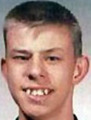
On a cold January day in 1980, a 30-year-old man named Robert Ahtonen vanished from the grounds of the Newberry Regional Mental Facility in Michigan's Upper Peninsula. He was a patient at the facility, and his aunt had planned to pick him up for a home visit on January 21st. A severe blizzard, however, delayed her arrival. When the storm finally subsided and she reached the hospital, she was met with the distressing news that Robert had wandered off into the blizzard and had not been seen since. Facility staff reportedly realized he was missing around 4:00 p.m. when he did not appear for his medication, but law enforcement was not notified until 7:30 p.m. The temperature that night plummeted to a frigid 11 degrees, adding a grave sense of urgency to the search for the missing man.
Robert's life had been marked by hardship from a young age. Born in Chicago, Illinois, he exhibited behavioral issues that worsened after the death of his mother when he was a teenager. Tragedy struck again when his father was killed in a car accident shortly after. For a time, he lived alone in a cabin near his aunt's home, but it became clear he could not manage on his own, and his extended family was unable to provide the care he needed. The years that followed were a cycle of stays in various state mental health facilities and group homes. He was diagnosed with several conditions, including epilepsy, an organic brain disease, and mild chronic undifferentiated schizophrenia, for which he required medication. Functioning at the level of a seven- or eight-year-old with an IQ of 67, he needed assistance with daily life.
The circumstances surrounding Robert's disappearance from the Newberry facility remain a painful mystery. The prevailing theory is that he likely succumbed to the harsh elements of the blizzard he walked into. Despite this, his body has never been found, leaving his case unsolved. Distinctive physical characteristics have been noted in his file, including scars on the little fingers of both hands, a previously fractured left hand, and severely overcrowded and crooked teeth with a double set of eyeteeth. At the time he went missing, he was wearing a gold-tone watch. The investigation into what happened to Robert Ahtonen continues, a quiet and somber testament to a life marked by struggle and a disappearance that has left a void of unanswered questions.
Robert Albert Ahtonen was a 30-year-old man who disappeared from Newberry, Michigan, on January 21, 1980, after walking away from the Newberry Regional Mental Facility during a severe winter storm. Robert was especially vulnerable because he had epilepsy, an organic brain disorder, chronic schizophrenia and an intellectual disability that left him functioning at approximately the level of a seven- or eight-year-old child. He required medication to prevent seizures, had difficulty following directions and was unable to care for himself independently. On the day he vanished, his aunt was supposed to collect him from the facility for a home visit, but a blizzard made travel too dangerous and delayed her arrival. By the time the storm eased and she reached the hospital, Robert was gone.
Robert was a white male with sandy-brown hair and blue eyes. Available descriptions vary slightly, placing him between approximately 4 feet 11 inches and 5 feet 11 inches tall and weighing between 135 and 150 pounds. His most recognizable physical features were his severely crooked and overcrowded teeth, including a double set of eyeteeth that protruded outward. He also had scars on the little fingers of both hands and had previously fractured his left hand. The only item of clothing or jewelry clearly documented in public case summaries is a gold-tone watch. The most recent known photograph of Robert had been taken when he was about 17, approximately thirteen years before he disappeared, so investigators later relied on sketches and age-progressed images to help show how he might have appeared as an adult and in later life.
Robert's difficulties had shaped much of his life long before the night he vanished. He was born in Chicago, Illinois, and attended public school through the eighth grade. He reportedly displayed behavioral problems from an early age, and those struggles became more severe after his mother died in 1966. The following year, when Robert was 17, his father was killed in an automobile accident. For approximately three months afterward, Robert lived alone in a cabin next to his aunt's residence, but his disabilities made independent living impossible. His extended family could not provide the level of constant supervision and medical support he needed, and during the years that followed he lived in a succession of state mental-health institutions and group homes.
By January 1980, Robert was a patient at the Newberry facility in Michigan's Upper Peninsula. The planned visit with his aunt should have offered him a temporary return to familiar family surroundings, but worsening weather disrupted those plans. His aunt postponed the trip rather than risk driving through the blizzard. At some point during the storm, Robert left the facility grounds on foot. Staff reportedly realized he was missing at about 4:00 p.m., when he was expected to receive his medication, but police were not notified until approximately 7:30 that evening. Those lost hours were critical because darkness was falling, the storm had complicated travel and visibility, and the temperature reportedly dropped to around 11 degrees that night.
The danger Robert faced outside was immediate and severe. He had no known ability to navigate safely through a blizzard, find shelter on his own or recognize the seriousness of remaining outdoors without assistance. Without his seizure medication, he was also at risk of a medical emergency. His cognitive limitations may have prevented him from explaining who he was or where he belonged if he encountered a stranger. Publicly available accounts do not describe a confirmed sighting after he left the grounds, nor do they reveal footprints, discarded possessions or a verified direction of travel. There is no indication that he had transportation, money or a planned destination. The storm that delayed his aunt may also have covered tracks and erased clues before a full search could begin.
One possibility is that Robert became disoriented in the snow, wandered into a wooded or isolated area and died from exposure. The Newberry region contains extensive forests, rural roads and undeveloped land where a person could be extremely difficult to locate, particularly during winter conditions. Deep snow, freezing temperatures and reduced visibility would have made survival increasingly unlikely as the hours passed. Yet no remains or personal items publicly identified as Robert's have been recovered. Without physical evidence, investigators have been unable to determine whether he remained near the institution, reached a roadway, entered a building or encountered someone who transported him away from the area.
It is also possible that a passing motorist offered Robert a ride without realizing that he was a missing and medically vulnerable patient. If he was taken beyond the immediate search area, either out of kindness or for unknown reasons, the investigation would have had no clear route to follow. His limited communication skills may have made it difficult for him to provide his full identity or explain his connection to the facility. However, there has been no confirmed evidence that he entered a vehicle, traveled to another community or lived under a different identity. No reliable communication from Robert has been reported since the afternoon he walked away.
The delay between the facility's discovery of Robert's absence and the notification of law enforcement has remained one of the most troubling circumstances in the case. A search begun immediately might have had a greater chance of locating tracks or reaching him before the temperature fell further. By the time authorities were alerted, the combination of darkness, snowfall and severe cold would have made the operation much more difficult. Public records do not explain why police were not contacted sooner, whether staff attempted their own search first or how extensively the surrounding area was examined that night. The passage of more than four decades has further limited the availability of witnesses and detailed records describing the initial response.
Robert's disappearance is classified as a lost or injured missing-person case rather than a confirmed abduction or criminal act. There is no publicly reported evidence that anyone intended to harm him, and no suspect has been identified. The circumstances instead point toward an exceptionally vulnerable man leaving a supervised environment during life-threatening weather and becoming lost before help could reach him. Still, because Robert was never located, investigators cannot conclusively rule out the possibility that he encountered another person or was taken somewhere outside the original search area. His case continues to be maintained by the Marquette County Sheriff's Office and remains listed in national missing-person records.
For Robert's surviving family, the absence of a definitive answer has meant enduring decades of uncertainty. They had already experienced the deaths of both of his parents and the painful recognition that his disabilities required care beyond what relatives could provide. His aunt had intended to bring him home for a visit, only to arrive after the storm and learn that he had disappeared. What should have been a temporary delay caused by dangerous weather became a permanent separation. With no confirmed final sighting beyond the institution and no recovered remains, his loved ones were denied both the hope of a verified survival and the certainty needed to mourn a confirmed death.
In overview, Robert Albert Ahtonen's case is the unresolved story of a medically and intellectually vulnerable 30-year-old man who walked away from the Newberry Regional Mental Facility during a blizzard on January 21, 1980. He needed seizure medication, could not safely care for himself and disappeared into weather severe enough to delay the relative who was coming to take him home. Staff realized he was absent in the afternoon, but police were not notified until several hours later, after darkness and bitter cold had intensified the danger. No confirmed sighting, physical trace or explanation has emerged since then. Robert's fate remains unknown, leaving behind the compassionate but painful image of a dependent man alone in a winter storm and a family still waiting to learn where his final journey took him.
Last Seen: Jan 21, 1980