Crime Solvers Central
302 Cases Solved. Advancing justice for missing persons, unsolved homicides, unidentified and unclaimed remains.

Case Description

Any updates on this case? Let us know!
Summary based on the NamUs case record (MP31692) and 8 other sources
Robert Joseph Poissant, age 54, went missing on September 5, 2015, during a boating trip off Keewaydin Island near Naples, Florida. Poissant and his girlfriend were swimming in the Gulf of Mexico when their boat, which was not anchored, began to drift away due to a strong current. Poissant encouraged his girlfriend to swim after the boat, and they became separated in the water around 5:00 p.m. His girlfriend managed to reach the shore after four hours of swimming, but Poissant was never seen again.

Despite an extensive search by the U.S. Coast Guard, which located the boat adrift near Gordon Pass, no trace of Poissant was found. Authorities believe he likely drowned, though his body has never been recovered. Poissant, who was well-known in the boating community, had several tattoos and went by the nicknames "Bob" and "Bobby." His case remains classified as lost/injured missing, with foul play not suspected.
Last Seen: Sep 5, 2015

Possible Unidentified Matches (2)

Unidentified remains cases whose details are consistent with this person, ranked by how closely they compare. Fields that are unknown in either case are left out of the score.

76%Possible
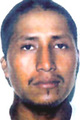
John Doe — Immokalee, Florida
UP115982 • Found May 28, 2021
View case
Sex ✓Male
Age 60%Est. 18–100 vs 54 when missing
Race 100%White
Location 95%29 mi away, same county
TimingFound 6 years after last seen
Height 100%5'9" vs 5'9"
Weight 87%210 lb vs 180 lb
Eyes 100%Brown vs Brown
75%Possible
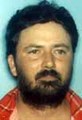
John Doe — Immokalee, Florida
UP81735 • Found Jul 26, 2018
View case
Sex ✓Male
Age 84%Est. 38–52 vs 54 when missing
Race 60%Hispanic
Location 95%29 mi away, same county
TimingFound 3 years after last seen
Height 84%5'7" vs 5'9"
Weight 100%175 lb vs 180 lb
Eyes 100%Brown vs Brown

These comparisons are generated automatically from public NamUs case data and are not confirmed identifications. Only DNA, dental or fingerprint comparison by investigators can confirm an identity. If you believe two cases are connected, contact the agency handling the unidentified case.