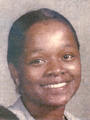
Rhonda Marcella Daugherty was a 49-year-old woman living in the Coolidge community near LaFollette, Tennessee, when she was last seen on December 2, 2014. Her husband, Charles Daugherty, saw her at their home early that morning before leaving for work. When he returned at approximately 6:00 p.m., Rhonda was gone. The circumstances inside the residence immediately made her absence troubling: there were no reported signs of forced entry or a struggle, yet the back door was found open. Her vehicle remained at the property, and personal belongings she would ordinarily be expected to take-including her purse, keys and cellular phone-were still inside. Relatives described the disappearance as completely out of character for Rhonda, a mother and Sunday school teacher whose sudden silence left those closest to her deeply alarmed. Her mother had attempted to reach her during the afternoon but received no answer, and the unexplained scene at the home soon prompted a missing-person investigation.
The Campbell County Sheriff's Office began searching for Rhonda, and on December 4, 2014, the Tennessee Bureau of Investigation joined the case at the request of the local district attorney general. Investigators and members of the community searched for evidence that might explain how she could have disappeared from her home without taking her belongings or transportation. Attention eventually turned toward Lonnie Lee Vann, a former Campbell County middle-school teacher who lived in the area. At first, authorities publicly emphasized that no confirmed connection had been established between Vann and Rhonda's disappearance. Vann was separately wanted in connection with an armed robbery committed in LaFollette several days after Rhonda vanished, and the TBI placed him on its Top Ten Most Wanted list. He fled Tennessee but was captured without incident in Myrtle Beach, South Carolina. As investigators continued examining Rhonda's disappearance, they developed information that, according to the TBI, identified Vann as the person responsible for her kidnapping and death.
In January 2015, authorities charged Vann with kidnapping and murdering Rhonda even though her remains had not been recovered. Prosecutors acknowledged that pursuing a homicide case without a body presented a significant evidentiary challenge because the state would have to establish both that Rhonda was dead and that her death resulted from a criminal act. A Campbell County grand jury subsequently returned an indictment accusing Vann of first-degree murder, felony murder and kidnapping in connection with Rhonda's disappearance, along with charges arising from other offenses. Investigators did not publicly disclose every piece of evidence that connected him to Rhonda, nor did they announce how they believed she was killed. For her family, the criminal charges brought a measure of accountability but not the answer they most desperately wanted: the location of Rhonda's remains. Searches and investigative efforts did not provide them with the opportunity to recover her, hold a funeral or say a proper goodbye.
Vann initially pleaded not guilty, but the case was ultimately resolved through a plea agreement. He pleaded guilty to second-degree murder, kidnapping and tampering with evidence, as well as charges connected to other crimes, and received an effective prison sentence of 40 years. His guilty plea legally established his responsibility for Rhonda's murder, yet it did not resolve the enduring uncertainty surrounding where he left her. Publicly available reports do not provide a confirmed recovery location, and Rhonda continues to be listed in the National Missing and Unidentified Persons System under case number MP61691. The NamUs record describes her as a White woman with shoulder-length brown hair, hazel eyes, a height of approximately five feet four inches and a weight of about 160 pounds. She also had three piercings in each ear. Family DNA reference samples were completed and entered for comparison, preserving an avenue through which unidentified remains could potentially be connected to her.
Rhonda's case is a painful example of how a criminal prosecution can reach a conclusion while a family's search remains unfinished. The evidence gathered by investigators was sufficient to charge and convict the man responsible for taking her life, but it did not bring Rhonda home. Her loved ones have been left to grieve without her remains and without a complete account of what occurred after she disappeared from the LaFollette residence. In overview, Rhonda Daugherty was last seen at home on December 2, 2014; her untouched belongings and the absence of an obvious explanation led to an intensive investigation; Lonnie Vann was identified, charged and ultimately convicted of her kidnapping and murder; and despite that conviction, Rhonda's location has never been publicly confirmed, leaving the recovery of her remains as the central unresolved part of the case.
Last Seen: Dec 02, 2014