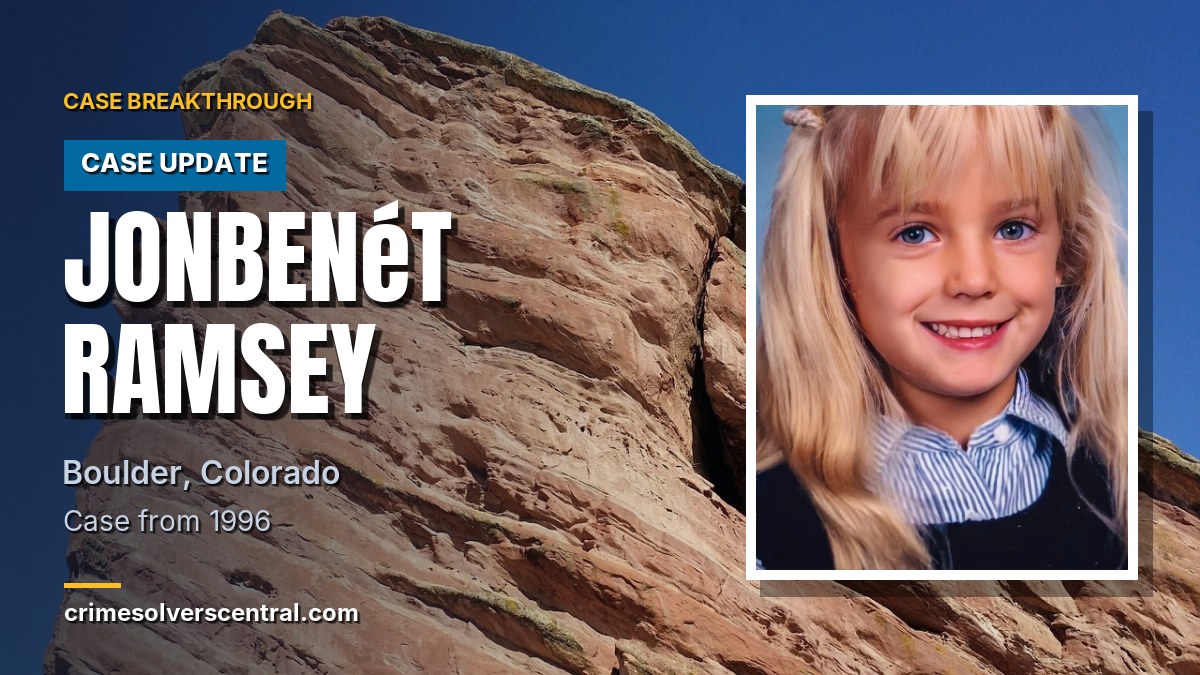
Boulder officials told ABC News and other outlets in November 2026 they are discussing SNP and forensic genetic genealogy testing and re-interviewing subjects in the 1996 killing.
What happened
Boulder Police Chief Stephen Redfearn and Boulder County prosecutors told ABC News and other outlets in early November 2026 that investigators are pursuing new DNA testing methods for evidence in the 1996 killing of JonBenét Ramsey and are re-interviewing people with connections to the case. The department said it was in talks with laboratories about using single nucleotide polymorphism (SNP) testing and forensic investigative genetic genealogy on existing evidence.
Officials said they are proceeding cautiously because some of the samples are very small and complex, and certain tests can consume rare material. Chief Redfearn said the department will only send items for testing once they have confidence the labs and methods will yield usable results. Prosecutors and police emphasized that the effort is intended to try to identify the source of DNA previously described as belonging to an unknown male.
The reporting accompanied an ABC News 20/20 special re-examining the case and included interviews with family members and forensic experts. No arrests or charges have been announced as part of this testing. JonBenét’s family members who spoke with the program expressed hope that advances in DNA technology will finally produce answers.
Case background
JonBenét Ramsey, age 6, was found dead in the basement of her family home in Boulder on Dec. 26, 1996. Police responded after a ransom note was discovered in the home. An autopsy determined she died from blunt force trauma and asphyxia; her death was ruled a homicide.
Early investigation scrutiny focused on members of the Ramsey household; no one was ever convicted. In 2006 John Mark Karr falsely confessed and was later excluded by DNA tests. In 2008 Boulder County prosecutors said touch-DNA testing of JonBenét’s clothing had produced a profile belonging to an unknown male, and then, District Attorney Mary Lacy wrote to the Ramseys saying the family was not considered under suspicion based on that evidence.
Over subsequent years investigators followed thousands of tips and interviewed many people, but the case remained unsolved. The November 2026 coverage signals renewed police interest in applying newer SNP-based testing and investigative genetic genealogy techniques that were not available in earlier phases of the probe.