
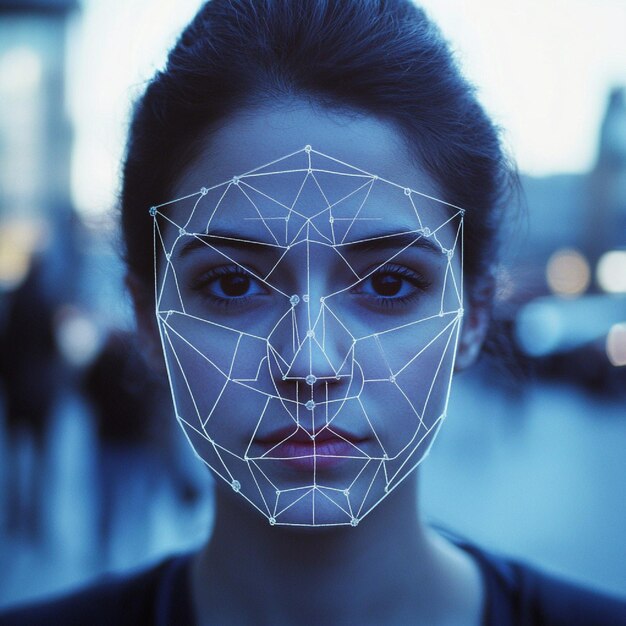
Introduction to Facial Recognition in Law Enforcement
Facial recognition technology (FRT) has rapidly evolved from a speculative concept to a pivotal tool in modern law enforcement. By analyzing unique facial features, this technology enables agencies to identify individuals with unprecedented speed and accuracy. Its integration into policing strategies has transformed investigative processes, offering both remarkable advantages and raising significant ethical debates.
Mechanics of Facial Recognition Technology
At its core, FRT captures and analyzes facial features to create a digital map, often referred to as a "faceprint." This process involves measuring distances between key facial landmarks such as the eyes, nose, and mouth. Once a faceprint is generated, it can be compared against vast databases to find potential matches. The accuracy of these systems has improved significantly, allowing for real-time identification in various scenarios.
Applications in Criminal Investigations
Law enforcement agencies employ FRT in multiple facets of criminal investigations. One primary use is identifying suspects by comparing surveillance footage against criminal databases. For instance, the FBI's Next Generation Identification (NGI) System utilizes facial recognition to match images with its extensive repository of mugshots, aiding in suspect identification. Additionally, FRT assists in locating missing persons by cross-referencing public images and surveillance footage, thereby facilitating quicker recoveries.
Enhancing Public Safety Through Surveillance Unlock the full case narrative for , all available source links, additional videos, and member discussions.
Beyond individual investigations, FRT plays a crucial role in broader public safety measures. Live Facial Recognition (LFR) systems are deployed in public spaces to monitor crowds and identify individuals on watchlists in real-time. This proactive approach aims to prevent potential threats before they materialize. For example, British police forces have been encouraged to incorporate facial recognition into various investigations, reflecting a trend towards its widespread adoption in public safety initiatives.
MEMBER ACCESS
Continue reading the complete case summary
Cancel anytime.
Already a member? Log in

February 24, 2025, 03:41
Comments:
0
February 19, 2025, 18:24
Comments:
0
April 10, 2025, 17:22
Comments:
0
April 11, 2025, 13:08
Comments:
0
April 28, 2025, 00:23
Comments:
0
February 22, 2025, 17:31
Comments:
0

March 10, 2025, 03:18
Comments:
0

April 28, 2025, 02:29
Comments:
0
April 12, 2025, 03:51
Comments:
0

July 7, 2025, 03:18
Comments:
0
LM
on Vanished Without a Trace: The Unsolved Disappearance of Silvia Menendez in Downtown Los Angeles
Silvia es mi hermana. Si en algún momento tu encuentras este post. Quiero que sepas que te busco, necesito saber que estás bien, segura y a salvo, yo estoy sufrurndo mucho con esta incertidumbre al no saber nada de ti y prnsar que puedas no estar bien.
July 3, 2026, 06:44
LM
on Vanished Without a Trace: The Unsolved Disappearance of Silvia Menendez in Downtown Los Angeles
She is my sister, and I am trying to locate her.
April 30, 2026, 04:53
HC
on Vanished Without a Trace: The Disappearance of Saidy Yolibeth Chirinos in Falfurrias, Texas
Te Xtraño muchooo mi lokitha bella te llevo presente cada día que Dios me presta de vida💔😪
January 31, 2026, 10:14
OT
on Vanished at Sea: The Mysterious Disappearance of Cameron Booth Off Chincoteague's Coast
He was a criminal, an abuser, likely who didn't want to face justice of his actions and took his own life because he could not face the consequences of what he did. The victims have told the family his crimes, with evidence. The family knows he was arrested and convicted of possession of CSAM. They know who and what he was. And they're all so equally sick they live in comfort that the victims don't want to retraumatize themselves over everything he put them through. Dont support this families sick parade of using a monster to get sympathy. He was never ashamed of who he was. He loudly boasted his crimes and justified them. The family shouldn't sit there and pretend, how far from reality are they to sit and post this man publicly on news outlets, websites, knowing who he is. Do they need attention that badly? They don't want the attention from the truth. The victims will never get justice. Do not pray for him o
January 22, 2026, 22:01