
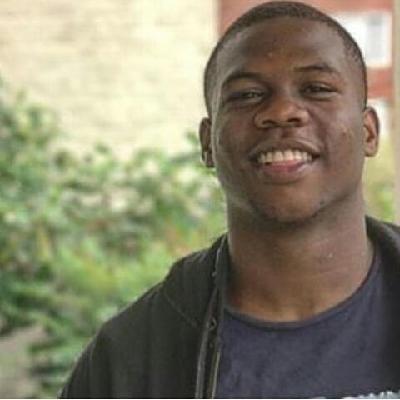
In the profound quiet that settles over a city in the earliest hours of the morning, a call for help sliced through the stillness. It was Friday, February 16, 2018, just two minutes past one o'clock in the morning, when the Metropolitan Police Department received a report of a shooting. The location was a residence nestled in the 4200 block of 7th Street, Southeast, in Washington, DC. Such calls are an unfortunate reality for officers in any major city, each one carrying the potential for tragedy and the start of a long, arduous investigation. For the officers responding that night, the address was more than just a point on a map; it was a scene where a life had been irrevocably altered by an act of extreme violence. They proceeded toward the location, aware that every second was critical, not yet knowing the full scope of what they would find inside the home or that this specific call would become another lingering question in the city's long list of unsolved homicides.
The victim at the center of this tragedy was Chicano Phillips. At only eighteen years old, he was a resident of Southeast, DC, the very quadrant of the city where his life would be violently cut short. An age that for most marks a threshold of new beginnings—graduations, first jobs, the exploration of adulthood—became for Chicano the final chapter. The facts of his life before that night are not part of the public record of his death, but his identity as an 18-year-old from the local community grounds the incident in a devastating reality. He was not an anonymous statistic but a young man with a future, a presence in his neighborhood, and a place within a family. His death represents not just the end of his own potential, but a profound loss that would ripple outward, leaving a void in the lives of those who knew and loved him, a void that remains unfilled as long as the case remains unsolved.
The violence that befell Chicano Phillips did not happen on an anonymous street corner or in a public park. It occurred inside a residence. This detail is crucial, as it transforms the nature of the crime and the investigation that follows. A shooting within a home suggests a different set of circumstances than a public altercation. It raises immediate questions about how the perpetrator gained access. Was it a forced entry, a robbery gone wrong, or was the shooter someone known to the occupants, someone who was invited or let inside? The scene was contained within four walls, which can be both a help and a hindrance to investigators. It potentially limits the number of random witnesses but also concentrates the evidence to a specific, controlled area. For the community, a crime inside a home shatters the sense of sanctuary that a residence is meant to provide, sending a chilling message that danger can penetrate even the most private of spaces.
Upon arriving at the address on 7th Street, Southeast, police officers entered the residence and were met with the immediate and stark reality of the report. They found Chicano Phillips inside, suffering from a gunshot wound. The initial moments on a scene like this are a flurry of controlled and urgent activity. Officers must secure the area to ensure their own safety and preserve evidence, while simultaneously rendering aid to the victim. Finding an 18-year-old gravely injured by gunfire is a grim task, one that underscores the human cost of violence. The officers' discovery marked the official beginning of the case, transitioning it from a dispatcher's call to a tangible crime scene. Chicano was no longer just a name on a report; he was a critically injured person, and the primary focus shifted from investigation to the desperate effort to save his life.
With Chicano Phillips found grievously wounded, the response from DC Fire and Emergency Medical Services was swift and critical. Paramedics arrived on the scene to take over his care, their immediate goal to stabilize him for transport. Every action, from assessing the wound to controlling bleeding to monitoring his vital signs, was part of a desperate race against time. He was suffering from life-threatening injuries, a designation that leaves no room for error or delay. Once he was secured, he was transported to a local hospital, the ambulance a vessel of fragile hope traveling through the dark city streets. For Chicano, for his family who would soon receive the worst news of their lives, and for the medical professionals who received him, this journey marked the beginning of a painful and uncertain vigil, a fight for survival that would unfold over the next two days. Unlock the full case narrative for , all available source links, additional videos, and member discussions.
MEMBER ACCESS
Continue reading the complete case summary
Cancel anytime.
Already a member? Log in

February 24, 2025, 03:41
Comments:
0
February 19, 2025, 18:24
Comments:
0
April 10, 2025, 17:22
Comments:
0
April 11, 2025, 13:08
Comments:
0
April 28, 2025, 00:23
Comments:
0
February 22, 2025, 17:31
Comments:
0

April 28, 2025, 02:29
Comments:
0

March 10, 2025, 03:18
Comments:
0
April 12, 2025, 03:51
Comments:
0

July 7, 2025, 03:18
Comments:
0
LM
on Vanished Without a Trace: The Unsolved Disappearance of Silvia Menendez in Downtown Los Angeles
Silvia es mi hermana. Si en algún momento tu encuentras este post. Quiero que sepas que te busco, necesito saber que estás bien, segura y a salvo, yo estoy sufrurndo mucho con esta incertidumbre al no saber nada de ti y prnsar que puedas no estar bien.
July 3, 2026, 06:44
LM
on Vanished Without a Trace: The Unsolved Disappearance of Silvia Menendez in Downtown Los Angeles
She is my sister, and I am trying to locate her.
April 30, 2026, 04:53
HC
on Vanished Without a Trace: The Disappearance of Saidy Yolibeth Chirinos in Falfurrias, Texas
Te Xtraño muchooo mi lokitha bella te llevo presente cada día que Dios me presta de vida💔😪
January 31, 2026, 10:14
OT
on Vanished at Sea: The Mysterious Disappearance of Cameron Booth Off Chincoteague's Coast
He was a criminal, an abuser, likely who didn't want to face justice of his actions and took his own life because he could not face the consequences of what he did. The victims have told the family his crimes, with evidence. The family knows he was arrested and convicted of possession of CSAM. They know who and what he was. And they're all so equally sick they live in comfort that the victims don't want to retraumatize themselves over everything he put them through. Dont support this families sick parade of using a monster to get sympathy. He was never ashamed of who he was. He loudly boasted his crimes and justified them. The family shouldn't sit there and pretend, how far from reality are they to sit and post this man publicly on news outlets, websites, knowing who he is. Do they need attention that badly? They don't want the attention from the truth. The victims will never get justice. Do not pray for him o
January 22, 2026, 22:01