

Why Indigenous Missing Persons Are Overlooked: Key Causes
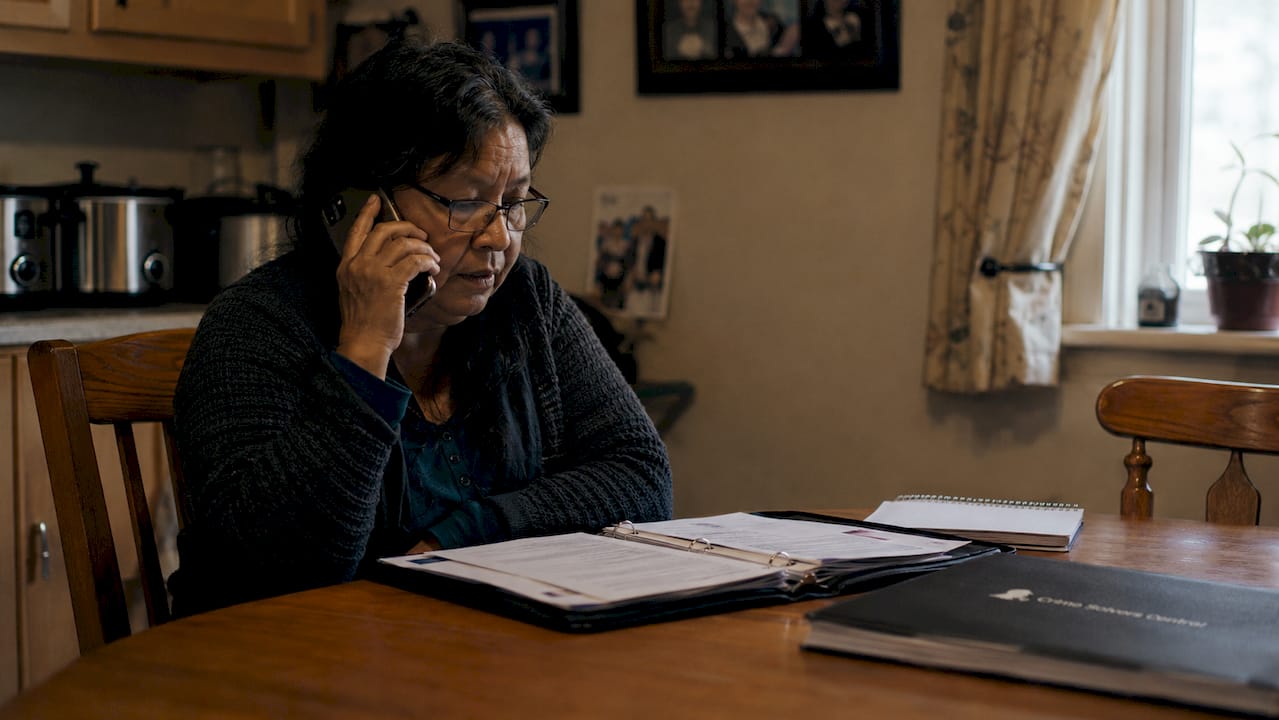
Indigenous missing persons are overlooked because of systemic failures across law enforcement, media, and data systems, not because of isolated mistakes. The FBI’s National Crime Information Center recorded just under 1,500 active federal cases involving missing Native Americans as of late 2025, yet experts confirm this figure represents a significant undercount. A 2016 snapshot alone showed over 5,700 missing Indigenous women and girls, with only a fraction entered into federal systems. Savanna’s Act and the Not Invisible Act were passed to address these gaps, but implementation remains slow and underfunded. Understanding why these cases fall through the cracks is the first step toward demanding real accountability.
Why indigenous missing persons are overlooked: jurisdictional chaos
Fragmented authority between tribal, local, state, and federal agencies is the largest operational barrier to investigating missing Indigenous persons cases. When a person goes missing on or near a reservation, the question of who holds jurisdiction is rarely simple. The Bureau of Indian Affairs, tribal police, county sheriffs, and the FBI can all claim partial authority, and none of them is required to coordinate automatically.
Indigenous families often face a confusing maze of agencies, unsure which office to call first. Cooperation between agencies is limited, and that confusion costs critical hours in the early stages of a disappearance. Tribes frequently lack the staffing or legal authority to compel outside agencies to act, leaving families to advocate for themselves during the worst moments of their lives.
The consequences of this fragmentation are concrete. Leads go cold while agencies debate responsibility. Evidence is not shared across jurisdictions. Families receive conflicting information from multiple offices. This is not a bureaucratic inconvenience. It is a structural failure that directly reduces the chance of finding a missing person alive.
Key barriers created by jurisdictional complexity include:
- No single agency owns the case from start to finish
- Tribal police often lack authority to investigate off-reservation disappearances
- Federal agencies require specific thresholds before opening investigations
- Inter-agency data sharing is voluntary, not mandatory
- Families must repeatedly re-explain the case to each new agency contact
Pro Tip: If you are advocating for a missing Indigenous person, document every agency contact in writing. Request a case number from each office and ask explicitly which agency holds primary jurisdiction. This paper trail becomes critical when pushing for inter-agency coordination.
How media bias silences overlooked indigenous cases
More than 95% of Indigenous missing persons cases studied received no national or international media coverage. That number reflects a pattern, not an accident. Media producers make editorial decisions about which stories are “newsworthy,” and research from the University of Nebraska-Omaha confirms that Indigenous victims are perceived as less newsworthy than white victims.
This bias has a direct effect on investigations. Public attention creates pressure on law enforcement. Tips come in when faces appear on television. Funding flows toward cases that generate community outrage. When Indigenous cases receive no coverage, none of those mechanisms activate. The case stays invisible, and the family carries the burden alone.
“Media coverage decisions reflect implicit bias that devalues Indigenous victims, limiting news exposure and public pressure on authorities. Families receive dismissive treatment from both law enforcement and media, shaped by the same systemic biases that make these cases disappear from public view.”
The table below illustrates the coverage gap and its downstream effects:
| Factor | Effect on Indigenous cases |
|---|---|
| Low perceived newsworthiness | Cases receive no national media pickup |
| Racial stereotyping in narratives | Stories frame victims as less sympathetic |
| No public pressure | Law enforcement faces fewer accountability demands |
| Reduced tip volume | Investigations stall without community leads |
| Funding follows attention | Resources go to high-profile cases instead |
Understanding how media incentives work helps explain why this gap persists even when journalists claim to be objective. Ratings, clicks, and advertiser preferences all shape which stories get told. Indigenous communities are not the audience most advertisers pay to reach, and that commercial reality shapes editorial choices in ways that are rarely stated out loud.

What data failures reveal about indigenous missing persons statistics
Misclassification of Indigenous victims as “White” or “Other” in law enforcement databases undermines visibility and resource allocation for missing cases. The National Crime Information Center (NCIC) and the National Missing and Unidentified Persons System (NamUs) both rely on data entered by local agencies. When those agencies record the wrong ethnicity, the case disappears from Indigenous-specific searches and reports.
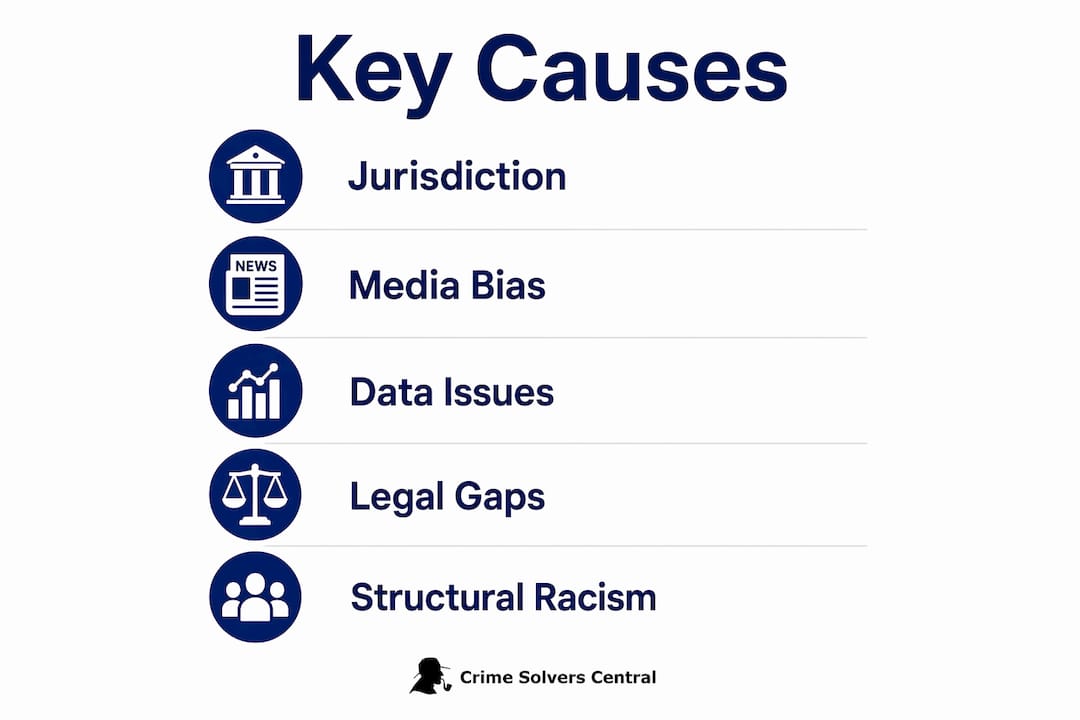
Medical examiners make similar errors. A body recovered near a reservation may be logged as “unknown” or misidentified by race, which means the case never connects to an open missing persons report. These are not rare edge cases. Families and advocates report them as a common obstacle requiring persistent correction.
The downstream impact of bad data is severe. Policymakers use NCIC and NamUs figures to allocate funding. If the numbers undercount Indigenous victims, the funding formulas follow the wrong data. Researchers studying missing persons data consistently find that data quality determines which communities receive attention and which do not.
The steps most likely to correct a misclassified record are:
- Request the full case file from the entering agency and identify the race or ethnicity field
- Provide tribal enrollment documentation or other official identity records to the agency
- Submit a formal written correction request, citing the specific database entry
- Follow up with the state’s missing persons clearinghouse to confirm the update
- Contact NamUs directly if the local agency does not act within 30 days
Pro Tip: Ask the investigating agency to confirm in writing what ethnicity code appears in both NCIC and NamUs for your family member’s case. Errors in one system do not automatically correct in the other. You may need to file separate correction requests with each database.
Do federal laws actually protect missing Indigenous people?
Savanna’s Act, signed in 2020, requires the Department of Justice to develop protocols for responding to missing and murdered Indigenous people cases. The Not Invisible Act, passed the same year, created an advisory committee to address violent crime in Indian Country. Both laws represent real legislative progress. Neither has been fully implemented.
Implementation of Savanna’s Act is slow and inconsistent. Effectiveness depends on local law enforcement adoption and funding, and current staffing levels at tribal agencies are inadequate to meet the law’s requirements. The law mandates better data collection and tribal-police protocols, but mandates without funding are instructions without tools.
Oklahoma officials discussing new initiatives in 2026 highlighted that inter-agency distrust remains a core obstacle. Overcoming jurisdictional turf wars requires formal partnership agreements, shared databases, and sustained political will. None of those things happen automatically because a law passes.
Advocates pushing for better legislative outcomes should focus on these pressure points:
- Demand that tribal law enforcement receive direct federal funding, not pass-through grants
- Push state legislatures to create their own Missing and Murdered Indigenous People task forces
- Monitor DOJ annual reporting requirements under Savanna’s Act for compliance gaps
- Support tribal authority expansions that allow Indigenous police to investigate off-reservation cases
- Engage congressional offices about the common delays that undermine case outcomes
Legislative success depends on funding local agencies and empowering tribal law enforcement with real authority to investigate within their communities. Without both, the laws remain symbolic.
Key Takeaways
Systemic neglect, not isolated failures, is the defining reason Indigenous missing persons cases go unsolved and unnoticed across every level of the justice system.
| Point | Details |
|---|---|
| Jurisdictional fragmentation | No single agency owns Indigenous missing cases, causing delays and missed leads. |
| Media bias is structural | Over 95% of Indigenous missing cases receive no national media coverage due to implicit bias. |
| Data errors erase victims | Misclassification in NCIC and NamUs hides cases from funding formulas and investigators. |
| Laws exist but underfunded | Savanna’s Act and the Not Invisible Act set standards that local agencies lack resources to meet. |
| Advocacy changes outcomes | Families who document contacts, correct records, and use Indigenous platforms improve case visibility. |
The uncomfortable truth about structural racism in these cases
Working with missing persons data over time makes one thing clear: the neglect of Indigenous cases is not accidental. Every layer of the system, from media editorial rooms to database entry fields to inter-agency protocols, reflects the same underlying devaluation of Indigenous lives. Calling it a “gap” or a “challenge” understates what is actually happening.
The families I have seen navigate this system carry a burden that no grieving family should face. They become their own investigators, their own publicists, and their own database auditors. They do this because the system was not built with them in mind, and it has not been rebuilt since.
What actually moves cases forward is culturally competent advocacy combined with community-led visibility. Indigenous-led platforms and social media campaigns have brought attention to cases that traditional media ignored for years. That is not a workaround. That is the primary channel for these families right now, and it deserves direct investment and support.
Sustained inter-agency collaboration requires more than a memorandum of understanding. It requires trust built over time, shared training, and accountability structures that outlast individual administrations. Advocates who understand the types of underserved victims in cold cases know that Indigenous communities face compounding disadvantages that demand compounding solutions. Incremental progress is not enough when families are still waiting for answers decades later.
— Crime
Crimesolverscentral: a resource for advocates and families
Crimesolverscentral maintains a national database of over 264,913 cases, organized by state and situation, making it one of the most accessible tools for advocates working on overlooked missing persons cases. Families searching for information on Indigenous missing persons can use the cold case database to locate case records, cross-reference details, and identify patterns across jurisdictions. The platform also supports community members who want to contribute through membership, fundraising, or health and safety initiatives. When law enforcement systems fail, having a centralized, searchable resource gives advocates a concrete place to start and a way to amplify cases that deserve public attention.
FAQ
Why are Indigenous missing persons cases undercounted?
Indigenous missing persons cases are undercounted because local agencies frequently misclassify victims’ ethnicity in federal databases like NCIC and NamUs. Inconsistent reporting protocols across tribal, state, and federal jurisdictions compound the problem, leaving many cases invisible in official statistics.
What is Savanna’s Act and does it work?
Savanna’s Act requires the Department of Justice to develop response protocols for missing and murdered Indigenous people. Implementation has been slow and inconsistent because the law depends on local law enforcement adoption and funding that many tribal agencies do not currently receive.
How does media coverage affect Indigenous missing persons investigations?
Media coverage generates public pressure, tips, and funding that accelerate investigations. Because more than 95% of Indigenous missing persons cases receive no national media coverage, these cases lose all three of those advantages, leaving investigations with fewer resources and less community engagement.
What can advocates do when agencies fail to act?
Advocates should document every agency contact in writing, request case numbers from each office, and formally correct any ethnicity misclassification in NCIC and NamUs. Pushing cases through Indigenous-led social media platforms and community networks has proven more effective than waiting for traditional media coverage.
Which federal agencies are responsible for Indigenous missing persons cases?
The FBI, Bureau of Indian Affairs, and tribal police all hold partial authority depending on where a disappearance occurs and the circumstances involved. The lack of a single lead agency is itself a core reason these cases stall, as families must navigate multiple offices with overlapping and sometimes conflicting jurisdictions.