

True Crime Discussion: Where to Join and How to Post

Join moderated, evidence-focused communities for true crime discussion: member forums like Websleuths, curated subreddits, Discord servers, Facebook groups, or Crimesolverscentral for structured, ethical participation. The fastest shortlist:
- Crimesolverscentral — Paid membership unlocks a national cold-case database containing a very large number of cases, member forums, evidence boards, and a flyer builder. Best for serious researchers and family advocates.
- Websleuths — Free, registration-required forum with strict sourcing rules and organized case categories. Best for archival, evidence-first threads.
- Reddit (r/TrueCrime, r/TrueCrimeDiscussion) — Free, open subreddits with high activity and episode-driven conversation. Best for casual to semi-investigative discussion.
- Facebook True Crime groups — Free groups tied to real social profiles, ranging from casual fan pages to tightly moderated support communities. Best for social-network-style engagement.
- Discord true crime communities — Free or invite-only servers with real-time chat, voice sessions, and topic channels. Best for live discussion and close-knit research groups.
Before joining anywhere, check for three things: a published code of conduct, named moderators, and a searchable case archive. Communities without those signals tend to drift toward speculation and harassment fast.
Pro Tip: Search the community for your case of interest before posting. If a thread already exists, reply there rather than starting a duplicate. Most forums penalize redundant posts and it signals you read the rules.
Key Takeaways
The strongest true crime communities combine strict moderation, searchable archives, and explicit victim-privacy rules.
| Point | Details |
|---|---|
| Choose moderated communities | Look for a published code of conduct, named moderators, and a victim-privacy policy before joining. |
| Cite official sources only | Use court records, police reports, and established journalism; label every unverified claim as speculation. |
| Never doxx living people | Posting personal contact information for suspects or witnesses causes real harm and violates most platform rules. |
| Use trigger warnings | Add a content warning at the top of any post involving graphic details, child victims, or sexual violence. |
| Crimesolverscentral for depth | Members access 264,913+ searchable cold cases, evidence boards, and moderated forums built for evidence-first research. |
Table of Contents
- How do you write a responsible true crime discussion post?
- Curiosity without harm: the ethics of long-term participation
- What Crimesolverscentral offers serious cold-case researchers
- Sources
- FAQ
How do you write a responsible true crime discussion post?
Reputable forums treat sourcing the way a newsroom does: evidence-based discussion is the norm, not the exception. Here is how to write a first post that earns respect and invites quality replies.
Step-by-step:
- Search first. Run the case name and victim’s name through the community’s search before posting.
- Read the rules. Every credible forum publishes a code of conduct. Read it fully, not just the headline rules.
- Write a brief introduction. One or two sentences about who you are and why this case matters to you.
- Summarize the case using verified facts only. Stick to official records, court documents, or established news reporting. Link to primary records and archival sources where possible.
- Label theory as theory. Write “I believe” or “speculation:” before any unverified claim. Never present a theory as fact.
- Add a trigger warning at the top if the content involves graphic details, child victims, or sexual violence.
- End with a specific question to focus replies and prevent the thread from sprawling.
Dos and don’ts:
- ✅ Cite official sources: court records, police reports, coroner findings, established journalism
- ✅ Name victims with dignity; avoid sensational language
- ✅ Correct your own errors publicly if new information surfaces
- ❌ Never post personal contact information for living people, including suspects
- ❌ Never accuse someone without documented evidence
- ❌ Avoid speculation about ongoing investigations involving living, named individuals
Responsible frameworks consistently stress avoiding doxxing, verifying leads against official sources, and prioritizing victim dignity as the baseline for any community participation.
Pro Tip: For U.S. cold cases, PACER (federal court records), state court portals, and FOIA-released documents are citable primary sources. Screenshot and archive them before linking, since government pages move.
Curiosity without harm: the ethics of long-term participation
Websleuthing can genuinely help investigations, but the same crowdsourced energy that surfaces a useful lead can also cause real offline harm through digital vigilantism when a community lacks guardrails. The difference almost always comes down to moderation quality and the culture a platform builds over time.
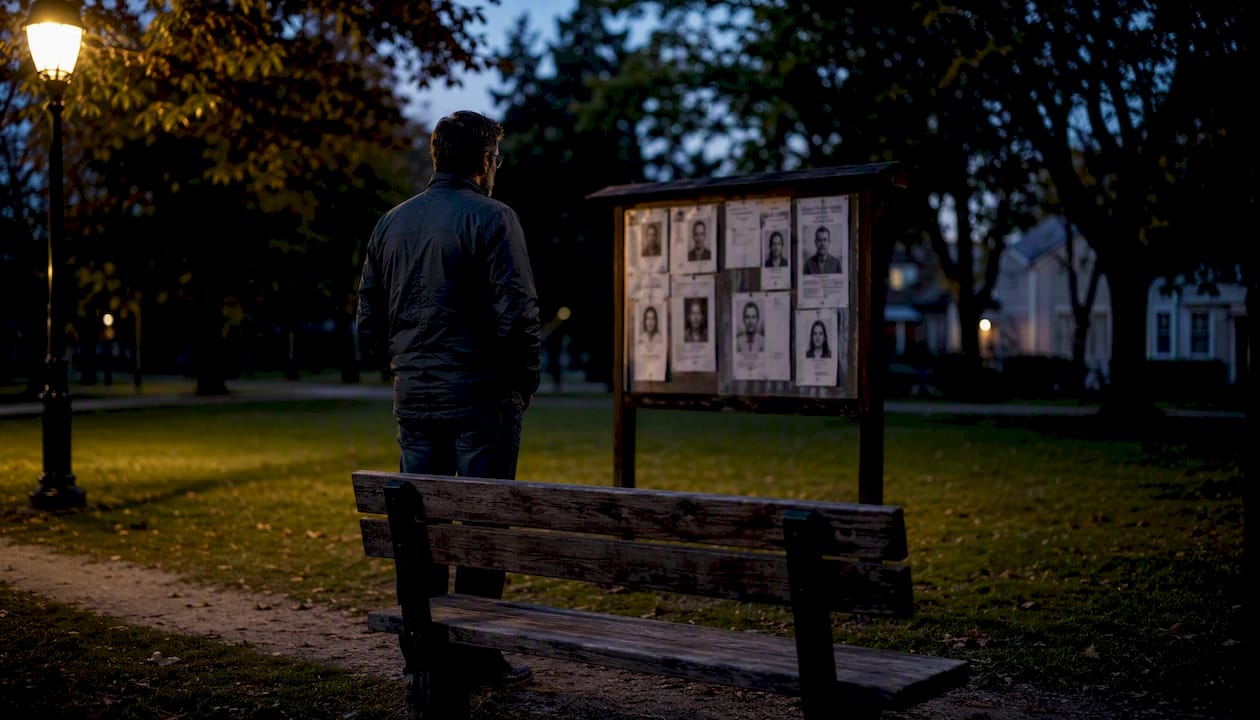
A community worth staying in has three visible ethics markers: a published code of conduct that explicitly covers victim privacy, moderators who post transparently about why content is removed, and a stated policy against naming unverified suspects. Forums that earn law-enforcement respect go further, requiring members to cite official documents and removing unverified claims with a public explanation.
Victim dignity is not a courtesy. It is the structural foundation that separates a productive ethical cold-case community from one that retraumatizes families and poisons investigations. If a community’s culture treats victims as entertainment props, leave.
What Crimesolverscentral offers serious cold-case researchers
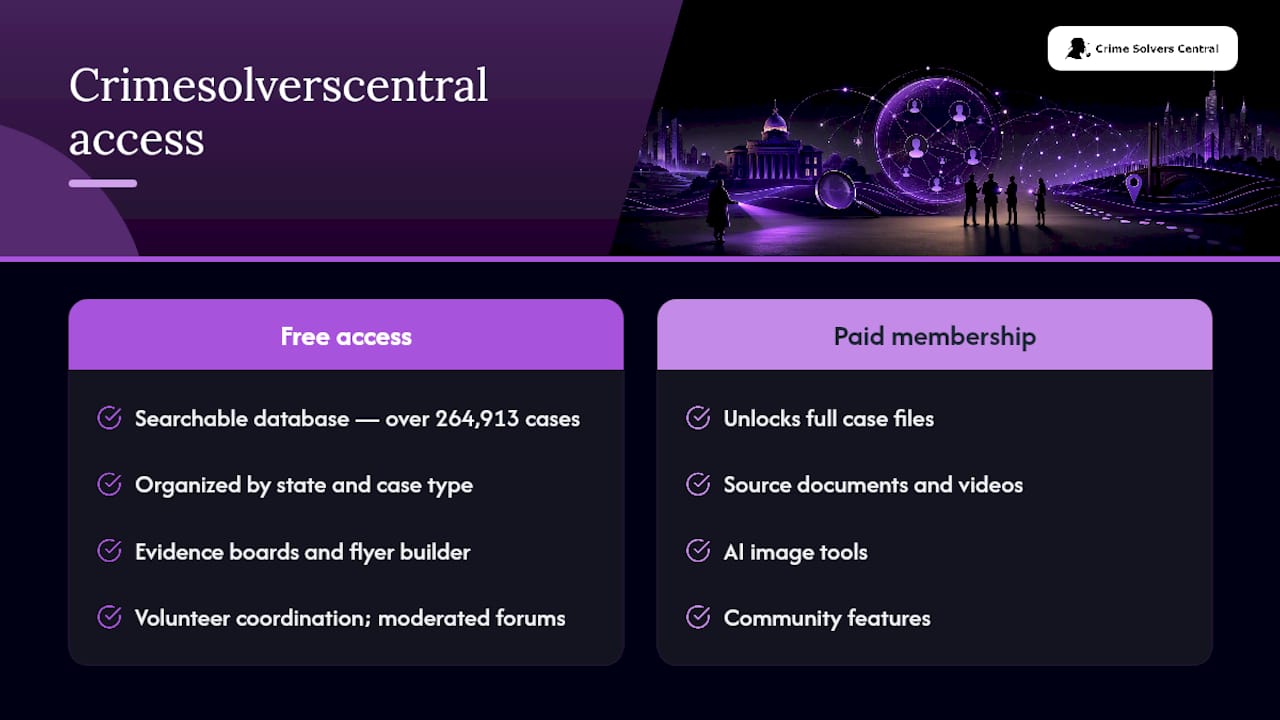
Most free forums give you a thread and a username. Crimesolverscentral gives you a searchable database of over 264,913 cold cases organized by state and case type, plus the member tools to do something with what you find: evidence boards, a flyer builder, volunteer coordination, and moderated forums where sourcing is enforced, not optional.
Paid membership unlocks full case files, source documents, videos, and AI image tools alongside the community features. For family members of missing persons, the cold-case database is the practical starting point: cases are categorized by situation, making it faster to locate a specific file than searching a general forum thread.
Sign up, read the code of conduct, post a brief introduction, and search your case before starting a thread. That three-step onboarding takes under ten minutes and sets you up to contribute rather than repeat what the community already knows.
Sources
- Newshub
- Online Detectives to Offline Harm: Does Websleuthing Cross the Line? – Inquiry + Society
- Websleuths The Ultimate Guide to Online Crime Investigation
- Apple Podcasts charts — True Crime
Free communities cover most discussion needs. Paid membership, as at Crimesolverscentral, typically unlocks full case files, advanced search, moderated forums, and community tools that free platforms do not offer.
FAQ
What makes a true crime discussion community trustworthy?
A trustworthy community publishes a code of conduct, names its moderators, enforces victim-privacy rules, and requires sourced claims. Communities that prioritize victim dignity and verification over speculation are the ones worth joining.
What are the top true crime podcasts right now?
The Apple Podcasts True Crime charts update weekly and show current top shows and trending episodes. High-chart shows typically have active companion communities on Reddit or Discord.
Is Crimesolverscentral free to use?
Basic case summaries are publicly accessible. Full case files, member forums, evidence boards, and community tools require a paid monthly membership subscription.
How do I avoid causing harm when discussing cases online?
Never post personal contact information for living people, label speculation clearly, and stick to verified sources. These three practices, outlined in responsible community sleuthing guidelines, cover the majority of harm-causing behaviors in online true crime spaces.