

First 1–4 Hours: Community Search Playbook for Families
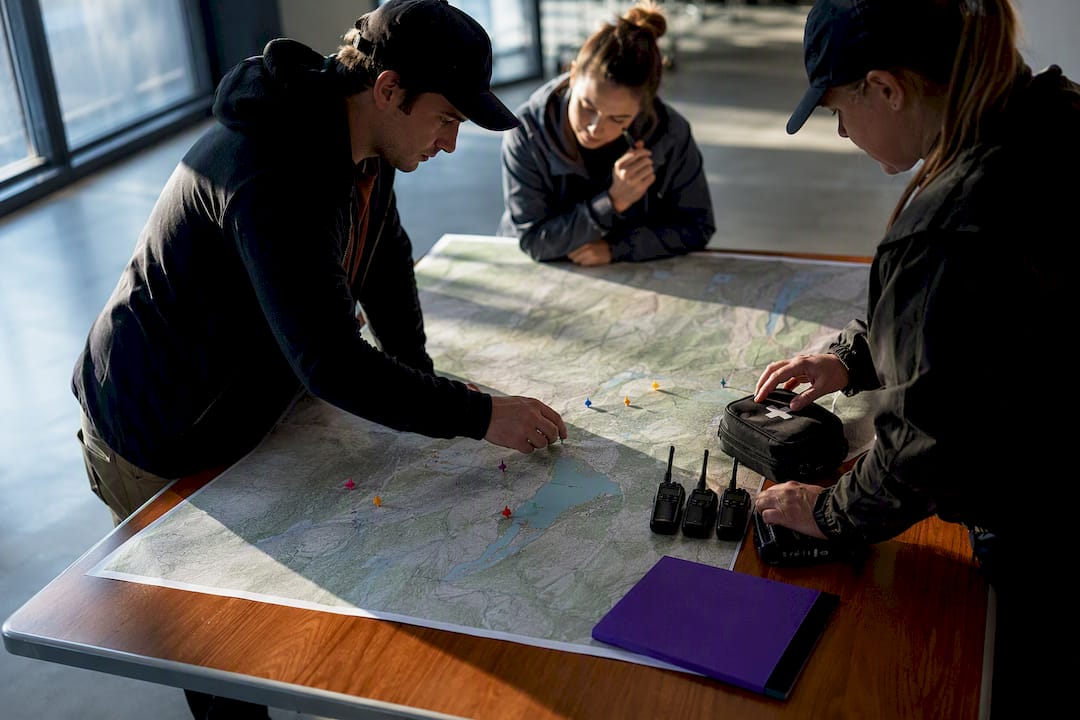
Contact law enforcement first and get a case number before you do anything else, then set up one command center and one volunteer coordinator. Mobilize screened teams into small mapped zones, and route every tip, sighting, and piece of evidence straight back to that command center for police. Skip any step and you risk contaminating evidence, duplicating effort, or putting untrained volunteers in danger.
TL;DR:
- Police can and should enter missing persons cases into NCIC and NamUs immediately, enabling faster resource deployment and case progression.
- Coordinators must establish a clear command center, assign screened volunteers to specific roles, and use mapping tools to ensure organized and safe search efforts.
- Evidence found by volunteers must be documented with photos and GPS coordinates before police are notified; volunteers should not move or handle any items.
- Digital mapping and GPS exports are vital to avoid redundant searches, with volunteers required to submit route data before concluding their shifts.
- Organized documentation, including tip logs and GPS-marked grids, is crucial for case continuity and future investigation, with community platforms like Crimesolverscentral providing essential case management tools.
Table of Contents
- First 1 to 4 Hours: The Checklist to Organize Community Search Efforts
- How Do You Coordinate a Search With Police?
- Setting Up a Command Center and Managing Volunteers
- What Search Patterns and Mapping Tools Actually Work?
- Communications, Tracking, and Safety Gear
- What Do You Do If a Volunteer Finds Evidence?
- Debriefing and Keeping the Search Organized Over Time
- What Community-Led Searches Get Right (and Wrong)
- Where Crimesolverscentral Fits Into Your Search Effort
- Sources
- FAQ
First 1 to 4 Hours: The Checklist to Organize Community Search Efforts
There’s no waiting period to report someone missing, despite what a lot of people still believe. Police can and should enter a case into NCIC and NamUs immediately, and the sooner that happens, the sooner official resources start working the case alongside your volunteers.
Here’s the sequence for the first few hours:
- Call police and get the case number. Confirm the report is filed and ask whether the case has been entered into NCIC and, if applicable, NamUs.
- Gather core details fast: recent photos, exact clothing description, last known location, medical needs or medications, vehicle information, and social media accounts.
- Pick a command center location (a home, church, or community building near the place last seen) and name one volunteer coordinator to run intake.
- Build a simple sign-in sheet with check-in and check-out times, and set the ground rules: no minors on search teams, buddy system only, basic protective gear, and a strict “do not touch” policy on anything unusual found in the field.
Getting this right early prevents the two most common failures in community searches: untracked volunteers wandering off alone, and physical evidence getting kicked, moved, or picked up before police ever see it.
How Do You Coordinate a Search With Police?
Coordination isn’t a courtesy. It’s what keeps volunteers from accidentally destroying evidence, duplicating ground someone already searched, or walking into a scene they shouldn’t. The COPS guide on missing persons volunteer management makes clear that search coordination and evidence preservation go hand in hand, not two separate concerns.
When you reach the assigned investigator or public information officer, ask for:
- The official case number and current NCIC/NamUs entry status
- Any maps or grids police have already searched, so your teams don’t retrace them
- A direct contact for reporting tips and sightings in real time
- Guidance on whether the case warrants K9 teams, dive teams, or drone pilots, and how to request them
Pro Tip: Keep a single logbook, digital or paper, where every tip gets a timestamp and a name attached before it’s forwarded to police. A tip that arrives secondhand through three volunteers loses credibility fast.
Setting Up a Command Center and Managing Volunteers
Your command center needs to function like a small operations office, not a gathering spot. Pick a location with parking, cell signal, a printer, and a private area for handling sensitive family information away from the general volunteer crowd.
Volunteer intake should follow a consistent flow:
- Pre-register interested volunteers through a Google Form or Facebook Event so you know rough headcounts in advance.
- Run on-site sign-in with ID check, a brief skills questionnaire, and a liability waiver.
- Assign a role and a shift window, not an open-ended commitment.
- Brief every team before they leave and debrief them when they return.
Core roles to fill on day one:
- Volunteer coordinator who owns intake, scheduling, and screening
- Team leaders who supervise each search group in the field
- Map holder who tracks which grids are assigned and completed
- Phone bank staff who log incoming tips
- Public information officer who handles media and social posts
- Logistics lead who manages supplies and transportation
The BJA/VIPS guidance on involving volunteers in missing person cases recommends pairing every walk-up volunteer with someone already screened and briefed rather than sending strangers out solo. That single habit catches most safety problems before they start.
What Search Patterns and Mapping Tools Actually Work?
Start at the place last seen (PLS) and work outward in prioritized rings rather than scattering teams randomly across town. That’s the core principle behind most search-and-rescue doctrine, and it’s echoed throughout the KlaasKids search and rescue community resource guide.
Match your search pattern to the terrain and team size:
- Parallel line search for open fields with several people spaced evenly apart
- Creeping line search for dense brush where visibility is limited
- Square search for confined areas like a backyard or small lot
- Circular search radiating outward from the PLS when the point of disappearance is well defined
Print large physical maps and divide the area into numbered grid tiles so no team searches blind. Color code completed grids by day, yellow for day one, orange for day two, and so on, so a multi-day operation doesn’t collapse into confusion about what’s already been covered.
For digital mapping, tools like CalTopo and SarTopo let coordinators build shareable grid overlays and assign zones before teams ever leave the command center. Volunteers can track their own routes with GPS apps such as AllTrails or Strava and export the GPX file at the end of a shift, which the map holder then layers onto the master map in Google My Maps or ArcGIS Field Maps.
Pro Tip: Require every team to submit their GPX track before they’re released for the day, even if they found nothing. A “clean” grid is just as valuable as a hot lead, because it tells the next shift where not to waste time.
Communications, Tracking, and Safety Gear
Good field communication is layered, not single-channel. Use a group app like WhatsApp or Telegram for logistics and scheduling, and put two-way radios in the hands of actual field teams since cell coverage often fails in wooded or rural search areas.
A few non-negotiables for the field:
- Set a fixed check-in cadence, every 30 to 60 minutes, so a missed call triggers action fast
- Require GPX route exports after every shift, no exceptions
- Route any drone or K9 request through police or a licensed operator, since FAA rules and jurisdictional authority both apply
- Equip every team with basic first aid, water, sturdy footwear, and a clear evacuation plan if weather or terrain turns dangerous
Crowdsourced tools have a place too. Open-source intelligence workflows like Trace Labs’ Search Party model, along with neighborhood doorbell camera footage, can surface leads fast. But those leads still need to go through the command center for triage before they reach investigators, not straight onto social media.
What Do You Do If a Volunteer Finds Evidence?
Never touch or move anything a volunteer finds in the field. Photograph it, mark the GPS coordinates, and call the command center immediately, which then notifies police.

The COPS guide on missing persons volunteer management is direct on this point: unmanaged search volunteers can consume hundreds of hours of public safety resources when a discovery isn’t handled correctly the first time.
A few rules that protect both the investigation and the family:
- Log every find with timestamp, GPS coordinates, photo reference, and the finder’s contact information
- Never post unverified details, photos, or theories about a finding on social media
- Route any public statement through the family or the police PIO, not through individual volunteers
- Keep minors off field teams entirely, and handle any distressing discovery with discretion toward the family’s privacy
Debriefing and Keeping the Search Organized Over Time
Every shift should end with a short debrief: coverage completed, hours logged, sightings reported, GPS-tagged photos, and any safety incidents.
Centralize every tip in one spreadsheet or digital evidence board rather than scattered texts and voicemails, with clear rules for what gets forwarded to investigators immediately versus what waits for review. To sustain volunteer energy past the first weekend, keep shifts scheduled rather than open-ended, post only family-approved updates, and connect relatives to victim services resources early. When active field searching winds down, preserve the NamUs entry, archived maps, and GPX tracks. That record is often what moves a case forward months or years later.
What Community-Led Searches Get Right (and Wrong)
Most guides treat community searches as a one-time event: gather volunteers, walk some fields, go home. That framing misses the real value, which is the documentation trail a well-run search leaves behind for investigators to use later.
A large cold case database shows this pattern repeatedly. The searches that actually help law enforcement aren’t the biggest ones. They’re the ones with a paper trail: a logged tip sheet, GPS-marked grids, timestamped photos, and a volunteer roster that police can call back to if a lead resurfaces two years later. A flyer builder or a forum post can extend a search’s reach, but only if the information behind it is accurate and gets back to investigators, not just shared for visibility. Organized volunteer effort works because it generates searchable, verifiable tips. Chaotic effort just generates noise.
— Crime
Where Crimesolverscentral Fits Into Your Search Effort
Crimesolverscentral gives family members and community organizers something most search efforts lack on day one: a place to consolidate case information after the search teams go home. The searchable case database, organized by state and case type, sits alongside a flyer builder, volunteer coordination tools, and member forums built for exactly this kind of documentation work. A free membership gets you access to public case summaries; a paid membership unlocks full case files, digital evidence boards, and deeper community features for ongoing investigations. If your search effort is producing tips, photos, and leads that need a permanent, organized home investigators and future volunteers can revisit, start building your case profile on Crimesolverscentral today.
Sources
- COPS guide on missing persons volunteer management
- BJA / VIPS guidance on involving volunteers in missing person cases
- National Missing and Unidentified Persons System (NamUs)
- KlaasKids search and rescue community resource guide
FAQ
Do I Have to Wait 24 Hours to Report Someone Missing?
No. Law enforcement can and should take a missing person report immediately, with no mandatory waiting period, and enter the case into NCIC right away.
Who Should Run a Community Search Command Center?
A designated volunteer coordinator should run intake, screening, and scheduling, while team leaders supervise field groups and a map holder tracks completed grids.
What Should I Do if I Find Something During a Search?
Do not touch or move it. Photograph the item, mark its GPS location, and report it to your command center immediately so police can respond.
What Mapping Tools Do Search Organizers Use?
CalTopo and SarTopo are widely used for building shareable grid maps, while volunteers often track routes with GPS apps like AllTrails or Strava and export the data afterward.
Can Crimesolverscentral Help Organize a Community Search?
Crimesolverscentral offers a searchable cold case database, a flyer builder, and volunteer coordination tools that help organizers document and share information with investigators after search operations.