

Missing Persons Search: 3 Federal Resources and What Families Can Share

If someone you know is missing, call local police now and file a report, then search the National Missing and Unidentified Persons System and, for a missing child, the National Center for Missing & Exploited Children and the FBI’s public listings. Before you search, gather recent photos, a physical description, medical details, and the last known contacts or social media activity.
TL;DR:
- NamUs covers all ages and unidentified remains, NCMEC handles children and AMBER Alerts, while FBI listings generally involve kidnappings or interstate cases.
- Search nicknames, maiden names, and common misspellings, widen date and location filters first, then narrow results and check state pages and social media.
- Most states do not require a waiting period to report a missing adult; ask for a case number and confirmation of NCIC entry.
- Unshared toothbrushes or hairbrushes can provide DNA reference samples; let investigators collect them, because family records enter CODIS, NCIC, or NamUs only through official submission.
Table of Contents
- Authoritative Databases to Search and What Each Contains
- Step-by-Step Search: How to Use the Databases Effectively
- How to Report a Missing Person and Work With Law Enforcement
- Records, Evidence, and Forensic Resources Families Can Provide
- How Crime Solvers Central Complements National Databases
- Expectations, Timelines, and Why Persistence Matters
- How Crime Solvers Central Can Help and How to Get Started
- FAQ
- Sources
- Curated Authoritative Links for Missing Persons Searches
Authoritative Databases to Search and What Each Contains
Three federal-level resources cover most missing-person cases in different ways, and knowing which one fits your situation saves time.
NamUs is the national clearinghouse for missing, unidentified, and unclaimed persons. It is free to use, lets anyone search public case records, and offers registered access for families who want to submit information directly and request investigative support. The National Center for Missing & Exploited Children maintains missing-children posters and coordinates AMBER Alert distribution, and it accepts reports from parents, guardians, and law enforcement. The FBI’s Kidnappings & Missing Persons page lists cases that rise to federal involvement, usually kidnappings or cases crossing state lines, and includes a tip submission channel.
State and local police departments also run their own missing-person pages or clearinghouses, which often post cases faster than national systems and reflect the jurisdiction actively investigating the disappearance.
- NamUs covers all ages and includes unidentified remains, making it the broadest search tool available to families.
- NCMEC focuses specifically on children and AMBER Alert cases, with posters searchable by name, age, and location.
- FBI listings cover federal cases, typically kidnappings or those with interstate elements.
- State and local registries often post new cases first and reflect the agency actually running the investigation.
Each database serves a distinct purpose, and a thorough search usually means checking more than one.
Step-by-Step Search: How to Use the Databases Effectively
Searching these systems well takes more than typing a name into a search bar.
- Start with NamUs public search, then consider registering for an account, which allows you to submit tips, request case updates, and work directly with NamUs regional staff.
- Search multiple name variations, including nicknames, maiden names, and common misspellings, since database entries depend on how the report was originally filed.
- Use date-range and location filters rather than exact dates alone, since the last confirmed sighting and the report date often differ.
- Add descriptive filters such as tattoos, scars, or dental work, which narrow results faster than physical description alone.
- Check NCMEC’s poster search and AMBER Alert archives if a child is involved, since these systems update rapidly during active alerts.
- Cross-reference any hits against FBI listings and your state’s missing-person page, and check the person’s social media accounts for their last activity or location tags.
Pro Tip: Search NamUs using a wide date range first, then narrow it once you see how many records match your initial filters.
Treat every database as one piece of a larger picture. A name that returns no results in NamUs might still appear on a state registry or in an FBI listing, so advanced search tactics across multiple systems matter more than relying on a single source.
How to Report a Missing Person and Work With Law Enforcement
Filing a report with local police should happen immediately. Most states have dropped mandatory waiting periods for reporting a missing adult, so you do not need to wait 24 hours or any set amount of time before filing.
- Bring recent photos, a detailed physical description, and any medical conditions or medications the person needs regularly.
- Provide dental and medical records if available, along with a list of last known contacts, routines, and frequented locations.
- Ask the investigating officer to enter the case into the National Crime Information Center (NCIC) and to coordinate with NamUs when the case fits its scope.
- Request a case number and the investigator’s direct contact information so you can follow up without starting over each time.
If days pass with no updates, ask specifically what steps have been taken and whether the case has been logged in NCIC and NamUs. Persistence in requesting updates, rather than passivity, tends to keep a case active on an investigator’s list.
Records, Evidence, and Forensic Resources Families Can Provide
Forensic matching depends heavily on what families can supply early in a case.
- Recent photographs from multiple angles, including any showing tattoos, scars, or distinguishing marks.
- Dental and medical records, which forensic examiners use to compare against unidentified remains.
- An unshared toothbrush or hairbrush, preferred for DNA reference samples because they reduce contamination risk compared to shared items.
- Any documents or items investigators request for official collection, ideally gathered at a NamUs-sponsored event or through law enforcement directly.
NamUs periodically hosts Missing Persons Days, community events where families can submit DNA samples and records under proper forensic protocols. CODIS, NCIC, and NamUs all rely on law-enforcement-submitted data to cross-match cases, meaning family-provided records only become part of the system once an officer or investigator formally enters them. Keep original documents and items safe, and let investigators handle official collection rather than submitting samples independently.
How Crime Solvers Central Complements National Databases
Official databases confirm whether a case is logged and searchable, but they do not organize volunteers, build flyers, or centralize tips the way a dedicated case catalog can. We maintain a national cold case database covering missing persons and unsolved homicides, sorted by state and case type, so families and researchers can find related cases without starting from scratch.
- Members can build digital evidence boards to organize photos, timelines, and documents in one place.
- Community forums let families share vetted tips and connect with others working similar cases.
- Flyer builder tools and volunteer coordination features help organize outreach beyond what a single family can manage alone.
Pro Tip: Use a centralized case catalog alongside NamUs so volunteer tips and official records stay organized in the same place.
Expectations, Timelines, and Why Persistence Matters
AMBER Alert cases often resolve within hours or days once activated, reflecting the urgency built into that system. Long-term cold cases work differently: they usually require sustained attention, repeated cross-referencing across jurisdictions, and new forensic matches over months or years. Databases like NamUs increase the odds of resolution, but only when paired with family-supplied records and consistent follow-up. Realistic persistence, not a single search, tends to move these cases forward.
— Crime
How Crime Solvers Central Can Help and How to Get Started
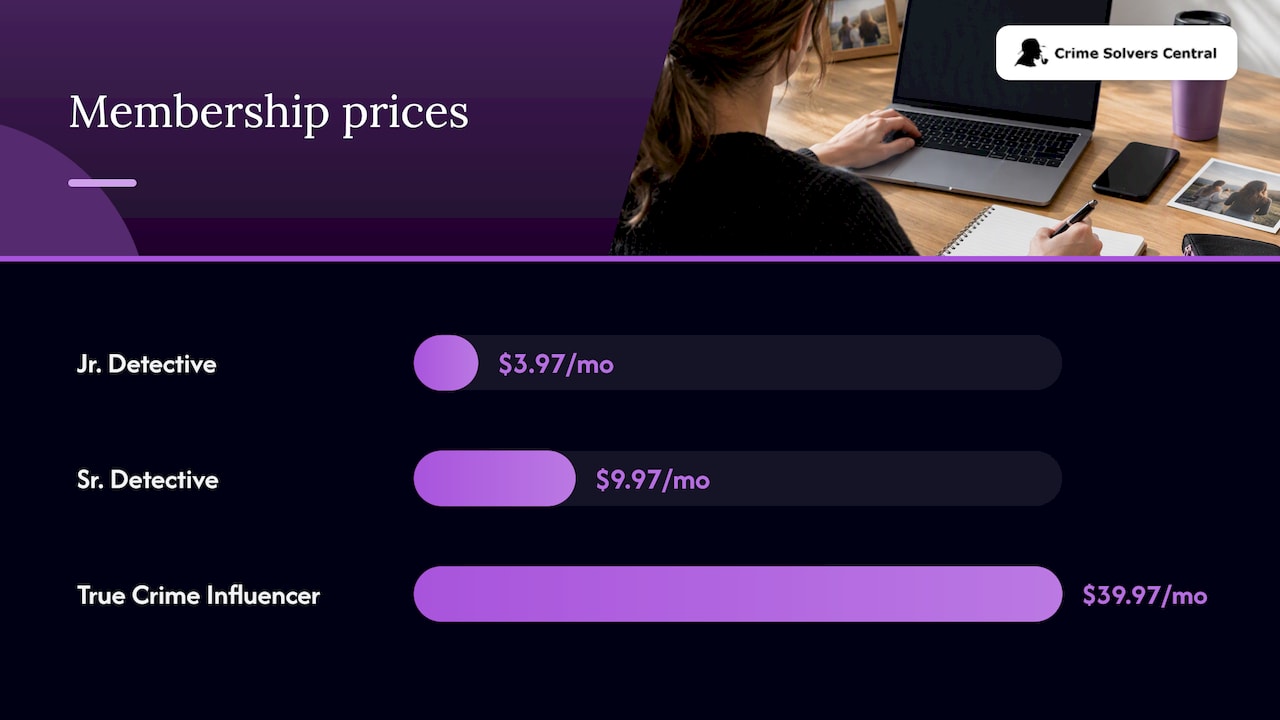
Searching official databases is the right first move, but organizing everything that comes after, flyers, volunteer tips, case research, is where things often stall. Our membership tiers unlock tools built for exactly that: Jr. Detective access starts at $3.97 per month, Sr. Detective adds deeper case file access at $9.97 per month, and True Crime Influencer membership at $39.97 per month unlocks full community and research tools, with annual options available on the same page.
Members get full case documents, forum access, and the digital tools to coordinate outreach alongside official channels rather than instead of them. If you are trying to keep a case visible while investigators work it, visit our pricing page or browse the cold case database to see how a membership fits your search.
FAQ
Who is currently missing right now?
Active missing-person cases are listed in real time on NamUs and on the FBI’s Kidnappings & Missing Persons page, both searchable by name, location, and case details. State and local police department pages often show the most recently reported cases in a specific area.
Have Lilly and Jack Sullivan been found?
We do not track the status of individual ongoing cases in this guide. For the most current information on a specific case, check NamUs or contact the investigating law enforcement agency directly, since they hold the latest verified updates.
Is there a website for missing people?
Yes, several official sites exist: NamUs covers missing, unidentified, and unclaimed persons nationally, while the National Center for Missing & Exploited Children focuses on children and AMBER Alerts. The FBI also maintains public listings for kidnapping and missing-person cases that meet federal criteria.
Can you give me a list of people who have disappeared?
NamUs and the FBI’s public listings both offer searchable case records rather than a single downloadable list, since cases update constantly and vary by state. Our own cold case database organizes missing-person and unsolved homicide cases by state for readers who want to browse by region.
How do I start a missing persons search for a loved one?
File a report with local police immediately, since most states have no waiting period for reporting a missing adult. Then search NamUs, NCMEC, and FBI listings while gathering photos, medical records, and recent contacts to share with investigators.
Sources
- The National Missing and Unidentified Persons System (NamUs)
- AMBER Alert program overview (OJP)
- Reporting & Investigating Missing Persons: A Background Paper
- FBI — Kidnappings & Missing Persons
Curated Authoritative Links for Missing Persons Searches
- NamUs: the national public search tool and registration portal for families, with free investigative support and DNA collection guidance.
- AMBER Alert program overview: background on how AMBER Alerts activate and resolve, with national recovery statistics.
- Reporting & Investigating Missing Persons background paper: federal documentation on how NCIC, CODIS, and NamUs work together.
- FBI Kidnappings & Missing Persons: public federal case listings and a channel for submitting tips.