

Missing Person Alerts: Types, Criteria and What to Do
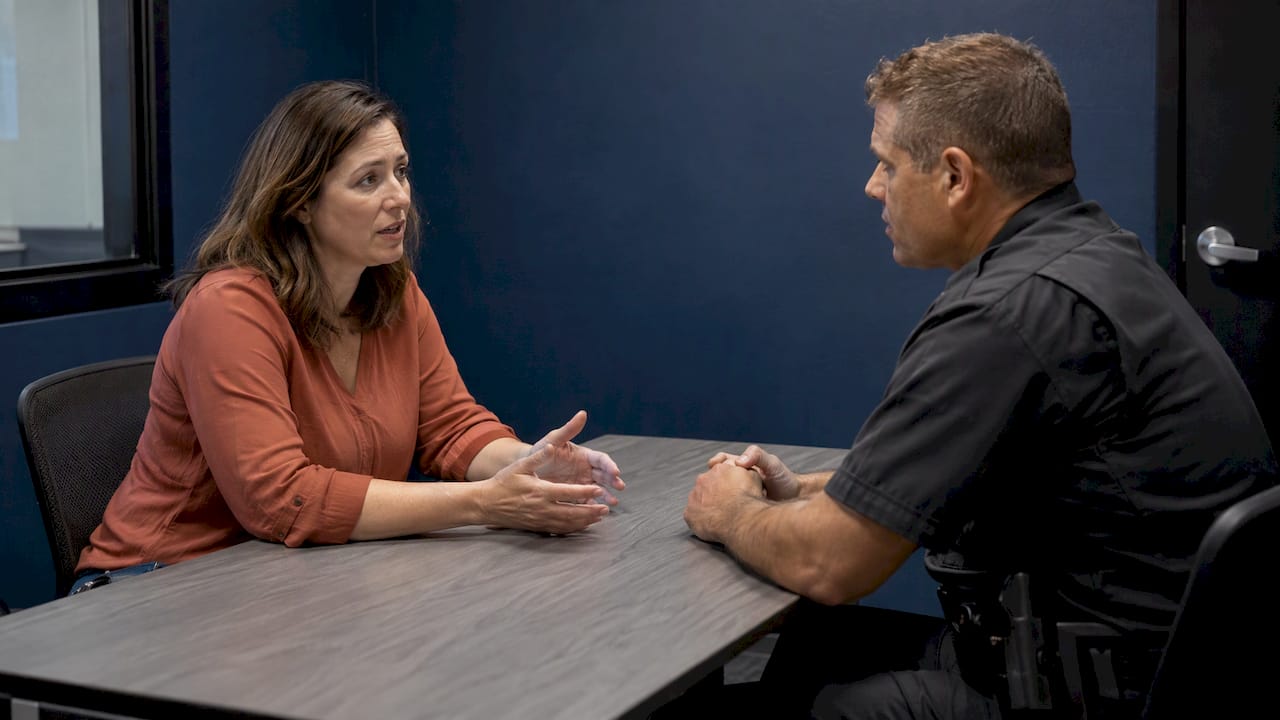
A missing person alert is a public notice, sent through phones, highway signs, broadcasters and websites, that asks everyone nearby to look for a specific person. Only law enforcement can request one, and only when the case meets that state’s criteria. If someone you love is missing, do not wait for an alert: call local law enforcement now and report it. The alert comes from that report, never the other way around.
This guide explains the main alert types used in the United States, who qualifies for each, why many missing people never trigger one, and what families, volunteers and ordinary readers can do in the meantime.
TL;DR
- Report a missing person to local law enforcement immediately. Alabama’s state agency states there is no waiting period, and families should not hold off for an alert.
- Only law enforcement can request an alert, and each type has its own criteria. AMBER Alerts are for abducted children in danger; other alerts cover endangered adults, seniors or officers.
- No alert does not mean no search. Alerts are deliberately selective, and most missing person cases are worked without one.
- Ask the agency to confirm the case has been entered into national systems, and register the case with NamUs.
- Volunteers help most by working through law enforcement, passing along tips and avoiding anything that touches evidence.
Table of Contents
- What a missing person alert is, and what it is not
- The main types of missing person alerts
- Who decides, and what police need to issue one
- Why there is often no alert, and why that is not the end
- Steps to take in the first hours
- How to receive, verify and share alerts
- If you want to help without getting in the way
- Our perspective
- Keeping a case visible after the alert window closes
- Where Crime Solvers Central fits
- FAQ
- Sources
What a missing person alert is, and what it is not
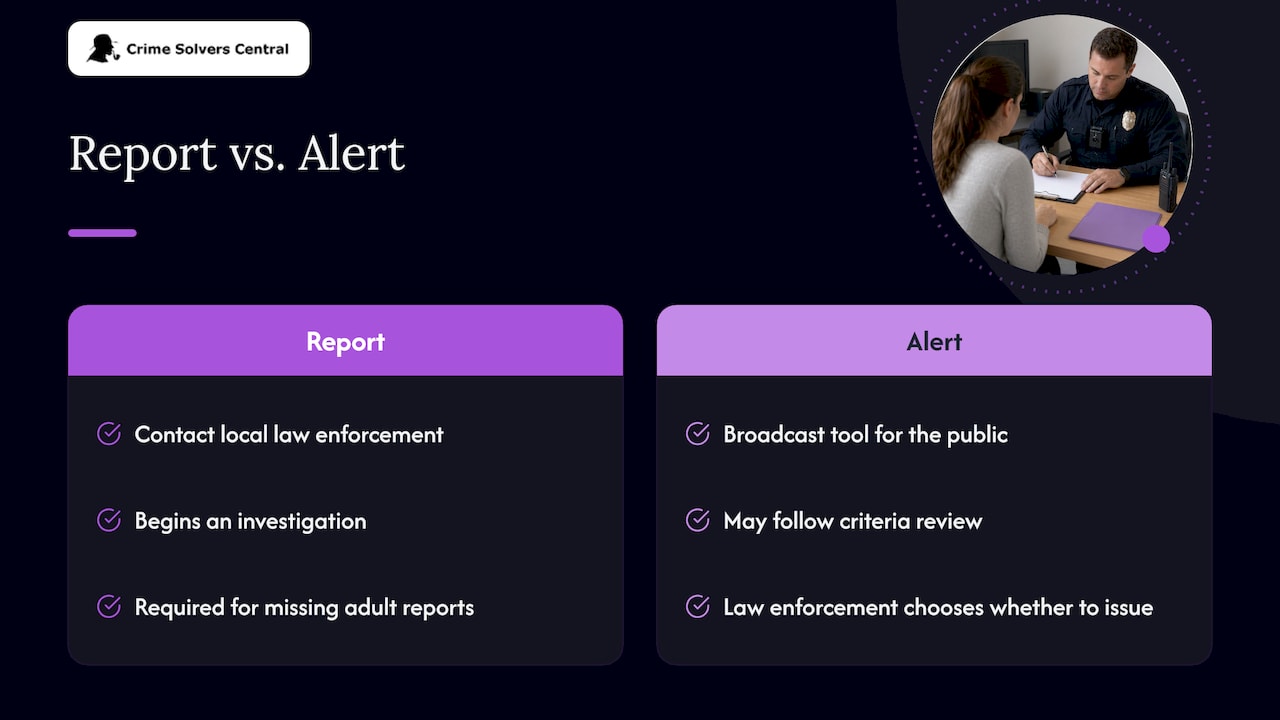
People often use “report” and “alert” as if they were the same step. They are two separate processes. A report is what you make to the police so an investigation can begin. An alert is a broadcast tool that law enforcement may choose to use once the investigation shows the case fits set criteria.
The federal Bureau of Justice Assistance makes the same distinction for adults: reporting and alert processes operate independently, so you contact local law enforcement to report the person missing and to find out whether the circumstances meet the adult alert criteria in that jurisdiction. Reporting a missing adult requires law-enforcement involvement and an investigation.
That is why a search for “missing person alerts” often leads to two very different kinds of pages. One kind is a live feed of current alerts from a police department, highway patrol or state clearinghouse. The other is an explainer about how the system works. If you are looking for a live alert, go to your state’s official clearinghouse or the local police department. If you are trying to understand why your family member has no alert, read on.
The main types of missing person alerts
The names and rules differ by state, but most systems are built from the same few pieces.
| Alert type | Who it is for | Typical trigger |
|---|---|---|
| AMBER Alert | Children under 18 | Believed abducted and in immediate danger of serious bodily harm or death |
| Endangered Missing Person Alert or Advisory | Children or adults who do not meet AMBER criteria | Medical needs, disability or suspicious circumstances |
| Ashanti Alert | Missing adults (national notification network) | Adult reported missing and the case meets state, territorial or Tribal adult-alert criteria |
| Blue Alert | Law enforcement officers | Officer missing, injured or killed in the line of duty and the suspect is a serious public threat |
| Silver and Purple Alerts | Older adults or adults with cognitive conditions, in states that use them | Defined by each state |
AMBER Alerts
The AMBER Alert program is the best known. According to the program’s official FAQ, AMBER Alerts are strictly for children under 18 who are believed to be abducted and in immediate danger of serious bodily harm or death. Law enforcement, not the family, decides whether a child has been abducted and whether the case meets the criteria, then notifies broadcasters and state transportation officials.
The same page is direct about why the bar is high: the alert is reserved for the most serious cases, because overuse could lead the public to tune alerts out.
Endangered missing person alerts
Many missing people are not abducted children, and that gap is where endangered missing person alerts come in. A Department of Justice guide describes these alerts and advisories as designed for people who do not meet AMBER criteria but are still in danger, for example because of medical needs, a disability or suspicious circumstances.
States name and run these differently. Pennsylvania State Police, for instance, operate a Missing Endangered Person Advisory system for people at special risk of harm, while North Carolina and Texas regions run their own endangered and missing alert programs. Check your own state’s name for it; the criteria are usually published on the state police or state missing persons clearinghouse website.
Ashanti Alerts for adults
The Ashanti Alert Act created a national notification network for missing adults. Once a state, territory or Tribe implements it, an Ashanti Alert can share information about adults reported missing with law enforcement, media and the public. Participation is by jurisdiction, so what exists where you live depends on local implementation.
Blue Alerts
Blue Alerts are a different animal. The Alabama Law Enforcement Agency explains that they are issued when an officer is missing, injured or killed in the line of duty and the suspect poses a serious threat to the public. They matter to readers of this topic mostly because they share the same phone and highway-sign channels as the alerts for missing people.
Why the list differs by state
Alabama alone lists four missing-person-related alert types, AMBER, Emergency Missing Child, Missing and Endangered Person, and Blue, and each has separate criteria. Florida, North Carolina and other states publish their own menus. Never assume the rules you read about in one state apply in another.
Who decides, and what police need to issue one
You cannot request an alert yourself, and neither can a news outlet or an advocacy group. Idaho State Police explains that the investigating local or Tribal law-enforcement agency determines whether a case meets alert criteria and requests the alert. The state clearinghouse then distributes it but does not investigate the case.
Louisiana State Police describe the same gatekeeping. Only law-enforcement agencies may request an alert, after local investigators assess the circumstances, the level of risk and whether enough descriptive information exists to help locate the person.
That last point is the one families can influence. An alert is only as good as what it can say to the public. Police will ask for details, and the more precise you are, the more likely an alert is usable.
What to have ready
NBC’s guidance on filing a report advises giving police a current photograph, a description, identifying details, vehicle information and the last known location. In practice, gather these before you call, or while a second family member makes the call:
- A recent, clear photo showing the face, plus one that shows distinctive clothing or features
- Height, weight, hair, eye color, scars, tattoos, glasses, medical devices
- What the person was wearing and carrying
- Vehicle make, model, color and plate number
- Phone number and carrier, social media accounts, and any apps used to share location
- The last known location, the time, and who saw them last
- Medical conditions, medications and any history of wandering or crisis
Why there is often no alert, and why that is not the end
This is the hardest part for families. You report, the police take it seriously, and nothing goes out to anyone’s phone. That can feel like indifference. It is usually policy.
Idaho State Police say alerts are selective because issuing one for every runaway or missing person could cause people to ignore or disable emergency alerts. The agency’s alert coordinator describes limiting alerts as protecting their effectiveness. The state also makes clear there is no waiting period to report someone missing.
A missing person case without an alert still has an active investigation. Ask the investigating officer directly:
- What is the case number, and who is the detective or officer I contact?
- Has the case been entered into NCIC? The Minnesota Bureau of Criminal Apprehension says families should verify that the person’s information was entered into the National Crime Information Center within two hours of the report.
- Which alert criteria apply here, and which of them are not met yet?
- What new information could change that decision?
If the answer to the last question is something you can supply, such as a medical condition, a threat, or a recent message, supply it in writing and keep a copy.
Steps to take in the first hours
- Call local law enforcement and make the report. For a child, the AMBER Alert program’s guidance is to contact your local law enforcement agency immediately. The same applies to adults.
- Give the details above and ask for a case number.
- Confirm the NCIC entry and ask who is handling the case.
- Register the case with NamUs, the National Missing and Unidentified Persons System, which the federal government describes as a free national repository and resource center offering forensic, analytical and investigative support. Our step-by-step NamUs search guide walks through what to enter and what to expect.
- Keep a log of every call, name and promise, along with your own notes on whom the person might contact.
- Avoid common early errors. Our list of mistakes families make in missing persons searches covers the ones that waste the most time.
Sometimes a missing adult turns out to be in custody after an arrest, and families then face a very different set of questions. If that happens in California, this guide to family support after an arrest explains the first practical steps.
How to receive, verify and share alerts
Most alerts reach you in one of a few ways: a phone notification, a highway message sign, a broadcast bulletin, or a post on an agency website or social page. Tribal officials can also use IPAWS, which the Department of Justice describes as a free, internet-based tool for issuing public alerts and warnings, including missing person alerts, through multiple communication pathways.
When an alert reaches you:
- Read the whole thing. Vehicle, plate, direction of travel and the number to call matter more than the headline.
- Call the number given, not the comments section. If you think you have seen the person, contact the agency listed in the alert or call 911 if the situation is urgent.
- Share only the official text. Screenshots of old alerts keep circulating long after a person is found. Before reposting, check the originating agency’s page. Our guide on recent missing persons cases and how to verify before you share shows how.
- Do not approach. Report and let law enforcement respond.
Alabama’s agency notes that understanding the purpose and criteria of each alert type helps the public respond effectively when time is critical. Keeping phone emergency alerts switched on is the simplest way to be part of that response.
If you want to help without getting in the way
People who want to help in a missing person case are one of the most valuable resources a family has, and also one of the easiest ways for a case to go sideways. The Department of Justice’s guide for community response plans says helpers should work through law enforcement and follow the assigned search plan, report tips and observations promptly, and avoid touching evidence, interviewing witnesses, making investigative decisions or speaking publicly for the case.
The same guide says community victim-service providers can support families, coordinate resources and relay observations and updates, but are not investigators. Physical searches should be supervised and coordinated by law enforcement.
Useful volunteer jobs that fit those limits include:
- Helping a family organize meals, childcare and phone duty
- Distributing official flyers in agreed areas
- Sharing verified alerts and the official tip line
- Keeping organized notes on what you have seen, and passing them on
Our tips for families and investigators lays out how to present information so it is easy for a detective to act on.
Our perspective
Alerts are a powerful tool, but they are a short window. They go out for the cases that meet strict criteria, and then they fade. Most missing people, and most families, live in the long stretch afterward, where nobody is sending anything to anyone’s phone.
That long stretch is why we built Crime Solvers Central around a searchable national database. Our catalog holds more than 264,000 cases of missing persons, unsolved homicides and unidentified or unclaimed remains, organized by state and by situation, so a case does not disappear because the news cycle moved on.
We think the best response to a case with no alert is organization: one place to look up similar cases, build a digital evidence board, create a flyer, and coordinate volunteers who want to help the right way. Our members can use those tools, plus case sources, videos and forums, to keep a case visible and give law enforcement something concrete to follow up on.
We also believe in the limits. Official channels decide and issue alerts, and we work alongside them. Our job is to keep cases findable, keep families connected to people who understand what they are going through, and help the public pass tips to the people who can act on them.
Crime
Keeping a case visible after the alert window closes
Once an alert expires, or if none was ever issued, the work becomes steady rather than urgent. A few habits matter most.
Keep your case entries current. If a phone is found, a sighting is reported or a detail changes, tell the investigating agency and update NamUs. Our overview of the official missing persons database landscape explains which systems hold which records.
Search beyond one database. Missing persons cases, unidentified remains and homicides sit in different places. Our guide on federal resources families can use and the one on unidentified persons databases show how to cross-check them.
Find people who have been there. Families in similar situations often know which questions to ask and which contacts are worth pursuing. Our article on registering with NamUs and connecting with vetted families explains how to do this carefully.
Know when a case enters a different category. If a missing person case becomes a suspected homicide, a new set of resources applies. See our family action guide for missing and murdered people.
Where Crime Solvers Central fits
If you want a place to keep a case organized and in front of people, our membership gives you full case files, sources, videos, forums, digital evidence boards, a flyer builder, AI image tools and volunteer coordination. Jr. Detective starts at $3.97 per month or $39 per year, Sr. Detective is $9.97 per month or $99 per year, and True Crime Influencer is $39.97 per month or $399 per year. See the membership plans to compare what each includes.
FAQ
Is there a waiting period before I can report someone missing?
No. Alabama’s state law enforcement agency and Idaho State Police both say there is no waiting period to report a person missing. Call local law enforcement as soon as you believe the person is not where they should be or may be in danger.
Can a family member ask for an AMBER Alert or Silver Alert?
No. Only law enforcement can request an alert, after investigators decide the case meets the state’s criteria. What you can do is give police complete, accurate details and ask which criteria apply and what information might change the decision.
Why was no alert issued for my missing relative?
Alerts are reserved for cases that meet specific criteria, partly so the public does not start ignoring or disabling them. A case without an alert is still investigated. Ask the officer to confirm the case is entered in national systems and register it with NamUs.
How can I help with a missing person case as a volunteer?
Work through law enforcement and follow the assigned search plan. Pass along tips quickly, support the family with practical tasks, and do not collect evidence, interview witnesses or speak publicly for the case.
Sources
- Frequently Asked Questions, AMBER Alert
- NamUs overview booklet
- Missing children and adults guidelines for families, Minnesota BCA
- Ashanti Alert Act National Notification System overview
- Behind the Alerts, Alabama Law Enforcement Agency
- How to File a Missing Person’s Report, NBC
- Guide for Implementing or Enhancing an Endangered Missing Child Alert Program, OJJDP
- Alerts for missing person cases in Idaho, Idaho State Police
- FAQ and Laws, Louisiana Alert System
- Tribal Justice and Safety, Resource Basket for Law Enforcement
- Guide to Developing a Tribal Community Response Plan
- Pennsylvania State Police