

Missing and Murdered Database: Your Complete U.S. Guide
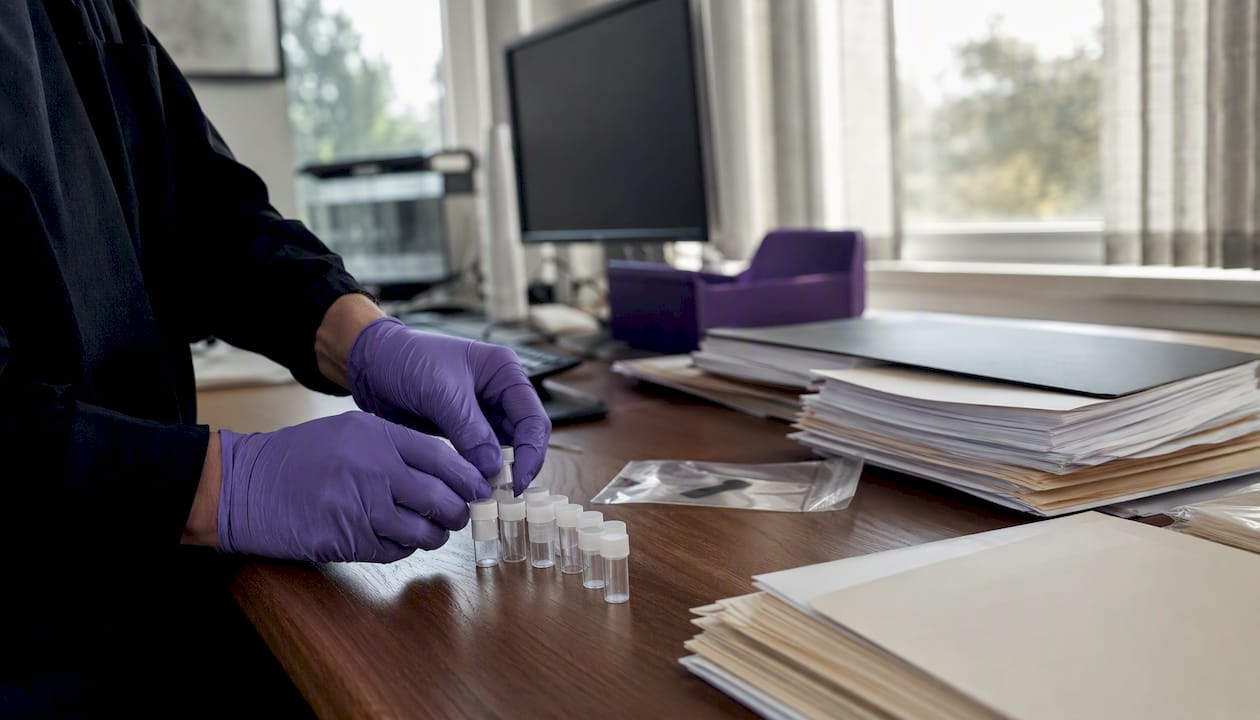
The four authoritative U.S. databases for missing and murdered persons are NamUs (National Missing and Unidentified Persons System), the Bureau of Indian Affairs Missing and Murdered Unit (BIA MMU), the Sovereign Bodies Institute (SBI) MMIP Database, and FBI ViCAP. For families and researchers, the single highest-impact first step is to search NamUs at namus.nij.ojp.gov and register as a public user so you can submit case details directly.
Which database fits your situation:
- NamUs: Federal cross-matching, forensic support, DNA reference collection, and public family access for any missing or unidentified person case nationwide.
- BIA MMU: Tribal cases specifically, tip-line coordination, and family-authorized case publication for Indigenous missing and murdered persons.
- Sovereign Bodies Institute MMIP Database: Community-governed records for Indigenous cases, especially where government data is absent or incomplete.
- FBI ViCAP: Law-enforcement-only pattern analysis linking violent crimes, homicides, and missing-person cases across jurisdictions.
- State and local repositories: Supplement federal records with regional detail, mandatory-reporting data, and active-investigation status.
Pro Tip: If the missing person is a tribal member, contact both NamUs and the BIA MMU simultaneously. Waiting on one before the other costs time that matters.
Key Takeaways
The most effective approach to a missing and murdered database search combines at least one federal system (NamUs or BIA MMU) with a community or local source, and submits DNA reference samples as early as possible.
| Point | Details |
|---|---|
| Start with NamUs | Register as a public user at namus.nij.ojp.gov and submit case details; it is the federal hub for forensic and investigative support. |
| Tribal cases need BIA MMU | Contact the BIA MMU tip line simultaneously with NamUs for any case involving a tribal member. |
| SBI fills government gaps | The Sovereign Bodies Institute captures Indigenous cases absent from federal systems; request access at sovereign-bodies.org/request. |
| Use two sources minimum | Cross-check federal and community databases; jurisdictional fragmentation means no single system holds every record. |
| Crimesolverscentral | Search over 264,913 cold cases by state at crimesolverscentral.com; membership unlocks full profiles, evidence boards, and advocate forums. |
Table of Contents
- What are the main missing and murdered databases in the U.S.?
- How do you search these databases and get reliable results?
- How do families and advocates submit cases and request assistance?
- Why do Indigenous cases require special data-sovereignty protections?
- Why do database gaps make it necessary to search multiple sources?
- How do investigators and forensic teams use these systems?
- What should you do right now if you need help?
- Crimesolverscentral gives you a national cold-case database in one place
- Sources
- FAQ
What are the main missing and murdered databases in the U.S.?
The four systems below are not interchangeable. Each was built for a different purpose, and knowing which one to use first saves weeks.
NamUs: the federal hub for families and investigators
NamUs, administered by the National Institute of Justice under the Office of Justice Programs, is the nation’s only centralized federal program providing forensic, investigative, and analytical services for missing, unidentified, and unclaimed person cases. It allows limited public access so family members can search records, submit information, and track case status without law-enforcement credentials. NamUs staff include tribally enrolled liaisons who handle cases involving Indigenous communities, and the system coordinates with federal forensic programs to support DNA matching and identification.
Bureau of Indian Affairs Missing and Murdered Unit
The BIA MMU posts selected case profiles with family authorization to generate public tips. It operates dedicated tip lines and coordinates directly with tribal law enforcement, federal investigators, and families while protecting next-of-kin confidentiality on active investigations. If a case involves a tribal member on or near a reservation, the BIA MMU is the most direct federal point of contact.
Sovereign Bodies Institute MMIP Database
The SBI database is community-governed and built on Indigenous data-sovereignty principles. Access is restricted and requires a formal request; the institute controls who sees what and under what conditions. SBI collects from FOIA records, news archives, family submissions, and historical documents, capturing cases that never appear in government systems. It is not a public search tool in the NamUs sense. It is a protected community resource.
FBI ViCAP
ViCAP stores homicide, sexual assault, and missing-person case data for pattern analysis and investigative linking. Access is restricted to law enforcement. If you are a family member or advocate, you cannot search ViCAP directly, but you can ask an assigned investigator to run a ViCAP query on your behalf.
State and local repositories
Most states maintain their own missing-persons registries, often feeding into the FBI’s NCIC (National Crime Information Center). Coverage and mandatory-reporting requirements vary significantly. Some states require law enforcement to enter a missing-person report into NCIC within two hours; others have no such mandate. Always check your state’s attorney general or state police website for the local registry.
Pro Tip: NamUs and NCIC are separate systems. A case in one is not automatically in the other. Confirm with your investigator that the case appears in both.
How do you search these databases and get reliable results?
Searching a missing and murdered database effectively means starting broad and narrowing deliberately. Here is a practical sequence:
- Start with NamUs. Go to namus.nij.ojp.gov and search by first name, last name, and state. Leave date fields open on the first pass. A misspelled name or an approximate age can still surface a match.
- Add physical descriptors. Once you have a results list, filter by sex, approximate age at disappearance, race/ethnicity, and distinguishing features (tattoos, scars, dental work). These fields are the most reliable for narrowing unidentified-person records.
- Search by tribal affiliation. NamUs includes a tribal-affiliation field. Use it. Many Indigenous cases are entered under this field even when the name is not immediately recognizable.
- Check aliases and alternate spellings. Run the search again with known nicknames, maiden names, or common misspellings. A single-letter difference in a surname can separate a match from a miss.
- Cross-check with your state registry. Pull up your state’s missing-persons database and run the same search. State records sometimes contain details, photos, or investigator contacts that NamUs does not yet reflect.
- For tribal cases, contact BIA MMU directly. The tip line can tell you whether a case is posted or under active coordination even if it is not publicly visible.
- Interpret case statuses carefully. “Active” means the case is open and under investigation. “Archived” usually means the case has been inactive for a defined period, not that it is closed or resolved. An archived NamUs record can be reactivated when new information arrives.
Pro Tip: Use boolean-style searches where the platform allows it. Searching “Jane OR Janet Smith” in a notes field can surface records entered under a variant. For geospatial searches, expand your radius by 50 miles beyond the last known location. People are often found outside the area where they disappeared.
Understanding how unsolved homicide databases are structured helps you read case statuses accurately and avoid misreading an archival record as an active lead.
How do families and advocates submit cases and request assistance?
Submitting a case to a missing and murdered database is not complicated, but preparation matters. Disorganized submissions slow the vetting process and delay publication.
What to gather before you submit:
- A recent, clear photograph (within the last two years if possible)
- Government-issued ID records (driver’s license, tribal ID, passport)
- Medical and dental records, including X-rays
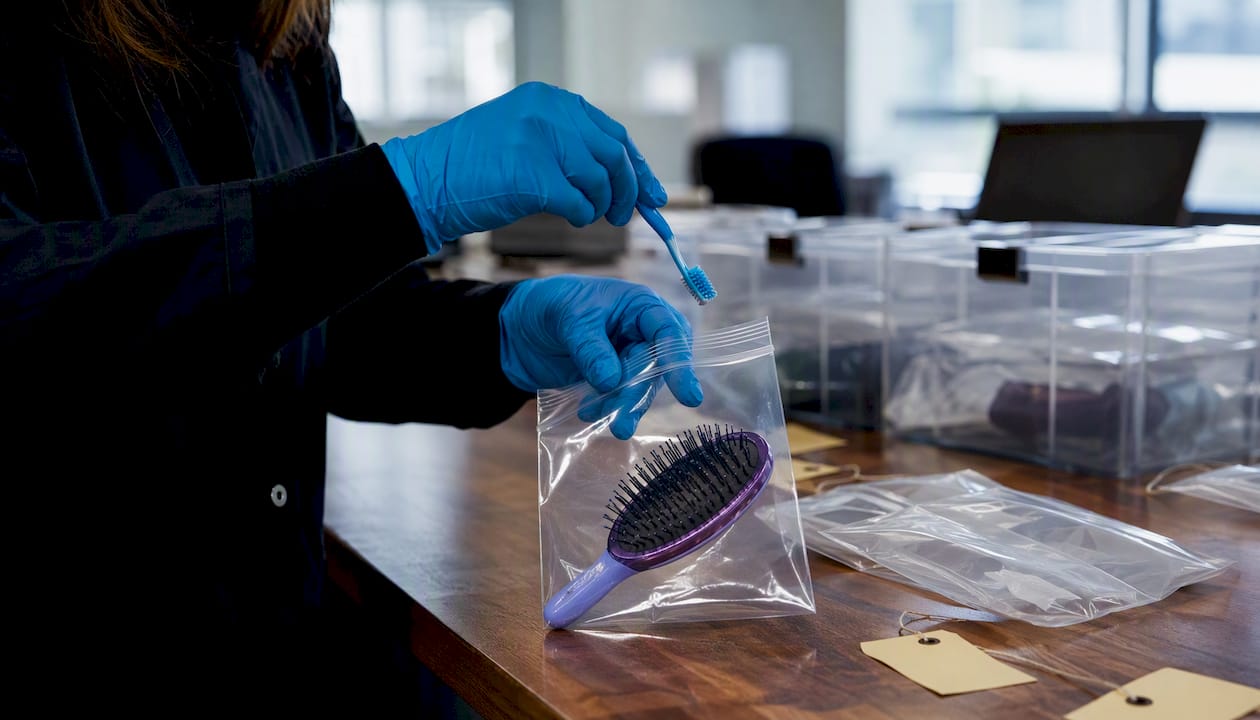
- DNA reference samples from a biological relative (a parent, sibling, or child) or personal items such as a toothbrush or hairbrush
- Contact information for the reporting family member and any known associates
- Last known location, date, and circumstances of disappearance
For NamUs, family members register as public users through the NamUs website. Registration is vetted by NamUs staff before full access is granted, which typically takes a few business days. Once approved, you can submit case information, upload documents, and communicate with the case’s assigned NamUs specialist.
Families who actively participate in NamUs, including submitting DNA reference samples and updating case records, improve the likelihood that an unidentified person record will be matched to their loved one. NamUs staff facilitate DNA collection through Missing Persons Day events and regional outreach, making sample submission accessible even for families in remote areas. (NamUs for Loved Ones of the Missing, NIJ/OJP)
The MEND (Medically Evaluated and Navigated Decedent) program and other NamUs family-support services provide mentoring, forensic referrals, and investigative assistance at no cost. Request these services through your NamUs case specialist. For tribal cases, ask specifically for a tribal liaison, who can coordinate with BIA MMU and handle culturally sensitive aspects of the case.
For a detailed checklist on assembling your case file, the guide on how to build a missing person case file covers document preparation step by step.
Why do Indigenous cases require special data-sovereignty protections?
Federal databases offer limited public views by design, but the protections they provide were not built with Indigenous communities in mind. The SBI’s approach is fundamentally different.
The Sovereign Bodies Institute restricts database access because Indigenous data sovereignty means communities, not agencies, control who sees information about their members. Family consent governs whether a case is published, what details appear, and who can access the full record. Tribal affiliation, Indigenous names, and ceremonial or cultural context are treated as sensitive data points that require specific handling, not standard fields to populate.
Indigenous data sovereignty is not a bureaucratic preference. It is a protective framework that prevents the colonial misuse of information about missing and murdered community members, including exploitation by media, researchers, or agencies that have historically failed these families. (Sovereign Bodies Institute)
Within NamUs, families can request restricted handling for specific case fields. To do this, contact your NamUs case specialist and state explicitly: “We request that [specific field] be restricted from public view pending family consent.” NamUs tribal liaisons are trained to handle these requests and can flag a case for culturally appropriate processing.
Pro Tip: When contacting any federal program about an Indigenous case, use the phrase “tribal data sovereignty” in your request. It signals to the liaison that you understand the framework and expect culturally appropriate handling. Vague requests for “privacy” are processed differently.
For a deeper look at why Indigenous missing persons are systematically undercounted, the analysis of key causes behind overlooked Indigenous cases covers the systemic factors directly.
Why do database gaps make it necessary to search multiple sources?
No single missing and murdered database captures every case. The gaps are structural, not accidental.
Common sources of undercounting and fragmentation:
- Jurisdictional fragmentation: — Tribal, county, state, and federal agencies each maintain separate records. A case entered at the tribal level may never reach NCIC or NamUs without deliberate coordination.
- Systemic bias in data collection: Annita Lucchesi and the SBI founders documented that governmental data routinely undercounts Indigenous missing persons due to reporting failures and systemic bias. SBI began in 2015 specifically to fill those gaps in official records.
Community databases like SBI’s fill these gaps by pulling from FOIA records, news archives, social media, family submissions, and historical documents. They capture people who were never entered into government systems at all.
The NamUs factsheet documents the scale of records maintained across program years, including family DNA reference submissions, which illustrates both the system’s reach and the volume of cases that remain unresolved.
Practical minimum for MMIP researchers and advocates: Search at least two sources, one federal (NamUs or BIA MMU) and one community or local (SBI or your state registry). A two-source approach catches cases that fall through jurisdictional cracks and gives you a fuller picture of what is known.
How do investigators and forensic teams use these systems?
Law enforcement and forensic analysts use these databases in ways that families rarely see directly, but understanding the workflow helps you know what to expect and what to provide.
DNA is the backbone of unidentified-person resolution. When a family submits a reference sample through NamUs, staff coordinate with regional specialists to process it and run comparisons against unidentified-person profiles. Matches are cross-referenced with CODIS (the FBI’s Combined DNA Index System). Dental records and fingerprints follow a similar path: NamUs interfaces with the National Dental Image/Information Repository (NDIR) and state fingerprint systems to generate comparison leads.
Multidisciplinary analytical reviews that pull from NamUs, ViCAP, CODIS, and regional medicolegal records are often what generate the first actionable lead in a long-stalled case. No single system holds all the pieces. (NamUs, NIJ)
ViCAP adds a pattern-detection layer. Analysts use it to cluster cases geographically, identify repeat offenders, and link homicides or disappearances that appear unrelated at the local level. A family cannot run a ViCAP query, but they can ask their assigned investigator to do so and request a summary of what the query returned.
When an investigator asks for a toothbrush, a hairbrush, or old dental X-rays, those items are not symbolic. They are the raw material for forensic comparison. Providing them promptly, and in the best condition possible, directly affects how quickly a match can be confirmed.
Timeline expectations are realistic: analytical support from NamUs typically means a specialist reviews the case, runs available comparisons, and contacts the family or investigator with findings. That process can take weeks to months depending on case volume and the completeness of submitted materials. Public databases support cross-jurisdictional investigations in ways that accelerate this timeline when records are complete and current.
Pro Tip: Ask your NamUs case specialist whether a multidisciplinary case review has been requested. If not, you can request one. These reviews pull analysts from multiple disciplines and often surface leads that routine case management misses.
What should you do right now if you need help?
If you are a family member, advocate, or researcher who needs to act today, here is the prioritized sequence:
- Search NamUs at namus.nij.ojp.gov. Register as a public user if you have not already. Submit any missing case information immediately.
- Contact BIA MMU if the missing or murdered person is a tribal member. The BIA MMU tip line is listed at bia.gov/service/mmu/missing-murdered-cases. Ask about case posting and tribal liaison assignment.
- Request SBI database access at sovereign-bodies.org/request if you are working on an Indigenous case and need community-governed records.
- Contact your local law enforcement and confirm the case is entered in both NCIC and NamUs. Get the case number for both systems in writing.
- Escalate access barriers through a tribal liaison request (for BIA or NamUs), a FOIA request for law-enforcement records, or an advocacy organization that specializes in MMIP cases.
When families hit a wall with official systems, the most effective next step is usually a tribal liaison request combined with a direct call to the BIA MMU tip line. These two contacts together often unlock coordination that a single-agency inquiry does not.
Essential contacts at a glance:
- NamUs registration: namus.nij.ojp.gov
- BIA MMU tip line and case profiles: bia.gov/service/mmu/missing-murdered-cases
- SBI database access request: sovereign-bodies.org/request
- ViCAP (law enforcement only): fbi.gov/wanted/vicap/missing-persons
- State missing-persons units: search “[your state] missing persons unit” plus the state attorney general’s website
For a full family action guide covering every step from initial report to long-term advocacy, the missing and murdered people family action guide is the most practical starting point.
An editorial perspective on community-led data
The most important shift in MMIP data work over the past decade is not a new federal program. It is the recognition that community-governed databases are not supplements to official systems. For many Indigenous families, they are the primary record.
Federal databases were built for law enforcement workflows. They were not designed to honor family consent, protect culturally sensitive information, or capture cases that agencies never bothered to enter. SBI’s restricted-access model and consent-based publication protocols are not obstacles to transparency. They are a direct response to decades of institutional failure. When a family chooses to submit a case to SBI rather than NamUs, that is not a gap in the data. It is a governance decision that deserves respect.
The practical implication for researchers and advocates: approach community databases as partners, not as secondary sources to check after the federal systems come up empty. Collaborating with communities on unsolved crimes requires understanding that the community often holds the most complete record.
Crimesolverscentral gives you a national cold-case database in one place
Searching NamUs, BIA MMU, and state registries separately takes time, and the results are scattered across systems that were not built to talk to each other. Crimesolverscentral’s national cold-case database brings over 264,913 cases, organized by state and case type, into a single searchable platform built for families, advocates, and researchers who need depth, not just a case number.
Free summaries are available without a membership. A monthly membership unlocks full case profiles, source documents, videos, a flyer builder, AI image tools, digital evidence boards, and community forums where advocates coordinate across cases. For families working an active MMIP case alongside official channels, the evidence board and volunteer coordination tools fill a gap that federal systems do not address. Start by searching the free database at crimesolverscentral.com to see whether your case or a related one is already profiled.
Sources
The sources below are the primary references for this article. Each is publicly accessible (or accessible by request) and maintained by the governing organization.
- National Missing and Unidentified Persons System | National Institute of Justice
- NamUs for Loved Ones of the Missing (NIJ/OJP PDF)
- What is NamUs? | NamUs
- Request access — Sovereign Bodies Institute
- Missing and Murdered Cases | Indian Affairs
- ViCAP Missing Persons — FBI
When evaluating any additional source, check three things: who owns and governs the database, whether access is public or restricted and why, and whether the data collection methodology is documented and community-informed.
FAQ
What is the best database to search for a missing Indigenous person?
Start with NamUs for federal forensic support, then contact the BIA MMU tip line for tribal coordination. For cases absent from government systems, request access to the Sovereign Bodies Institute MMIP database at sovereign-bodies.org/request.
Can families access FBI ViCAP directly?
No. ViCAP is restricted to law enforcement. Families can ask their assigned investigator to run a ViCAP query and request a summary of the results.
How do I submit a missing person case to NamUs?
Register as a public user at namus.nij.ojp.gov, gather photos, medical and dental records, and DNA reference materials, then submit through the portal. A NamUs specialist will vet and publish the case.
Why are Indigenous missing persons undercounted in official databases?
Systemic underreporting, jurisdictional fragmentation between tribal and federal agencies, and historical bias in law-enforcement prioritization all contribute. Community databases like SBI’s exist specifically to capture cases that government systems miss.
What does “archived” mean in a NamUs case record?
Archived status means the case has been inactive for a defined period, not that it is closed or resolved. New information can reactivate an archived record. Contact the NamUs case specialist to submit an update.