

40% of U.S. Murders Remain Unsolved: Where to Search Them
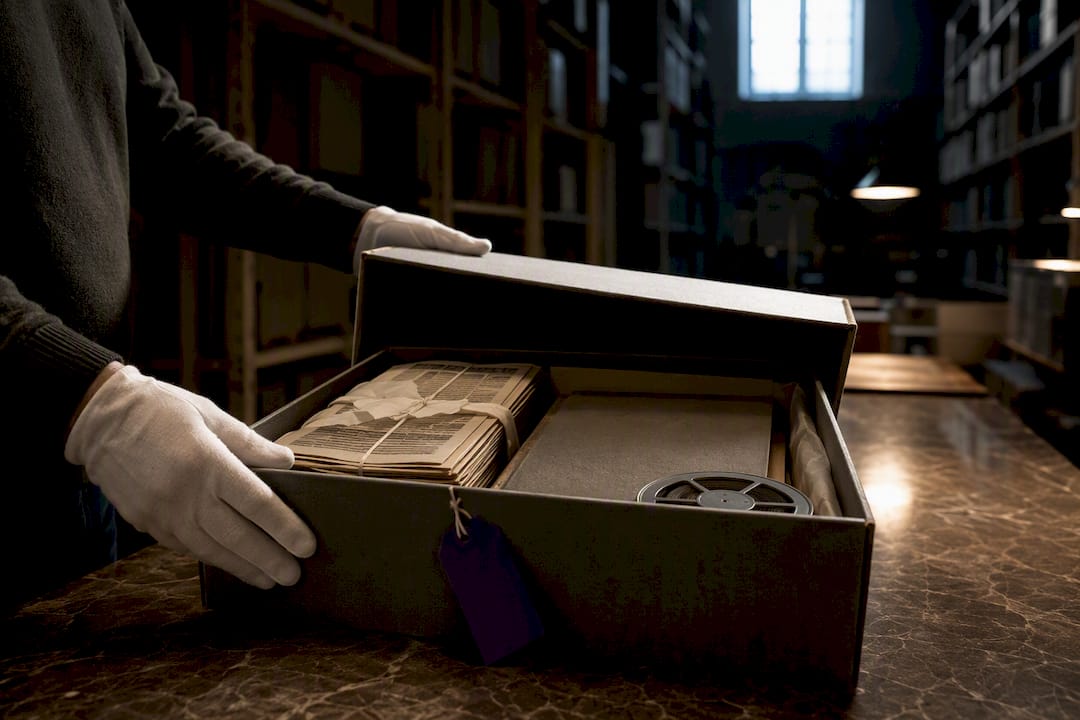
This page compiles a curated, categorized roster of notable unsolved murders alongside the authoritative databases where researchers can find primary case records. The National Institute of Justice estimates roughly 40 percent of U.S. homicides remain unsolved, and systems like NamUs and ViCAP exist specifically to organize that backlog. Cases below are chosen for documented, verifiable status. Jump to the resources section for the primary records behind each entry.
TL;DR:
- Physical evidence limitations and jurisdictional issues have kept many cases unresolved, such as the Zodiac Killer and the Keddie Cabin Murders, despite decades of investigation.
- Genetic genealogy has helped identify victims or suspects in cases like the Boy in the Box and Bear Brook Murders, but suspects remain unknown or unprosecuted.
- Unsolved cases are organized by era, region, victim type, and investigation status, with standardized criteria for what qualifies as a cold case.
- Official databases like NamUs and ViCAP are the primary sources for tracking unresolved homicides and unidentified remains, often complemented by FOIA requests for deeper records.
- Public interest and organized lists can aid in case breakthroughs, but tips must be routed to investigators with careful documentation to ensure they assist ongoing investigations.
Table of Contents
- The Most Notable Unsolved Murder Cases in the United States
- How Unsolved Homicide Cases Are Organized by Era, Region, and Type
- Where to Search Official Cold Case Databases and Records
- Why Cold Cases Get Reopened, and What the Numbers Show
- How to Research Unsolved Murders Responsibly
- Why Curated Lists of Unsolved Murders Matter
- Go Deeper With Crime Solvers Central’s Case Database
- Sources
- FAQ
The Most Notable Unsolved Murder Cases in the United States
Every list of infamous criminal cases starts in roughly the same place, but the reasons these cases stayed open vary enormously. Some collapsed because of destroyed evidence. Others never had a suspect pool narrow enough to prosecute. A few sit unsolved simply because nobody has been identified at all.
- Black Dahlia (Elizabeth Short), 1947, Los Angeles. Short’s mutilated body was found in a vacant lot, and the LAPD fielded dozens of confessions, none corroborated. Evidence mishandling and a flood of false leads buried the case; the LAPD’s own historical files remain the primary record.
- Zodiac Killer, 1968 to 1969, Northern California. A serial killer who taunted police and newspapers with ciphers, at least five confirmed victims, and a case still open despite a 2021 amateur decoding of one cipher. Physical evidence was limited and cross-jurisdictional coordination between Bay Area agencies was inconsistent, which fractured the investigation from the start.
- Boy in the Box, 1957, Philadelphia. An unidentified young boy was found beaten to death, wrapped in a blanket. He was finally identified through DNA and genealogy in 2022 as Joseph Augustus Zarelli, but his killer has never been named. It stands as one of the clearest examples of how forensic genealogy can solve identity without solving the crime itself.
- Bear Brook Murders, discovered 1985 and 2000, Allenstown, New Hampshire. Four female victims, two adults and two children, found in barrels along Bear Brook State Park. Genetic genealogy identified the presumed killer, Terry Rasmussen, and one victim’s identity years later, but questions about the full victim roster and secondary suspects persist.
- Belle Gunness, disappeared 1908, La Porte, Indiana. A suspected serial killer whose farm yielded the remains of multiple men and children; a headless body presumed to be Gunness was found in a fire at her home, but doubts about that identification linger over a century later, and no one was ever prosecuted for the deaths on her property.
- JonBenét Ramsey, 1996, Boulder, Colorado. A six-year-old found dead in her family’s basement. Contaminated crime scene procedures and years of shifting suspect theories left DNA evidence inconclusive against any named person.
- Tupac Shakur, 1996, Las Vegas. A drive-by shooting with no formal conviction for decades until a 2023 indictment against Duane “Keffe D” Davis reopened the case publicly, illustrating how a cold case can move after nearly 30 years.
- The Long Island Serial Killer (Gilgo Beach cases), 2010 to present, New York. Multiple sets of remains found along Ocean Parkway. An arrest in 2023 (Rex Heuermann) addressed several victims, but other Gilgo-linked remains stay unidentified or unattributed.
- The Keddie Cabin Murders, 1981, Plumas County, California. A brutal quadruple homicide with no forensic breakthrough despite decades of renewed interest and multiple documentary investigations.
- D.B. Cooper, 1971, skyjacking presumed fatal. Not a conventional homicide case, but the FBI’s own historical case file treats Cooper’s fate as unresolved, and it remains a touchstone for how federal archives preserve open case material.
- The Springfield Three, 1992, Missouri. Three women vanished from a home with no bodies ever recovered, blurring the line between missing-persons and homicide classification.
- Marilyn Sheppard, 1954, Bay Village, Ohio. The case that inspired The Fugitive. Her husband was convicted, then acquitted at retrial, leaving the actual killer legally undetermined to this day.
Each entry above has a documented year, location, and a specific reason it stalled, whether that’s contaminated evidence, jurisdictional friction, or an unidentified victim. Consult primary agency files, court records, or FBI historical case pages before relying on secondary retellings, which tend to compress or distort details over decades of retelling.
How Unsolved Homicide Cases Are Organized by Era, Region, and Type
A useful list of unsolved murders isn’t just long. It’s sortable. Researchers digging past the famous names need a framework, and most serious cold case databases and clearinghouses organize entries along four consistent axes.
By era. Cases before 1900 rely almost entirely on newspaper archives and coroner’s inquest records, since forensic evidence from that period rarely survives. The 1900 to 1979 window includes cases like Belle Gunness where physical evidence exists but predates modern forensic testing. From 1980 to 1999, DNA collection becomes more common but chain-of-custody standards vary by jurisdiction. From 2000 onward, most agencies follow standardized evidence protocols, so unsolved status usually reflects a lack of leads rather than lost evidence.
By state or region. Some states publish dedicated cold case units and public-facing case lists; others route everything through a central state police cold-case division with far less public detail. Crimesolverscentral’s own state-organized search tool reflects this pattern, letting researchers filter by state and case status rather than searching agency by agency.
By victim category. The major distinctions researchers use are:
- Serial-offender cases (Zodiac, Bear Brook) versus single-victim homicides with no connected pattern.
- Cases with a named, presumed-dead suspect (Belle Gunness) versus cases with zero suspect identification.
- Unidentified remains cases, sometimes called Jane Doe or John Doe cases, where the victim’s own identity is the unresolved element rather than the perpetrator’s.
- Missing-persons cases later reclassified as presumed homicides once remains or definitive evidence surface.
By investigation status. BJA guidance defines a violent-crime cold case as one that has gone unsolved for at least three years and retains realistic potential for resolution through new forensic techniques or newly surfaced information, per its Prosecuting Cold Cases Using DNA guidance. That three-year threshold isn’t universal. Some state task forces use one year, others use five, so always check the specific definition an agency or database applies before assuming a case qualifies for their cold-case unit.
Inclusion in any credible list requires three things: a documented homicide (not a rumor or urban legend), public reporting through a police record or news source, and confirmation that no prosecution has resolved it, or that the victim remains unidentified. Crimesolverscentral’s analysis of unsolved homicide statistics applies this same standard when categorizing entries by state.
Where to Search Official Cold Case Databases and Records
Public curiosity about a case only goes so far. Actual answers live in a handful of official systems built specifically to track unresolved homicides and unidentified remains.
- NamUs (National Missing and Unidentified Persons System). This Department of Justice clearinghouse holds missing-persons and unidentified-remains cases, searchable by state, physical description, and case number. It’s the recommended entry point for anyone trying to match an unidentified victim to a missing person report.
- ViCAP (Violent Criminal Apprehension Program). Run through the FBI, ViCAP collects details on unsolved homicides, sexual assaults, and missing persons cases suspected to be homicides, then cross-references submissions to spot serial patterns investigators might otherwise miss.
- State cold-case units. Most state police agencies maintain a dedicated cold-case page or contact line; Crimesolverscentral’s guide on leveraging national database cold cases walks through how to approach these units directly.
- Newspaper archives and court records. Local library microfilm collections, Newspapers.com, and county courthouse record rooms fill gaps that official databases don’t index, especially for pre-1980 cases.
- FOIA requests. Filing a Freedom of Information Act request with the relevant agency can surface case file details not published elsewhere, though redactions are common while a case stays technically open.
Pro Tip: Before filing a FOIA request, call the agency’s cold-case or records unit directly. Many will tell you over the phone whether a file is even eligible for release, saving weeks of waiting on a denial.
Why Cold Cases Get Reopened, and What the Numbers Show
New DNA testing or fresh witness information is what actually moves a cold case forward. A 2012 study of law enforcement cold-case practices found that physical evidence and DNA or witness information were the primary drivers cited by roughly 90 percent of responding agencies deciding whether to reopen a file.
Nationally, about 40 percent of homicides remain unsolved, according to NIJ working-group findings, which also recommend dedicated cold-case units staffed with experienced investigators and standing access to forensic tools as the clearest path to shrinking that backlog.
Federal grant programs have translated that recommendation into measurable results. NIJ-funded reviews have pushed tens of thousands of cold cases back through forensic testing, driving a spike in CODIS uploads and generating thousands of new DNA hits that reconnected old evidence to known offenders. BJA’s definition of a violent-crime cold case, unsolved for at least three years with realistic potential for resolution, is what qualifies a file for that kind of federally funded review in the first place. Crimesolverscentral’s breakdown of why cold case units exist traces how that funding structure shaped modern unit staffing.
How to Research Unsolved Murders Responsibly
Citizen interest can genuinely help solve cases, but only when it stays disciplined and stays out of the way of active investigations.
- Start with the agency, not the internet. Contact the jurisdiction’s cold-case unit directly, and check NamUs or ViCAP first since those are the systems law enforcement itself relies on.
- Build a timeline from primary documents. Police reports, coroner’s findings, and contemporary news coverage matter far more than secondary retellings, which often introduce bias or outright errors over time.
- Report leads, don’t publish accusations. Send sourced tips directly to investigators with full context and contact information, and never name a private individual as a suspect without prosecutorial confirmation.
Pro Tip: Keep a dated research log with a source citation for every claim you write down. If a lead ever reaches investigators, that log is what makes your tip credible instead of just another theory.
Why Curated Lists of Unsolved Murders Matter
Public attention genuinely moves cold cases, but only when it’s organized instead of scattered across forum threads and speculation. A well-sourced list does something a viral post never can: it gives a family member, a journalist, or a retired detective a starting point that’s actually verified. Crime Solvers Central built its database around that principle, cataloging cases by state and status so the same rigor applied to Black Dahlia or Bear Brook gets applied to a case nobody outside one county has ever heard of. Public interest helped identify the Boy in the Box after 65 years. It can do the same for cases still waiting. The right move is always to route what you find toward official channels and toward databases built for that exact purpose.
— Crime
Go Deeper With Crime Solvers Central’s Case Database
Most of the cases above have thin public files. Crimesolverscentral exists for the cases that don’t make headlines, cataloging entries by state and status so a family member or researcher isn’t stuck piecing together fragments from scattered news archives. The state-by-state search tool covers unsolved homicides and unidentified remains beyond the household names covered here.
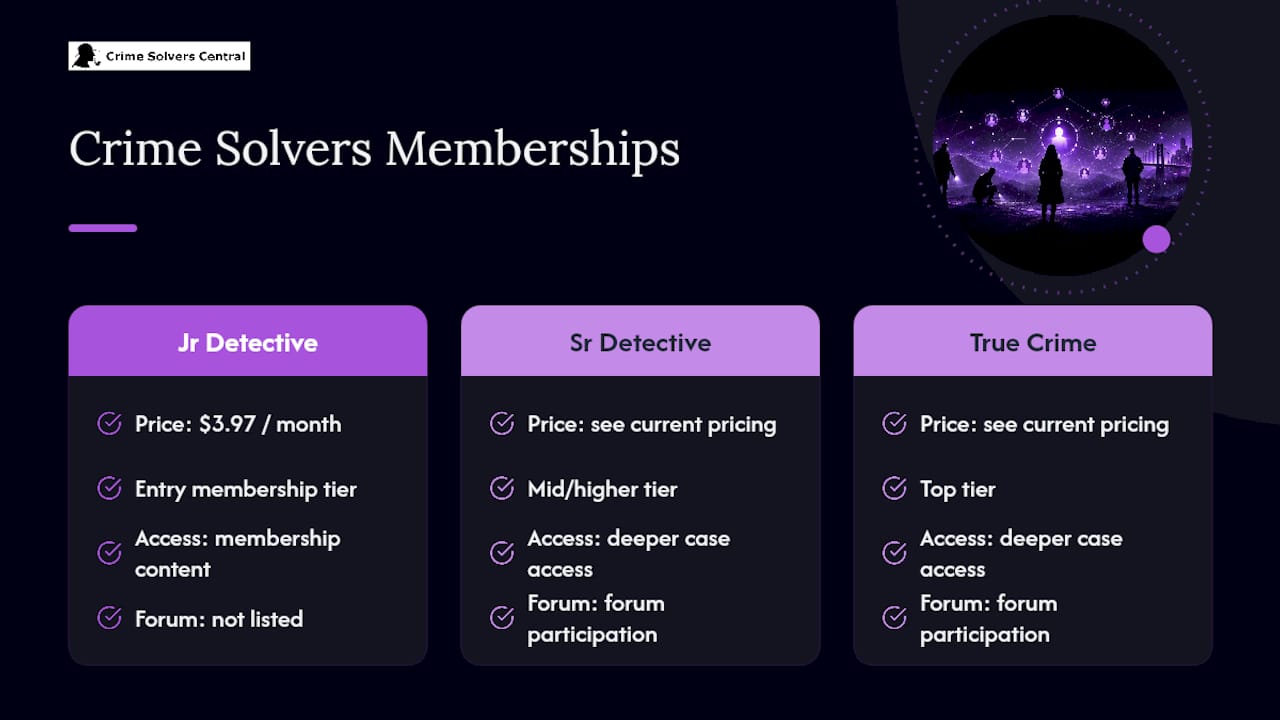
Full case files, digital evidence boards, and community research tools sit behind membership. The Jr. Detective plan starts at $3.97 a month, with Sr. Detective and True Crime Influencer tiers unlocking deeper access and forum participation for researchers who want to go further. Check the current plans and pricing to see which tier fits your research goals, and start with a case in your own state.
Sources
- Expert Panel Issues New Best Practices Guide for Cold Case Investigations
- BJA FY21 Prosecuting Cold Cases Using DNA
FAQ
What are the biggest unsolved murders in history?
The Black Dahlia, the Zodiac Killer, and JonBenét Ramsey are among the most widely cited unsolved murders in American history, each defined by lost or contaminated evidence rather than a lack of public attention. Belle Gunness’s suspected serial murders and the Bear Brook murders also rank among the most researched, since both involve multiple victims and unresolved identity questions.
What are the greatest unsolved mysteries in history?
Beyond named homicide cases, the Boy in the Box (identified in 2022 but still missing a suspect), the Springfield Three disappearance, and D.B. Cooper’s skyjacking sit among the most enduring unresolved mysteries tracked by official FBI case files. Each combines documented facts with a genuinely unresolved core question, which is what keeps them active in research communities decades later.
Who is the most famous unsolved serial killer?
The Zodiac Killer remains the most widely recognized unsolved serial killer case in the United States, tied to at least five confirmed victims between 1968 and 1969 in Northern California. Terry Rasmussen, linked to the Bear Brook murders through genetic genealogy, is a rare case where a suspect was identified posthumously without a full conviction on record.
What is the strangest unsolved case?
The Boy in the Box stands out because investigators solved half the mystery, his identity, through DNA and forensic genealogy in 2022, yet his killer remains completely unknown 65 years after his death. The Keddie Cabin Murders are similarly strange: a quadruple homicide with a documented crime scene but no forensic breakthrough despite repeated reinvestigations.
How can I search for information on a specific unsolved murder?
Start with NamUs for unidentified remains or missing-persons angles, and ViCAP if the case involves a suspected pattern across multiple crimes, both described in BJA’s cold-case guidance. Crimesolverscentral’s state-organized database is built specifically to help researchers filter cases by location and status when starting from scratch.