

12 Famous Unsolved Murders and What Forensics Changed
Jack the Ripper, the Black Dahlia, the Zodiac Killer, the Somerton Man, Hinterkaifeck, Belle Gunness, the Boy in the Box, the Beaumont children, Mary Rogers, the Long Island Serial Killer, the Keddie murders, and the Walker family massacre make up the core shortlist of famous unsolved murders that researchers and true-crime readers return to again and again. Each case has survived decades, sometimes more than a century, without a conviction, and each has left a paper trail thick enough for serious study.
These twelve cases matter beyond morbid curiosity. The National Institute of Justice defines a cold case as an unresolved violent crime that has sat open for at least three years but could still be solved with new information or new technology, and every case below fits that description. Some have seen fresh forensic testing in the past decade. Others remain frozen in the exact evidentiary state investigators left them in.
Here is the shortlist, in the order this article covers them:
- Jack the Ripper (London, 1888) — at least five women killed in Whitechapel by an attacker never identified despite one of history’s largest manhunts.
- Black Dahlia, Elizabeth Short (Los Angeles, 1947) — a 22-year-old aspiring actress found mutilated and bisected in a vacant lot.
- Zodiac Killer (Northern California, 1968-1969) — a self-named serial killer who taunted police and newspapers with ciphers, claiming at least 37 victims.
- The Somerton Man, Tamam Shud case (Adelaide, 1948) — an unidentified man found dead on a beach with a coded scrap of paper sewn into his pocket.
- Hinterkaifeck (Bavaria, 1922) — six members of a farming family and a maid bludgeoned to death on an isolated farm.
- Belle Gunness (La Porte, Indiana, 1908) — a suspected serial killer whose farmhouse fire revealed multiple bodies, though her own death was never confirmed.
- Boy in the Box (Philadelphia, 1957) — an unidentified young boy found in a cardboard box, identified in 2022 but still unsolved as a homicide.
- Beaumont children (Adelaide, 1966) — three siblings vanished from a beach and were never found.
- Mary Rogers (New York, 1841) — an early American murder case that helped shape investigative journalism and inspired Edgar Allan Poe.
- Long Island Serial Killer (New York, 1990s-2010s) — linked to at least 10 sets of remains found along Gilgo Beach, with a 2023 arrest that only partly resolved the case.
- Keddie murders (California, 1981) — four people killed in a mountain cabin, with a fifth victim’s remains identified decades later.
- The Walker family murders (Osprey, Florida, 1959) — a family of four shot execution-style, a case still tied to theories about a national killing spree.
Key Takeaways
Famous unsolved murders stay open because forensic limitations, lost evidence, and jurisdictional gaps outpaced the technology available at the time, but modern DNA science and genetic genealogy are closing that gap case by case.
| Point | Details |
|---|---|
| Twelve cases anchor the genre | Jack the Ripper, the Black Dahlia, the Zodiac Killer, and the Somerton Man remain the most-cited historical unsolved murders worldwide. |
| Identification isn’t the same as resolution | The Somerton Man and the Boy in the Box were both identified by name decades later, yet their killers remain unknown. |
| DNA technology keeps improving | Labs can now extract profiles from degraded samples that returned no result under older testing thresholds. |
| Evidence type predicts solvability | Cases involving DNA-rich evidence like semen clear more often than outdoor or knife-involved homicides. |
| Report tips to the specific unit | Contact a cold case or major crimes unit directly with dates, names, and documents rather than a general tip line. |
| Crimesolverscentral organizes case research | Its state-by-state cold case database gives researchers and families searchable access to full case files and source documents. |
Primary sources worth bookmarking
- NIJ Cold Case Investigations — federal guidance on cold-case definitions and forensic advances.
- National Best Practices for Cold Case Units (NIJ PDF) — how agencies structure and sustain cold-case investigations.
- FBI Major Cases — archival summaries of high-profile unresolved federal investigations.
- PMC systematic review on cold case solvability — peer-reviewed data on which case factors predict clearance.
- Local NamUs listings and county sheriff archives for unidentified persons and case-specific filings.
Treat news coverage and public wikis as a starting index only. Cross-check dates and claims against the primary documents above before citing them as fact.
Table of Contents
Famous Unsolved Murders: The Full Case Files
Each entry below follows the same structure: what happened, where the investigation stands, and why the case never closed. Confirmed facts are separated from theory wherever the record allows it.
Jack the Ripper (1888)
Between August and November 1888, at least five women, Mary Ann Nichols, Annie Chapman, Elizabeth Stride, Catherine Eddowes, and Mary Jane Kelly, were murdered in London’s Whitechapel district. All were killed at night, several with surgical precision to the abdomen, which fueled early theories that the killer had medical training.
Scotland Yard investigated more than 2,000 people, interviewed 300, and formally detained around 80 suspects. None were charged. Letters claiming to be from the killer, including the infamous “Dear Boss” letter that coined the nickname “Jack the Ripper,” flooded newspapers, though most historians believe journalists fabricated them to sell papers.
The case remains unsolved because Victorian forensic science had no fingerprinting, no blood typing, and no photography standard for crime scenes. Physical evidence was handled, contaminated, or discarded long before anyone understood its future value. A shawl allegedly linked to the Eddowes murder underwent controversial DNA testing in 2014 and again in 2019, pointing to a Polish immigrant named Aaron Kosminski, but chain-of-custody problems mean the results remain theorized, not confirmed.
Black Dahlia, Elizabeth Short (1947)
On January 15, 1947, a woman walking with her child discovered Elizabeth Short’s body in a vacant Los Angeles lot. The 22-year-old had been severed at the waist, drained of blood, and posed in a manner investigators believed was meant to shock whoever found her.
The Los Angeles Police Department fielded over 150 confessions, a number that still stands as one of the highest for any American murder case, and investigated roughly 750 people. Detectives traced Short’s final days to the Biltmore Hotel but lost her trail after that. No forensic evidence ever tied a single suspect conclusively to the crime.
The case stayed open partly because the LAPD’s own records were poorly preserved for decades, and partly because so many false leads clogged the file that legitimate ones may have been buried. Author Steve Hodel has argued his own father was the killer, a theory that draws serious attention but has never been substantiated in court.
Zodiac Killer (1968-1969, California)
The Zodiac killed at least five confirmed victims in the San Francisco Bay Area between December 1968 and October 1969, though he claimed 37 in letters to newspapers. He sent four ciphers to press outlets, one of which went unsolved for 51 years until a team of amateur code breakers cracked it in 2020, though the message revealed no identifying information.
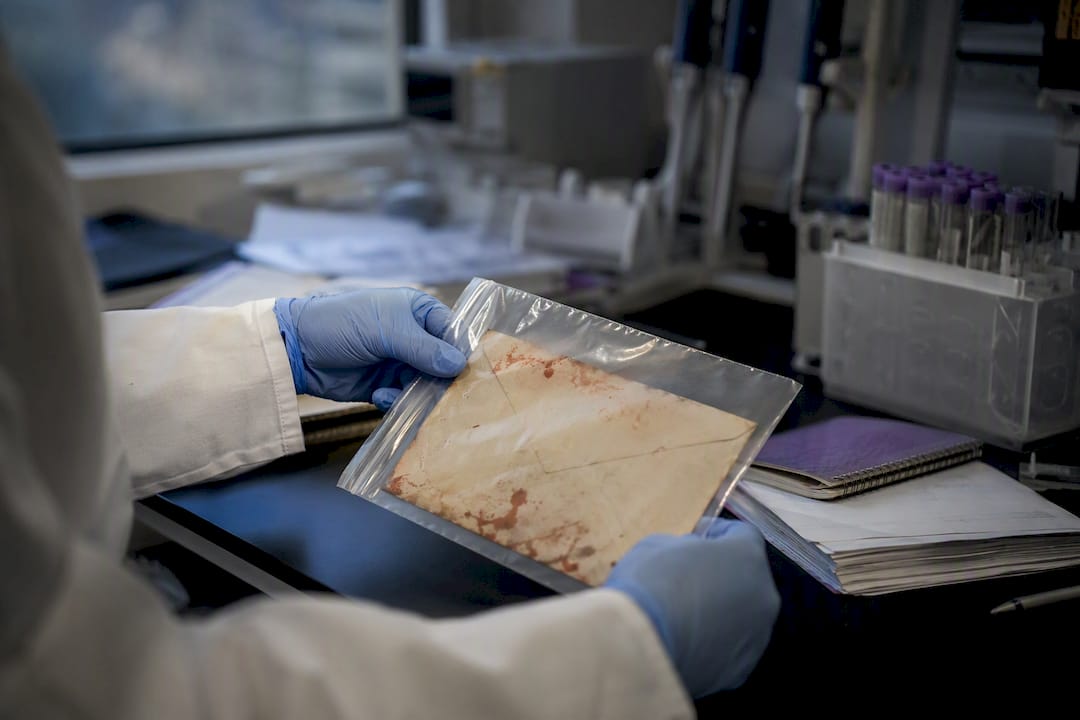
The FBI’s major-cases archive still lists the Zodiac among its unresolved files. In 2021, a group of retired law enforcement investigators named Gary Francis Poste as a suspect based on circumstantial evidence, but no DNA or physical proof has ever confirmed an identity, and law enforcement agencies have not endorsed the claim. Evidence from the era, including a bloody envelope, has been retested multiple times without a usable profile.
The Somerton Man, Tamam Shud case (1948, Adelaide)
An unidentified man was found dead on Somerton Park Beach in December 1948, dressed neatly, with no identification and the labels cut from his clothing. A scrap of paper reading “Tamam Shud,” Persian for “it is finished” or “ended,” was found sewn into a hidden pocket, torn from a rare edition of a Persian poetry collection.
Investigators spent 74 years trying to identify him. In 2022, University of Adelaide researcher Derek Abbott used DNA from hairs embedded in a plaster cast of the man’s face and genetic genealogy to name him as Carl “Charles” Webb, an electrical engineer born in Melbourne. His identity is now considered largely confirmed, but the cause of death and the meaning of the coded message found alongside his body remain unresolved.

Hinterkaifeck (1922, Bavaria)
Six people, farmer Andreas Gruber, his wife, their adult daughter, two grandchildren, and a newly hired maid, were bludgeoned to death at an isolated farmstead in Bavaria in March 1922. Strange details preceded the murders: Gruber reported footprints in the snow leading to the house but not away from it, and found a newspaper he didn’t own in the attic.
German police investigated more than 100 suspects over the following decades, reopened the case formally in 2007 with modern forensic techniques, and still failed to identify a killer. Investigators believe the murderer stayed on the property for days afterward, feeding the livestock, which suggests someone the family may have known. No physical evidence from the scene survived in a form usable for DNA testing.
Belle Gunness (1908, La Porte, Indiana)
Belle Gunness ran a farm in Indiana where she is believed to have murdered multiple suitors, hired hands, and possibly two of her own children between roughly 1900 and 1908. Her farmhouse burned down in April 1908, and investigators found a headless female body inside along with the remains of her children. Excavations of the property later uncovered the remains of at least a dozen more victims.
Whether the headless body was Gunness herself has never been confirmed. Some investigators at the time believed she staged her death and fled, based on inconsistencies in the body’s size relative to her known stature. No arrest was ever made, and reported sightings of Gunness continued for years afterward without verification.
Boy in the Box (1957, Philadelphia)
A young boy’s body was found in a cardboard box in a wooded area of Philadelphia in February 1957. He had been beaten and showed signs of neglect. For 65 years, he remained unidentified, one of the country’s most studied unidentified child cases, cataloged extensively through NamUs style national identification networks.
In 2022, investigators used genetic genealogy to identify him as Joseph Augustus Zarelli. Identification solved half the mystery. Who killed him, and why, remains completely open, and Philadelphia police have said the homicide investigation continues using the same DNA techniques that finally named the victim.
Beaumont children (1966, Adelaide)
Jane, Arnna, and Grant Beaumont, ages nine, seven, and four, vanished from Glenelg Beach in South Australia on Australia Day, 1966. Witnesses reported seeing the children with a tall, blond man earlier that day. No trace of them was ever found despite one of the largest search efforts in Australian history.
Investigators have chased hundreds of leads and excavated multiple sites, including a factory once owned by a suspect named Harry Phipps, based on tips from a former employee. Excavations in 2018 and 2013 turned up nothing conclusive. The case remains unsolved primarily because no physical evidence, body, or confirmed witness account ever emerged.
Mary Rogers (1841, New York City)
Mary Rogers, a young woman known in New York as the “beautiful cigar girl,” was found dead in the Hudson River in July 1841. Her murder became a media sensation and is widely credited with shaping early American crime journalism, and Edgar Allan Poe fictionalized the case in his story “The Mystery of Marie Rogêt.”
Investigators at the time considered a botched abortion, a gang assault, and a jilted suitor as possible explanations. No forensic standard existed to test any theory. The case is confirmed unsolved by the historical record itself: 19th-century policing had no method for the kind of evidence collection modern cold-case units now rely on.
Long Island Serial Killer (1990s-2010s, New York)
Beginning with the disappearance of Shannan Gilbert in 2010, searches along Gilgo Beach uncovered the remains of at least 10 people, most of them women connected to sex work advertised online. The case, sometimes called the Gilgo Beach killings, went unsolved for over a decade despite an active FBI and Suffolk County task force.
In 2023, authorities arrested Rex Heuermann and charged him in connection with several of the murders, using cell phone data and DNA evidence, including a hair recovered from a pizza crust discarded during surveillance. Heuermann has pleaded not guilty, and several of the Gilgo Beach victims remain unidentified or unconnected to any specific suspect, which keeps parts of the broader case technically unresolved.
Keddie murders (1981, California)
Four people, Glenna “Sue” Sharp, her son and two of his friends, were found bludgeoned to death in a cabin in Keddie, California, in April 1981. Sue’s 12-year-old son and 5-year-old daughter were asleep in another room and survived. Investigators found a claw hammer at the scene wrapped in tape matching tape found elsewhere in the cabin, but the physical evidence never led to an arrest.
For decades, a fifth set of remains found nearby went unidentified. In 2019, authorities confirmed those remains belonged to Sue Sharp’s daughter, Tina, whose disappearance had originally seemed unrelated. Local Plumas County investigators have named suspects in interviews over the years, but no charges have ever been filed, and much of the original physical evidence has reportedly been lost or degraded.
The Walker family murders (1959, Osprey, Florida)
Cliff and Christine Walker, along with their two young children, were found shot to death in their Florida home in December 1959, days after Christine had been raped. The case drew national attention in part because of its geographic and stylistic overlap with the unsolved Clutter family murders in Kansas that inspired Truman Capote’s “In Cold Blood.”
Investigators briefly considered Richard Hickock and Perry Smith, the men executed for the Clutter murders, as suspects, since they passed through Florida around that time. Polygraph results and circumstantial gaps kept that theory unconfirmed, and it remains one of several competing theories rather than an established link. Sarasota County’s file stayed open for over 60 years without forensic evidence advancing it meaningfully.
How Modern Cold Case Work Changes the Odds
Forensic and organizational advances have measurably improved the odds of resolving historical unsolved murders, even ones that sat dormant for half a century or more. The tools didn’t exist when most of the cases above went cold. They exist now, and that gap explains why the Somerton Man and the Boy in the Box finally got names while Jack the Ripper and Hinterkaifeck remain open.
Modern labs can pull usable DNA from degraded or previously untestable evidence, samples that returned no result under older testing thresholds. Probabilistic genotyping and better contamination controls mean a hair, a bloodstain, or a decades-old swab that failed testing in 1995 might succeed in 2026. Forensic genetic genealogy, the same method that identified the Somerton Man and Joseph Zarelli, builds family trees from small DNA fragments uploaded to public genealogy databases, then narrows a suspect pool from millions of possibilities to a handful of names.
A few other shifts matter just as much as the lab work:
- Ballistic and evidence networks like NIBIN now cross-reference shell casings and firearms across jurisdictions, catching connections a single department would have missed decades ago.
- Digitized case files paired with AI text analytics let investigators surface overlooked leads buried in thousands of pages of handwritten notes and old interview transcripts.
- Multidisciplinary teams, pairing detectives with forensic scientists, prosecutors, and victim advocates, produce more durable investigations and reduce legal missteps when genetic genealogy raises privacy and consent questions.
- Case-specific solvability factors matter too: research shows evidence like semen is strongly linked to eventual clearance because it reliably yields DNA, while outdoor homicides and knife-involved cases tend to close less often, which helps explain why certain case types on this list have stayed open longer than others.
The scale of the problem is why these tools matter. Thousands of homicide cases across the country meet the NIJ’s own three-year threshold for “cold,” and dedicated cold-case units have shown that focused resources and modern forensic partnerships can close cases that sat dormant for generations. Reviewing the role of DNA in cold cases shows how far testing sensitivity has come just in the last ten years.
Pro Tip: If you have information or believe evidence in a cold case deserves retesting, contact the original investigating agency directly and ask specifically for the cold case or major crimes unit, not the general tip line. Bring dates, names, and any documents or photos you have, note where original evidence might still be stored, and be prepared for the process to take months rather than days. Agencies prioritize tips that include verifiable, specific details over general suspicion.
Why these cases still matter
These twelve cases stick with people for different reasons, but the common thread is procedural: each one exposes a specific limitation of its era, whether that’s Victorian London’s lack of forensic method or 1980s California losing physical evidence to time and storage. Studying why cold case audits yield new leads makes clear that fresh eyes on an old file, paired with disciplined review protocols, often reveal connections the original investigators simply couldn’t have seen with the tools available to them.
The victim-centered piece matters as much as the technical one. Every name on this list belonged to a person with a family, and modern cold-case guidance from agencies like the NIJ increasingly treats communication with survivors as part of the investigative process, not an afterthought. That shift in priorities, as much as any lab breakthrough, is what separates today’s cold-case units from the ones that shelved these files decades ago.
Where to dig deeper into these cases
Reading case summaries is a start. Researching a case properly means going past the summary into the actual case files, and that’s where a searchable database earns its keep over scattered forum threads and recycled blog posts. Crimesolverscentral’s Cold Case Database by State organizes missing persons and unsolved homicide cases by state and status across more than 264,900 entries, letting you narrow a search geographically or by case type instead of guessing which archive might have what you need.
Membership unlocks full case profiles, source documents, digital evidence boards, and forum access where researchers and family members compare notes on active leads. If you’re building a case file on a specific victim or trying to connect regional patterns the way genetic genealogy connects family trees, start with the state-level database and see what’s already documented before you assume a lead is new.
Sources
- Cold Case Investigations | National Institute of Justice
- National Best Practices for Implementing and Sustaining a Cold Case Investigation Unit
- Systematic review of factors associated with cold case solvability (PMC)
- Digital transformation approaches in cold-case reviews (OJP document)
- Major Cases | FBI
FAQ
What is the most famous unsolved murder in history?
Jack the Ripper’s 1888 Whitechapel murders remain the most widely cited unsolved case globally, largely because of the scale of the original investigation and the volume of surviving historical documentation.
Has DNA ever solved a decades-old cold case?
Yes. Genetic genealogy identified the Somerton Man in 2022 and the Boy in the Box in the same year, both cases that sat unresolved for decades before modern DNA techniques succeeded.
Are any of these twelve cases technically closed now?
Partially. The Long Island Serial Killer case saw an arrest in 2023, but several victims remain unidentified, and the Boy in the Box and Somerton Man cases have identified victims with no killer or cause of death confirmed.
How do I submit a tip on an unsolved murder case?
Contact the original investigating agency’s cold case or major crimes unit directly with specific, verifiable details, dates, names, or documents, rather than routing through a general tip line.
Where can I research a specific unsolved case in depth?
Start with primary sources like NIJ, FBI, and NamUs, then use a searchable resource like Crimesolverscentral’s state-organized cold case database for full case files and source documents.