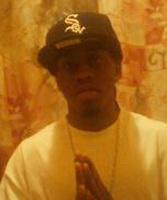
Dante L. Young was a 20-year-old Black/African-American man from Chicago whose life was cut short on the night of August 6, 2012, when gunfire found him just steps from the University of Illinois at Chicago campus. He lived in the nearby 1300 block of West Washburne Avenue, on the city's Near West Side, and those who later wrote about him online remembered a young man already carrying adult responsibilities: a recent graduate of Orr High School and a father to a little girl named Daniiya, with
family members and friends posting tributes that called him “great,” “kool,” and spoke of babysitting him when he was small and of naming children after him in his memory.
That Monday had been an ordinary summer day in a city already weary from a violent year, with shootings piling up across Chicago and neighborhoods like the Near West Side bearing much of the weight. As evening settled in, Dante was on the sidewalk near the 1200 block of South Union Avenue, a short walk from the UIC campus and not far from the major medical complexes that line the area. The streets there are busy by day with students, hospital workers, and commuters, but by late evening they quiet down into a patchwork of pools of streetlight and long stretches of shadow. It was along one of those stretches, just after 9:45 p.m., that a vehicle pulled up and shots erupted in what authorities would later describe as an apparent drive-by attack.
Multiple bullets struck Dante as he stood on the sidewalk, turning a routine night into a desperate emergency. Responders raced him from the scene to Stroger Hospital of Cook County, one of the city's main trauma centers, only a short distance from where he fell. Despite that proximity and the efforts of medical staff, he was pronounced dead at the hospital around 10:30 p.m., less than an hour after the shooting was reported. What might have been just another warm August night near the campus instead became a crime scene marked off by police tape, flashing lights reflecting off brick and pavement while detectives and evidence technicians tried to piece together what had happened and why.
The killing did not happen in isolation. That year, Chicago was experiencing a surge in homicides, with officials and residents alike talking about gang conflicts, retaliatory shootings, and the sense that some neighborhoods were under siege. Later summaries of Dante's case explicitly placed his death within that grim pattern, describing his shooting as one more entry in the toll of violence that was striking young people across the city, particularly in communities already dealing with poverty and limited opportunities. Online memorial projects cataloged his name alongside hundreds of others, listing his age, the date and place of his death, and inviting people to leave flowers, release balloons in his honor, or light virtual candles as small acts of remembrance against the scale of loss.
In the immediate aftermath, police said that no one was in custody, and there was no description released of a suspect or motive beyond the bare fact of a drive-by shooting near the campus. Over the years that followed, as the shock of that night hardened into grief for those who loved him, public records and case summaries continued to treat the homicide as unsolved. Dedicated homicide-tracking and case-advocacy sites still list his killing as an open case, explicitly asking anyone with information to come forward and offering links to the original news coverage, a quiet indication that no arrest or publicly identified suspect has yet brought Dante's family the resolution that comes with accountability.