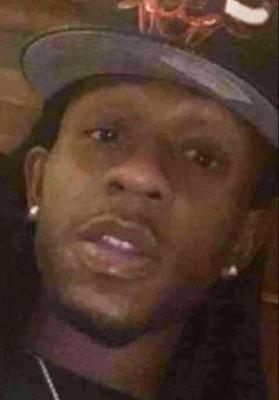
Rodney L. Stewart, a 17-year-old African-American youth, was trying to build a future for himself, but he knew he was running out of time in Chicago. Family and friends remembered the teen, also known as "Trell," as an easy-going, silly, and responsible young man. His grandmother, Sheila Green, with whom he had lived since he was 10, described him as a good kid who stayed out of trouble, liked to clean, went to bed early, and helped care for younger relatives. She recalled him as lanky and what some kids might call a nerd. Despite this, about a year before his death, Rodney warned his grandmother that he had "enemies" and was in trouble, a confession she found hard to believe at the time.
In the months leading up to his death, Rodney's life became increasingly unstable as he tried to escape the dangers he felt closing in. In May 2012, he moved from his grandmother's home to live with his mother, seeking more freedom.
When that relationship became strained, he moved in with his girlfriend, LaDorothy Morrison, and her family in the Woodlawn neighborhood. He moved with them to the West Side in August 2012. His schooling suffered during this period; by late October, officials at Bronzeville Scholastic Institute notified his grandmother that he had missed 42 days of school. Rodney told his grandmother he couldn't go back and wanted to take online classes instead. He and his girlfriend often talked about their future, and he was adamant that there was nothing for him in Chicago but jail or death. He made a plan to move to Iowa, where friends were waiting and a job prospect was available. He bought a bus ticket for November 10, 2012.
He never made it to the bus station. In the early morning hours of Thursday, November 8, 2012, just two days before his planned departure, Rodney was found. At approximately 6:50 a.m., police responded to a call and discovered him face down in an alley or gangway in the 2600 block of West 83rd Street in the city's Wrightwood neighborhood. He had been shot once in the back of the head. A weapon was reportedly found underneath his body. Paramedics rushed him in critical condition to Advocate Christ Medical Center in Oak Lawn. He fought for his life for hours before being pronounced dead at about 11:30 p.m. that night.
The Chicago Police Department opened a homicide investigation, but the case quickly met with challenges. Rodney's aunt, Andrea Johnson, who was very close to her nephew, expressed frustration that his girlfriend was not cooperating with detectives. She believed this was a major reason the case remained unsolved. Rodney's grandmother, Sheila Green, stated that she and the detectives believed they knew who was responsible for her grandson's murder. "We know, and the detectives know who did it," Green said in an interview a year after the killing. "But there isn’t enough evidence because no witness will step up."
A spokesman for the Chicago Police Department noted that charging decisions are made by the State's Attorney's Office, which typically requires credible witnesses willing to testify or physical evidence like DNA, which is often absent in murders by gunfire. Without cooperation from key individuals, the investigation stalled.
Rodney Stewart's family mourned a loss they never expected. They remembered him not for the trouble he tried to escape, but for the quiet and helpful young man he was. His grandmother held a balloon release at his grave at Mount Hope Cemetery to honor his memory. His death was one of more than 500 homicides in Chicago in 2012, a year marked by a severe spike in gun violence that drew national attention.
As of October 2013, Rodney's murder remained unsolved. His family was left waiting for a witness to come forward and provide the evidence needed for an arrest and a measure of justice. The case is a painful example of the violence that has claimed the lives of many young people in the city, and of the fear that can silence a community and stall an investigation. There is no information about a reward in this case.