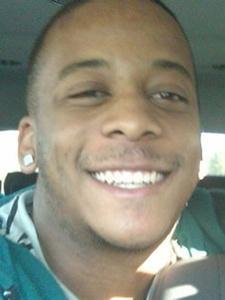
On the morning of July 10, 2013, in Chicago's Auburn Gresham neighborhood on the South Side, Marlon D. Young, a 39-year-old Black / African American man, stepped out of the house he shared with his family, planning what was supposed to be an ordinary day of paying bills and stopping by a dollar store with his wife. He lived across from a neighborhood church in a city that had been struggling for years with relentless gun violence, particularly in communities like his, where homicides in public spaces had become a grim and familiar pattern.
He walked toward his dark-gray Ford Five Hundred sedan parked near the gate, while his wife paused to talk with her mother on the front porch. In those quiet, routine movements—the car door opening, the brief conversation at the fence—there was nothing to hint at the violence seconds away. A light-gray car pulled up behind his vehicle, and three people jumped out almost as soon as the doors opened. According to his mother-in-law, they began firing immediately. Young tried to run, heading toward the parking lot of Progressive Beulah Pentecostal Church just across from his home, turning what had been a familiar, safe space into the scene of his last desperate steps. One of the attackers closed the distance, stood over him, and fired again, striking him in the head. The assailants took his wallet and money before fleeing back toward their car, leaving his body lying in the church lot as neighbors emerged and sirens began to converge on the block.
Family members, who only moments earlier had been planning the day with him, were forced to watch the aftermath unfold. His mother-in-law described him as “humble,” “loving,” and “home-focused,” the kind of husband and father whose world revolved around his family. She spoke of watching him die in front of her eyes and of the feeling that her “head is sinking” under the weight of what she had seen. His son, who was not home at the time of the shooting, had not yet been told of his father's death in the first hours afterward, as relatives tried to process how to break news that would change his life. A neighborhood anti-violence advocate, noting that another person had been killed just blocks away the week before, framed Young's death as part of a devastating chain of losses that summer—a series of shootings that left families shattered and reinforced the sense that ordinary errands and everyday routines had become dangerous in parts of Chicago.
Police and detectives worked the scene through the late morning and afternoon, examining shell casings and the path of the bullets, but the immediate information about the attackers remained frustratingly thin. Witness accounts agreed that three armed individuals had stepped out of a light-colored car and opened fire, and later reports noted that multiple vehicles were seen speeding away from the area after the shooting. Yet, by that evening, authorities reported that no one was in custody, and they had not released any detailed descriptions of the shooters. In the years that followed, case listings and memorial pages continued to describe Young's death as a homicide without naming a suspect, and advocates and case summaries openly invited the public to share tips or corrections—an indication that, in the public record, his killers have never been clearly identified or brought forward by name.