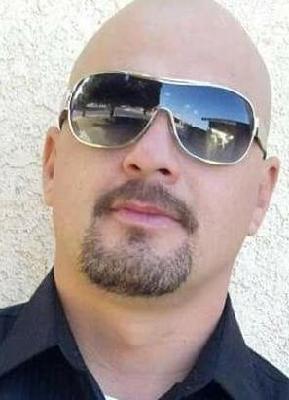
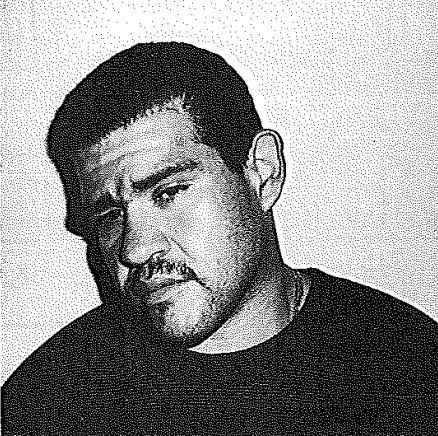
In August 1983, Charles Pray, a 57-year-old male whose race and ethnicity are not clearly documented in available public records, was working a late shift as the lone cashier at the Low Cost Market in Yuma, Arizona. The modest neighborhood store was a familiar part of his routine, a place where he handled the quiet late-night hours for customers stopping in for cigarettes, snacks, and last-minute groceries.
Shortly before midnight on August 21, a man later identified as Bernard Smith backed his car into a parking space outside the store and walked in like any ordinary customer, setting in motion a robbery that would cost Pray his life.
Smith approached the counter and asked for a pack of Player cigarettes, paying with a five-dollar bill. When Pray opened the cash register to make change, Smith drew a. 22-caliber single-action revolver and pulled back the hammer so that it clicked audibly, a deliberate act meant to intimidate the clerk. He then demanded the contents of the till, threatening to “blow head off” if he did not hand over the money. Instead of immediately complying, Pray called out twice for the store’s manager, John Wall, an instinctive appeal for help that seemed to irritate and alarm the gunman. In response, Smith fired, striking Pray in the neck at close range. With the cashier gravely wounded behind the counter, Smith reached into the register, scooped out the cash, and fled the store.
Despite the devastating neck wound, Pray initially survived the shooting. Emergency responders rushed him for medical treatment, and for a time he lingered between life and death, enduring what later court records describe as severe and protracted suffering before finally succumbing to his injuries in Yuma later that month. His death transformed the robbery case into a homicide, and a grand jury that had already been looking at Smith’s crimes in Yuma returned an additional indictment for first-degree murder tied directly to the shooting at the Low Cost Market.
Smith’s escape from the store was neither clean nor undetected. After emptying the register, he ran outside and encountered Ellen Foster and her sister sitting in their car. He ordered them to drive, then abandoned that idea and returned to his own vehicle. The sisters, realizing they had just seen a man fleeing a violent crime, followed his car for several blocks and managed to note his license plate number. They reported what they had seen to police, giving officers both a vehicle description and a plate that directly traced back to Smith. Within a short time, law enforcement stopped his car and found him behind the wheel with a revolver matching the description of the weapon used and a roll of blood-stained bills consistent with the cash stolen from the market.
Even in the face of that evidence, Smith tried to deflect responsibility. At first he claimed that he had picked up a hitchhiker who must have been the real robber and owner of the gun and cash, a story that collapsed when confronted with the witnesses’ account that he had not stopped to pick anyone up after leaving the store. He then shifted to a new version, insisting that another man, “Al Johnson,” had actually gone into the Low Cost Market and shot Pray, leaving the weapon and stolen money in Smith’s car afterward. Investigators could find no trace of this supposed accomplice, and the explanation was ultimately rejected by the courts as a fabrication. The evidence—eyewitness testimony from the women who followed him, the physical evidence in his vehicle, and the circumstances inside the store—pointed squarely to Smith as the sole perpetrator.
At the time of the killing, Smith was already a dangerous presence in Yuma. Recently paroled from a California prison in April 1983, he had embarked on a series of armed robberies targeting convenience stores in the area, including three separate holdups of Circle K locations in late July and mid-August that year. He was convicted of those robberies and received three life sentences. After Pray’s death, the state added the Low Cost Market shooting to the list of charges, ultimately trying Smith for both the robbery and the murder. A jury found him guilty of first-degree murder and robbery, and the trial judge imposed a death sentence on top of his existing life terms. Multiple appeals and post-conviction petitions followed over the years, but courts consistently upheld his conviction and the capital sentence. Smith remained on Arizona’s death row until he himself died in custody on December 11, 2002, still under sentence of execution for the murder of Charles Pray.