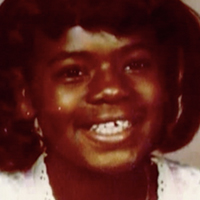
Tyna Marlene Bass was a 41-year-old Black / African American female from Atlanta, Georgia, whose death began as a horrifying discovery near Freedom Barkway Dog Park in the Old Fourth Ward area. On May 4, 2015, a man walking his dog near Highland Avenue and Howell Street came across a trash can and realized something was terribly wrong. Inside, police found Bass’s body wrapped in a blanket, rug, or similar covering.
The way she had been left stunned investigators and neighbors alike: she had not simply died there; someone had taken her life, concealed her body, and discarded her in a place where ordinary neighborhood life continued around her.
Bass was known around the neighborhood as “Tiny.” She had lived in St. Louis before moving to Atlanta, and people in the Old Fourth Ward knew her as a familiar presence who had been around the area for many years. Friends and neighbors remembered seeing her riding her bicycle and spending time near Highland Avenue and Prospect Place. She was described as part of the neighborhood, someone people recognized, missed, and talked about with grief after her death. Early reports noted that she struggled with alcoholism, but those who knew her still spoke of her as someone loved and known by many.
At the scene, investigators immediately treated the case as suspicious. Detectives noted that Bass appeared badly beaten, and her body was processed for evidence, including fingerprints and DNA. The autopsy later determined that she had died by strangulation, and investigators said she had defensive wounds, meaning she likely fought back against her attacker. That detail became important because police believed that, if Bass struggled for her life, she may have left behind the killer’s DNA under her fingernails.
The first break came when a man reported that his girlfriend was missing and had not been heard from in two days. Police soon identified the victim as Tyna Bass. As detectives canvassed the area, they spoke with people who knew her, including a man named Jeff Bolton, who was described as a friend of Bass and someone residents said knew what went on in the neighborhood. Bolton told investigators that he and Bass had been hanging out at his house before two men approached her and asked her to get into a U-Haul truck.
That story began to fall apart when detectives reviewed nearby surveillance footage. Bolton had claimed Bass got into the U-Haul around 10 p.m., but the footage did not show Bass, the two men, or the U-Haul truck. Investigators also learned that Bolton had a violent history, including prior convictions for theft and aggravated assault. With his story unsupported by video, detectives obtained a search warrant for his house.
Inside Bolton’s home, police found evidence that raised their suspicions further. Investigators discovered what appeared to be dried blood and a footprint, and in the basement they found the same kind of blanket that had been wrapped around Bass’s body. When detectives questioned Bolton, they pressed him on the false U-Haul story, the blood in his house, and what had happened to Bass. Bolton admitted having sex with Bass, which detectives believed may have been an attempt to explain why his DNA might later be found on her, but they still did not yet have enough evidence to charge him.
The investigation briefly turned toward another man, Daryl Wright, also known as “Freeze-O,” after an anonymous Crime Stoppers tip claimed he had been drinking and getting high with Bass, became angry, hit her, and killed her. The tip also suggested that someone else had pushed her body in the trash can to the dog park. Detectives questioned Wright, who admitted being with Bass the night before she was found, but the case still needed physical evidence to show who had actually attacked her.
Months later, the DNA results shifted the case decisively. Investigators said Wright’s DNA was not found on Bass, and based on that evidence, he was no longer considered a suspect. Bolton’s DNA, however, was found underneath Bass’s fingernails. Detectives believed that evidence fit the story told by her injuries: Bass had fought back while being strangled, scratching or grabbing at her attacker as she tried to survive. Investigators also determined that the blood found in Bolton’s house belonged to Bass.
By that time, Bolton was already in jail on a drug charge, and police moved to add a murder warrant against him. Investigators believed the DNA under Bass’s fingernails and her blood inside Bolton’s home tied him directly to the killing and to the place where the violence occurred. Online case discussion later reported that Jeffery Bolton pleaded guilty and received a 30-year sentence in connection with Bass’s death.
Bass’s final hours appear to have unfolded among people she knew, in the same neighborhood where she had spent so much of her life. What began with a man walking his dog and finding a trash can near a public park became a homicide investigation built around a false story, a bloody house, a discarded body, and the evidence Bass left behind while fighting for her life. Her case was not solved by one witness or one confession, but by the slow gathering of contradictions, forensic evidence, and the trace of her struggle beneath her own fingernails.