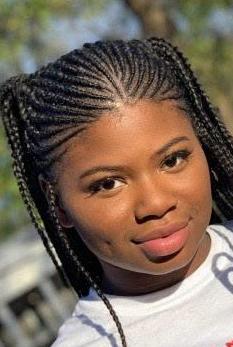
In the early morning hours of February 2, 2017, the life of 16-year-old Keosha Tinch, a female from Decatur, Georgia, was tragically cut short. She was a passenger in an SUV at the Deerfield Gardens Apartments on Campbellton Road in southwest Atlanta when an argument broke out between her friend and the friend's ex-boyfriend. The man, identified as Dwight Lewis, was seen in a heated exchange with his former girlfriend, Dyreaka Tucker, reportedly over childcare.
Following the dispute, as Tucker got into the vehicle with Keosha and others, Lewis approached and opened fire on the car. Keosha, who was sitting in the back seat, was struck by a bullet in the head and died at the scene. No one else in the vehicle was injured.
The young woman, a junior at Columbia High School, had dreams of joining the military and was just days away from her 17th birthday. Her mother, Kenya Tinch, described the unbearable pain of losing her daughter, stating, 'I feel like somebody just took my heart out my body and just balled it up.' In the wake of the shooting, a GoFundMe page was created to help the family with funeral expenses.
Atlanta police quickly identified 26-year-old Dwight Lewis as the suspect in Keosha's murder. An investigation was launched, and authorities, including the FBI, offered a reward of up to $10,000 for information leading to his arrest. Lewis was placed on Atlanta's most-wanted list and was considered armed and dangerous. For six months, Keosha's family waited for justice as law enforcement searched for Lewis. The manhunt concluded on August 3, 2017, when Dwight Lewis was apprehended in Detroit, Michigan. He was subsequently extradited back to Atlanta to face charges.
A Fulton County grand jury indicted Dwight Lewis on multiple charges, including malice murder, felony murder, and aggravated assault. During his trial, testimony from an eyewitness who knew Lewis was presented as strong evidence. The jury found Lewis guilty on all counts. He was sentenced to life in prison with the possibility of parole. Lewis later appealed his convictions, arguing that the evidence was insufficient and that the jury should have been instructed on the lesser offense of voluntary manslaughter. However, the Supreme Court of Georgia affirmed his convictions, holding that the evidence was sufficient for a rational jury to find him guilty beyond a reasonable doubt.