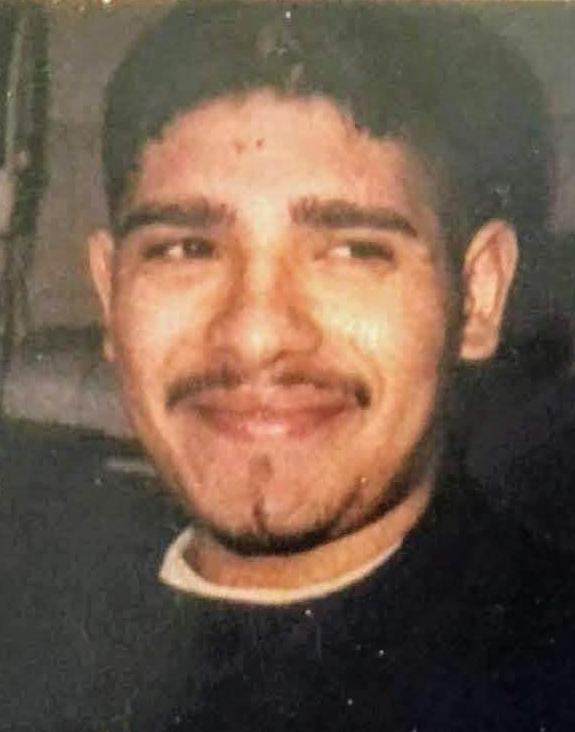
Paul Wyatt Russell Jr., a 30-year-old Black / African American man, was fatally shot on October 20, 2016, at the intersection of West 39th and Stockton streets in Garden City, Idaho. Russell, who was living in Meridian at the time, had not been part of the dispute that set the shooting in motion. He went to the intersection because a friend had become involved in an argument and Russell believed the friend might need help getting away from the situation.
The confrontation had begun
between Russell's friend and Elena Ann Pena. Prosecutors said Pena contacted her boyfriend, Lyle Joe Croson, and Mykle Don Blumenshine during the argument, and the two men came to the area armed with guns. Russell arrived separately to pick up his friend. According to investigators and prosecutors, Russell was unarmed and had no involvement in the dispute that had been unfolding before he arrived.
Gunfire erupted shortly after Croson and Blumenshine reached the scene. Both men discharged firearms, although authorities ultimately determined that the bullet that mortally wounded Russell came from Blumenshine's gun. Russell was struck in the head and collapsed where he was standing. Prosecutors later described how he essentially stopped breathing at the scene. He was rushed to a hospital, but the injury was catastrophic. Russell was declared brain dead and died after he was removed from life support.
Investigators determined that Croson fired his weapon upward rather than directly toward Russell's group, with his bullet ultimately striking a building across Chinden Boulevard. Blumenshine, however, fired in the direction of Russell and the others, and it was his round that struck Russell. Defense attorneys later maintained that neither man had specifically intended to shoot Russell. That distinction did not prevent prosecutors from holding both men criminally responsible for the killing.
The question of whether the confrontation was gang-related became an important issue in the criminal case. Ada County Deputy Prosecutor Shelley Akamatsu argued that the shooting was connected to gang rivalries. Croson was identified as a member of the Severely Violent Criminals, or SVC, a street and prison gang, while prosecutors said Russell's friend was associated with a rival gang and had shown what was viewed as gang-related disrespect during the confrontation. Russell himself had no known gang involvement or criminal connection to the dispute. Defense attorneys disputed the prosecution's characterization of the shooting as a gang-motivated attack and argued that Croson and Blumenshine had gone to the scene to retrieve Pena rather than to commit a killing.
Police began making arrests soon after the shooting. Garden City officers arrested Croson and Pena together at a Boise gas station on October 21, 2016. Croson was also wanted for parole violations and remained jailed. Pena was held on a $500,000 bond. Blumenshine was arrested by Garden City police on October 30 on parole violations. As the investigation developed, prosecutors increased the seriousness of the criminal allegations. Croson and Blumenshine were charged with aiding and abetting second-degree murder, while Pena's original charge was also amended to aiding and abetting second-degree murder.
Pena's case eventually followed a different course. In March 2017, she pleaded guilty to the reduced felony charge of accessory to second-degree murder and agreed to cooperate with prosecutors and testify against Croson and Blumenshine. Prosecutors said the accessory charge was based in part on statements Pena made to investigators after the shooting. Even after a detective informed her that Russell had been declared brain dead, Pena initially claimed she did not know what had happened, could not see where the gunshots came from and did not know Croson and Blumenshine had been armed. During her guilty plea, she acknowledged that those statements had been false. Her plea agreement contemplated a four-year sentence if accepted by the judge.
Blumenshine and Croson initially pleaded not guilty, but both ultimately admitted criminal responsibility before their cases went to trial. In August 2017, Blumenshine pleaded guilty to second-degree murder. Croson pleaded guilty to aiding and abetting second-degree murder. Investigators had concluded by then that Blumenshine fired the fatal shot, while Croson's criminal responsibility stemmed from his participation in the armed confrontation that resulted in Russell's death.
On October 13, 2017, Ada County District Judge Steven Hippler sentenced both men to life in prison. Blumenshine received a life sentence with eligibility for parole after serving 18 years. Croson received a life sentence with eligibility for parole after 15 years. Current Idaho Department of Correction records continue to list Blumenshine as serving a life sentence for second-degree murder and Croson as serving a life sentence for aiding and abetting second-degree murder.
During sentencing, the court heard about both defendants' extensive criminal histories. Both were convicted felons who were prohibited from possessing firearms and both had previous probation or parole violations. Croson and Blumenshine apologized to Russell's family. Blumenshine expressed regret for pointing and firing his weapon toward the group, while Croson told the family that he had never intended for Russell to die. Judge Hippler emphasized that Russell had simply arrived at the wrong moment after other people had created a dangerous confrontation, and that there had been opportunities for Croson and Blumenshine to take Pena and leave without resorting to gunfire.
Russell's family described him as a talented artist, a hard worker and someone known for helping other people. Originally from Texas, he joined the United States Navy about a month after graduating from high school and was stationed at Pearl Harbor, where he worked as a chef. He later moved to Idaho in 2010 and worked in the oil industry before becoming a manager at a fast-food restaurant. His father recalled his generosity, including an occasion when Russell came home from school without his new shoes because he had given them to another child.
That desire to help others was also what brought Russell to the intersection on the night he was killed. He had gone there because a friend was in trouble, not because he was looking for a confrontation. Even after his death, his family said that generosity continued through organ donation. Russell's donated organs were credited with saving the lives of four people. The shooting nevertheless left his young son without his father and his family confronting a loss that, as his father told the court, no prison sentence could undo.