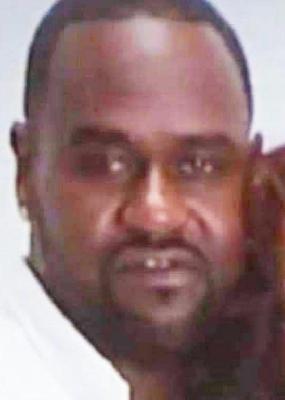
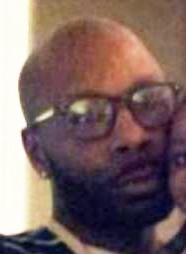
Reginald C. Brown, a 36-year-old African-American man, was fatally shot alongside his girlfriend, Roberta Newman, during the early morning hours of December 8, 2016, in Milwaukee, Wisconsin. The couple was sleeping inside Newman's home near North 107th Street and West Appleton Avenue, in the area of Florist Avenue, when an unknown intruder entered the residence and opened fire.
The killings occurred at approximately 1:30 a.m., leaving two people dead and two children inside the home traumatized by the violence. What initially appeared to be a devastating double homicide would develop into a troubling unsolved investigation involving possible personal disputes and a potential connection to gunfire in Chicago.
Brown, affectionately known as Reggie, had been in a relationship with Newman, a 38-year-old mother who had relocated from Chicago to Milwaukee. Although the couple maintained separate residences, Brown was spending the night at Newman's home when the shooting occurred. Newman's two sons were also inside the house. The last conversation Brown had with his mother, Rosie Abner, was particularly heartbreaking in retrospect. He told her he was resting in bed and needed sleep because he had work the following day. He expected to speak with her again after returning to work, unaware that the conversation would be their last.
The violence erupted while the household was asleep. Investigators determined that someone entered the residence, went to the upstairs bedroom where Brown and Newman were lying, and fired repeatedly at the couple. Both victims sustained multiple gunshot wounds and were killed before they could escape. When Milwaukee police arrived, they discovered Brown and Newman still lying beneath the bedcovers. Investigators recovered approximately 18 spent cartridge casings from the bedroom and surrounding area, indicating that the attacker had fired numerous rounds. The concentration of gunfire and the circumstances of the shooting led detectives to believe the killings were intentional and that at least one of the victims had been specifically targeted.
One of Newman's sons, who was 16 at the time, provided investigators with a critical account of what happened. The teenager had been in his bedroom when he heard gunshots coming from an adjoining room. Frightened, he contacted 911 and reported hearing gunfire inside the house. During the emergency call, he indicated that his mother was not responding. The teenager also told investigators that he had briefly looked outside his bedroom and seen a single dark figure running past his doorway. He heard footsteps as the individual descended the stairs and fled the residence. Although he could not identify the person, his observations provided detectives with important information about the attacker's movements and suggested that one individual had been seen leaving immediately after the shooting. Both children survived physically unharmed.
The killings shocked residents of the surrounding neighborhood. Local resident Tony Walker described the community's disbelief, emphasizing that the victims had been shot while lying in bed and that children had been present inside the residence. Brown and Newman's deaths occurred during an especially violent period in Milwaukee, when police were investigating several unrelated shootings across the city. By December 8, Milwaukee authorities had recorded approximately 130 homicides for the year. Nevertheless, the circumstances of this particular crime stood out because of the apparent determination of the attacker, the number of shots fired, and the fact that the victims appeared to have been defenseless.
As investigators examined the physical evidence, they discovered a potentially significant connection outside Wisconsin. Forensic testing established that the cartridge casings recovered from Newman's residence were of the same caliber and matched casings associated with a separate shots-fired incident in Chicago, Illinois. This discovery suggested that the firearm used in the Milwaukee double homicide had also been discharged in Chicago. Because Newman previously lived in Chicago, detectives began examining whether someone connected to her earlier life might have followed her to Milwaukee or otherwise been involved in the killings. The ballistic evidence provided an important investigative lead, although it did not establish the identity of the shooter or conclusively determine which victim was the intended target.
Detectives also investigated possible disagreements involving people connected to Newman. During a November 2019 public appeal for information, Milwaukee Police Detectives Nathan Butz and James Hutchinson disclosed that investigators had uncovered evidence suggesting an ongoing dispute between Newman and the father of one of her children. Police identified that individual as a person of interest and examined whether the disagreement might have played a role in the murders. Authorities did not publicly identify him in the reporting reviewed, and his status as a person of interest did not establish criminal responsibility. Investigators emphasized that they were continuing to examine other leads and had not ruled out the possibility that Brown, rather than Newman, had been the intended target.
For Brown's family, the investigation brought years of uncertainty and grief. His mother initially learned from her daughter that someone had been killed inside Newman's residence. Because Brown did not live there permanently, Abner hoped that he had escaped the violence. She later learned that her son had also been murdered. Speaking publicly in 2019, she struggled to understand why anyone would have carried out such a brutal attack. She remembered Newman as someone who had cared about her family and expressed the pain of losing her son without knowing who was responsible. Brown was also remembered through online memorial tributes as a humble, humorous, and generous individual. Contributors recalled his spiritual nature, his education at Washington High School, and his work as a welder.
By November 2019, nearly three years after the killings, Milwaukee police were still actively seeking information from the public. Detectives believed that individuals with knowledge of the crime had not yet come forward. The investigation continued to focus on the physical evidence, witness observations, the Chicago ballistic connection, and possible personal disputes involving the victims. Despite these investigative developments, the publicly available reports reviewed do not document an arrest, formal homicide charges, a criminal trial, or a conviction directly connected to the murders of Brown and Newman. No subsequent prosecution or resolution could be independently confirmed.
The deaths of Reginald Brown and Roberta Newman remain a painful reminder of an act of violence that destroyed two lives within moments and forever changed the lives of their surviving relatives. Their killer fled the residence, leaving behind spent ammunition, two grieving families, and children who had experienced the terrifying sounds of the attack. For Brown's mother, the unanswered questions have remained especially difficult because their final conversation had been so ordinary, centered on rest, work, and the expectation of speaking again the following day. The case remains publicly unresolved in the available reporting, with the identity of the person responsible and the precise motive still unconfirmed.