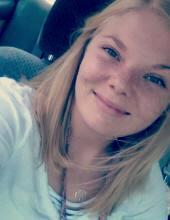
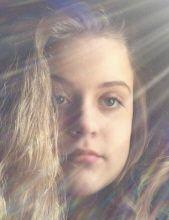
Do you know who murdered 21 year old Leah Hickman in 2007? Leah Nicole Hickman, a 21-year-old White female, was a Marshall University journalism student living in Huntington, West Virginia, when she vanished in the days before Christmas in 2007. She had grown up in the Point Pleasant and Leon area of West Virginia, graduated from Christ Academy, and moved to Huntington to attend Marshall, where she hoped to become a television news reporter.
At the time, she shared an off-campus apartment with her half-sister, Jessica Vickers, in the 400 block of 8th Avenue.
On Friday, December 14, 2007, Leah was last seen at the apartment. That afternoon, she logged into her MySpace account, and at about 5:40 p.m. she called a friend from her cell phone, saying she was going to McDonald's to get food. A McDonald's receipt later found in the apartment appeared to support that she made the trip. After that, the trail went cold. Calls to her phone began going straight to voicemail, and eventually callers received a message that her voicemail box was full. Her cell phone was never found.
The next day, her half-sister returned to the apartment and noticed troubling signs. Leah's purse, keys and car were still there, but Leah was gone. Concern grew when she failed to show up for work at Dress Barn in Barboursville and missed expected obligations, behavior described as out of character. Her family reported her missing on Sunday, December 16. Friends, relatives, police and members of the Marshall community searched for her, circulated flyers and held vigils as the missing-person case drew public attention across Huntington.
The search ended on Friday, December 21, 2007, when investigators discovered Leah's body in a crawlspace beneath her apartment building. The area was connected to or accessible from the basement laundry area, and police said the crawlspace could be reached from multiple points. Her body had been wrapped in plastic and hidden beneath the building. Authorities later determined she had been strangled. The discovery changed the case from a disappearance into a homicide investigation and left the community shaken, especially because the body had been concealed so close to where she lived.
Investigators examined the apartment building, the crawlspace and surrounding areas for evidence. Reports over the years have indicated that forensic evidence, including hair fibers or trace DNA, was collected and submitted for testing, but the results did not lead to a public identification of a killer. Mitochondrial DNA testing was reportedly completed without solving the case, and investigators later expressed concern that additional testing could consume or destroy the limited remaining sample without producing a usable result.
Police have said the case did not appear random. Investigators reportedly had a working theory that the killer knew the layout of the apartment building or understood how to access and use the crawlspace, but they did not have enough evidence to prosecute anyone. Public speculation has centered at times on people connected to Leah's life or the apartment, including speculation involving her half-sister's former boyfriend, but authorities have not publicly named a suspect, charged a person of interest, or confirmed that any one individual was responsible.
No arrests have been made in Leah Hickman's murder, and there have been no trials or convictions. The case remains unsolved. In 2014, someone spray-painted “Who Killed Leah Hickman?” on the side of the apartment building where her body had been found, a grim reminder that the question still lingered years later. Her family, especially her father, Ron Hickman, has continued pushing for answers, and her case has been cited in later efforts to strengthen cold-case review work in West Virginia, including proposals for a state cold case task force.