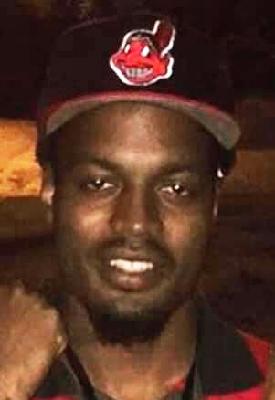
Mathew Taylor was a Black man from Richmond, Virginia, and the simple fact of his death carries a weight that doesn’t need embellishment to feel heavy. A name that once belonged to a living person—someone who moved through ordinary days, made plans, held worries, laughed at something small, and was known in ways the outside world will never fully capture—now sits on the other side of a final line. Even when the details are scarce, the loss is not. It is still a life interrupted, a silence that did not exist before, and a space that can’t be filled the way it was.
In Richmond, where neighborhoods hold long memories and families often root themselves deeply, a death doesn’t happen in isolation. It ripples through phone calls made with shaking hands, through doors that open to bad news, through the stunned moments afterward when time feels wrong—too fast, too slow, too sharp. The people who loved Mathew would have had to learn to say his name differently, with grief threaded into every syllable. They would have faced the first awful night, then the second, and then the long stretch beyond, when the world expects grief to become manageable even though it rarely does.
When information is limited, the mind reaches for something solid: a date to mark, a place to point to, a clear explanation that can be held up against the chaos of loss. But not every story is given to the public in full, and not every family wants their pain turned into a spectacle. What remains, even without the fine print, is the human truth of it: Mathew mattered. He was not a headline to those who knew him. He was a presence—someone’s call, someone’s relative, someone’s friend, someone’s memory of a moment that now feels priceless simply because it happened.
For the people left behind, grief often becomes a kind of vigilance. They replay what they do know. They search for what they don’t. They wonder what might have changed the outcome, what might have protected him, what might have brought him home one more time. In that searching, hope and heartbreak live side by side. Hope that answers exist. Heartbreak that answers may be slow, incomplete, or never fully satisfying. When there is uncertainty, it is not neutral—it becomes another burden to carry, another thing that wakes you up in the middle of the night.
If there were suspects named, arrests made, charges filed, or trials that unfolded, those milestones would shape the public arc of the story. But even without those visible markers, the private arc is already written in the lives of those who loved him: the empty chair at gatherings, the birthday that comes and goes, the small reminders that arrive without warning—a song, a street corner, a familiar phrase. Justice, accountability, and truth matter deeply in any death that raises questions, but so does remembrance. So does refusing to let a person become only the manner of their ending.
Mathew Taylor’s story, as it stands here, is not one that can be wrapped up neatly, and maybe that’s part of what makes it so painful. A life deserves to be known as more than its final chapter. Whatever the circumstances were, the fact remains that Richmond lost someone who belonged to it, and a circle of people lost someone who belonged to them. In the quiet after the immediate shock, what often endures is a simple promise made in different words by different hearts: you will not be forgotten. You will be spoken of. Your name will be carried forward, even when the world moves on faster than it should.