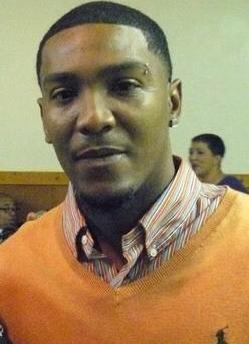
Do you know who murdered Deon? In the summer of 1997, Deon Mack, a male from Tulsa, spent the evening of June 28 at a small park in the 5200 block of South 40th West Avenue, a neighborhood spot that should have been an ordinary place to relax at the end of a warm day. Sometime that night, his car became the focus of someone else’s attention. Witnesses later told police they noticed an unidentified person lingering near Mack’s vehicle, peering through the windows as if looking for something inside.
The detail stood out enough that people remembered it, but not enough, at the time, to signal the deadly turn the night was about to take.
As the evening unfolded, Mack walked back toward his car. The stranger, still by the vehicle, did not leave or back away. When Mack approached, the encounter escalated in an instant. The person who had been watching the car opened fire, shooting Mack before fleeing into the night. The attack was sudden, with no public record of an argument or warning; from the accounts that have been shared, it reads like an ambush centered around his car. Emergency responders rushed him from the park to a hospital, but despite those efforts, he was pronounced dead there the same day.
In the immediate aftermath, the killing of Deon Mack became another painful entry in Tulsa’s list of unsolved homicides. Detectives had a rough outline of what happened—where he was, what witnesses saw near his car, the fact that he was shot as he approached—but the shooter’s identity remained hidden. The case was cataloged by the Tulsa Police Department as a cold case from the 1990s, preserved in their public listings as a reminder that justice had not yet been done. For years, the brief case summary stayed essentially the same: a man in a park, a suspicious figure by his car, gunshots, a rushed trip to the hospital, and a death that left a family without answers.
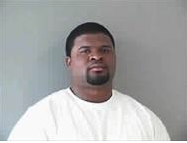
Nearly eighteen years passed before the story shifted. In 2015, Tulsa police revisited the file and, according to later summaries of the investigation, uncovered new evidence that pointed to a suspect who was already behind bars in another state. Detectives identified 49-year-old Irving Dwayne Stewart as the man they believed had shot and killed Deon Mack back in June 1997. At that time, Stewart was serving a sentence in a Georgia prison for an aggravated assault, and the renewed investigation linked him to the long-unsolved park shooting. With this development, what had once been a thin, static case file suddenly gained a name and a face for the alleged gunman.
After coordinating with authorities in Georgia, Tulsa investigators had Stewart extradited to Oklahoma. He was returned to Tulsa County and charged with first-degree murder in Mack’s death, then booked into the local jail. News reports at the time noted that he was held without bond while awaiting court proceedings, a sign of how seriously the case was being treated after so many years in limbo. The arrest was a major milestone for Mack’s case: for the first time, there was an officially named suspect facing a homicide charge, rather than an anonymous figure spotted near a car window in the dark.
Later public records concerning an inmate named Irving Dwayne Stewart show him in the custody of the Oklahoma Department of Corrections, with no publicly listed release date, indicating that he remains incarcerated on felony convictions. Those records, however, do not clearly spell out in open sources the precise outcome of the murder charge tied to Mack’s killing, leaving the final legal chapter of the case partially obscured from public view. What is clear from the surviving accounts is the arc of the story: a June night in a Tulsa park, a man returning to his car, a sudden burst of gunfire, and, years later, a long-delayed arrest that finally attached a name to the violence that ended Deon Mack’s life.