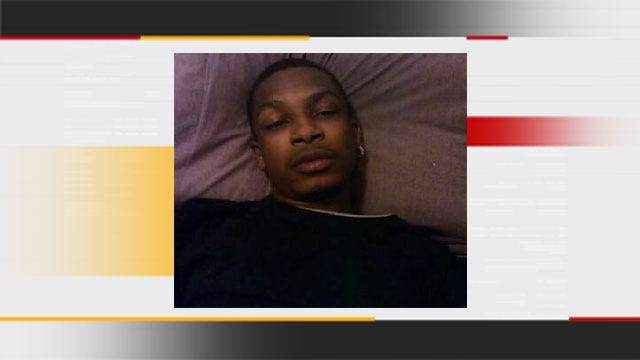
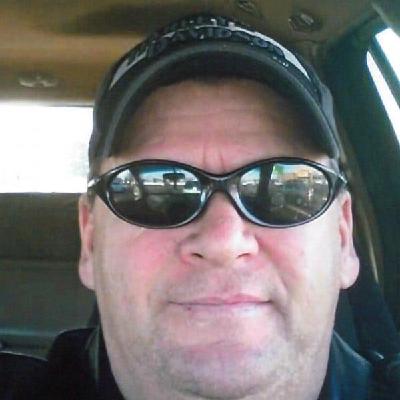
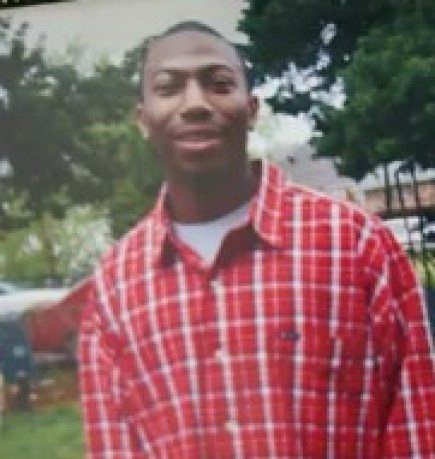
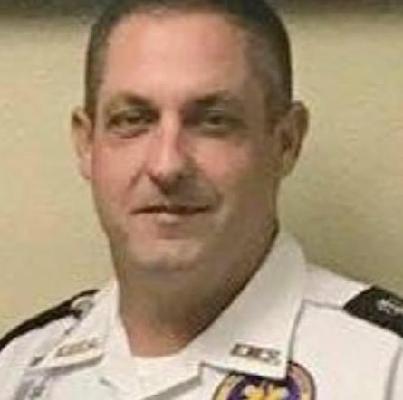
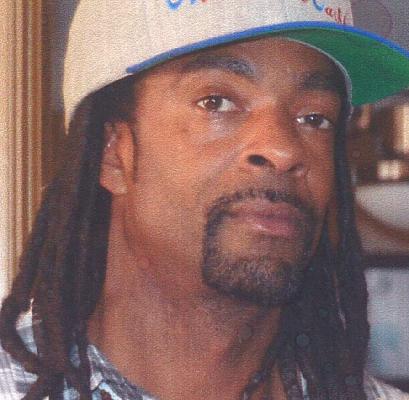
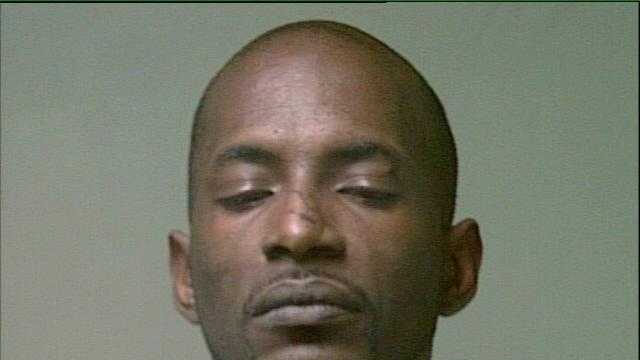
In June 2015, 34-year-old male Dennis Johnson Jr. from Oklahoma City crossed paths with people whose lives were already steeped in tension, suspicion, and crime, and the encounter ended in a way that would echo through courtrooms for years. Authorities later concluded that Dennis was stabbed to death in Oklahoma City, his final moments unfolding inside a house on the northwest side of the city, far from the quiet rural road where his body would eventually be found.
In the early hours that followed, his remains were transported nearly 100 miles to the Ada area in Pontotoc County, where they were left under a bridge and set on fire, turning a secluded stretch of Oklahoma landscape into the scene of a brutal crime that firefighters discovered only after they were called to extinguish a blaze.
The discovery under the bridge was as stark as it was disturbing. Once the flames were put out and investigators stepped into the ash and smoke, it quickly became clear that this was not an accident or a simple act of vandalism, but an attempt to erase a human being and whatever secrets his death might reveal. The body was soon identified as Dennis Johnson Jr., an Oklahoma City man whose killing now spanned two communities: the city where he had lived and died, and the small-town county where his body had been abandoned and burned. From that point on, investigators were tasked not only with reconstructing what had happened to him in his final hours, but also with understanding why so many people appeared to be involved in trying to cover it up.
As detectives pulled at the threads of the case, a grim picture began to emerge from witness statements and court affidavits. According to investigators, the violence that claimed Dennis’s life was rooted in revenge: he was believed to have stolen money, guns, and drugs from one of the couples who would later be accused in his killing. In the version laid out by investigators and later described in court records, Derrick Tyrell Laday and his girlfriend, Anna Maria Cruz, tracked him down and brought him to a house in Oklahoma City. There, witnesses told authorities, Dennis was beaten, and one account described Derrick stabbing him before his body was ultimately burned. Another witness recalled Derrick admitting that he had killed a man and needed a place to dispose of the body, a plea for help that pulled still more people into the orbit of the crime.
From Oklahoma City, the story shifted to Ada. Investigators said Derrick and others loaded Dennis’s body into a vehicle, along with gas cans and trash bags, and made the drive south. At some point, they stopped at a store and had associates buy items like bleach, ammonia, and latex gloves, the kind of purchases that suggested not panic but a methodical effort to clean up what had been done. Under the bridge near Ada, witnesses later recounted hearing the sound of gasoline being poured, followed by the crackle of a fire set beneath the structure. When firefighters arrived and put out the blaze, the remains they found would become the center of a case that eventually involved eight defendants, each accused of playing a role in either Dennis’s death or the attempt to destroy his body and the evidence it carried.
Prosecutors ultimately charged two brothers, Derrick Tyrell Laday and Aaron Tyrone Laday, along with their girlfriends, Anna Maria Cruz and Theresa Mari McDonald, with first-degree murder, alleging that they were at the heart of the fatal attack in Oklahoma City. Four others — Tionna Lynn Wilson, Anthony Deshawn Franklin, Eric Juarez, and Jalinda Rex — were swept into the case as well, accused of helping transport the body, burn Dennis’s remains, and even burn clothing tied to the killing. All eight were charged with desecration of a human corpse, and several also faced counts of conspiracy and accessory after the fact, reflecting prosecutors’ view that what happened to Dennis was not the work of a single person acting in isolation, but a group effort to punish him and then make him disappear. An affidavit noted that bloodstains found in one suspect’s vehicle matched Dennis’s DNA, a forensic anchor tying the hidden house in Oklahoma City to the burned bridge in Pontotoc County.
Years passed between the night Dennis was killed and the day the case reached its most public resolution in an Oklahoma County courtroom. When Derrick Laday finally stood trial, he did so under extraordinary circumstances: he chose to represent himself against the most serious of charges, including first-degree murder. In court, prosecutors painted him as the central figure who orchestrated the kidnapping and killing, then led the effort to move and burn the body, while also highlighting his prior history of violence as an aggravating factor. They described a crime they said was both deliberate and cruel — a man stabbed to death in a house, then transported and set ablaze under a rural bridge — and told jurors that the extent of the planning and the brutality justified the harshest punishment the state could impose.
In 2021, a jury found Derrick Laday guilty on multiple counts, including first-degree murder, and recommended the death penalty. A judge later formalized that recommendation, sentencing him to death for his role in Dennis’s killing. Even as the legal system moved forward — from initial arrests, to a web of charges against eight defendants, to a capital murder conviction and death sentence — the heart of the case remained the same: a man from Oklahoma City whose life ended in violence and whose body was burned in an attempt to erase what had been done. For those who followed the case, the verdict offered a measure of legal accountability, but it could not restore the years that Dennis lost or fully answer the quieter, more painful questions about how a dispute over stolen money, guns, and drugs could spiral into such devastating finality.
Today, what remains of Dennis Johnson Jr.’s story is preserved in court records, news reports, and the brief summaries that condense a complex life into a few stark lines: his name, his city, his age, the manner of his death, and the fact that the case is considered solved. Behind those lines lies a night of violence in Oklahoma City, a bridge outside Ada illuminated by fire, and a long pursuit of justice that stretched over years. However imperfect that justice may feel, it ensures that his death is not reduced to a nameless statistic. Instead, his case stands as a reminder of how far-reaching the ripples of one act of violence can be, touching not only the accused and the investigators, but also everyone who has had to live on in the shadow of what happened to him in that summer of 2015.