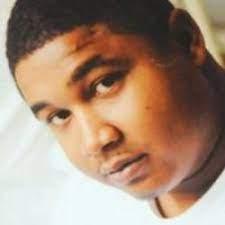
Four years before his own life was taken, Dayomine Owens was named as a defendant in a federal criminal case in his hometown of Dayton, Ohio. In early 1997, while incarcerated in a Dayton jail, he became a witness in a separate, high-profile murder case from Mississippi. Mr. Owens provided a statement to investigators implicating a cellmate in a 1996 double homicide. This statement would later be read in a Mississippi courtroom after his death, a critical piece of evidence from a man who could no longer be cross-examined. His past hinted at a life lived on the edge of the justice system, but it does not explain what happened to him three years later, on a summer day in 2000.
The known facts of Dayomine Owens’s death are stark and few. On Thursday, July 27, 2000, the Black man was killed in Dayton. Official records confirm his name, the date, and the location of his death, but offer no further details.
The specific circumstances surrounding his murder remain a mystery more than two decades later. Information regarding the time of day, the exact location within the city, the cause of death, or any potential witnesses has not been made public. His death was one of 35 homicides recorded in the city of Dayton that year, and his case is one that has grown cold with the passage of time.
The investigation into the murder of Dayomine Owens was launched by the Dayton Police Department. Detectives would have pursued initial leads, interviewed associates, and looked into his background, which included his recent history as both a federal defendant and a witness in a murder trial. The potential for his death to be connected to these prior events would have been a logical line of inquiry. However, whatever leads were generated at the time did not result in an arrest.
As years turned into a decade and then two, the investigation stalled. With no new evidence or witnesses coming forward, the case was eventually classified as a cold case. It is now listed in the Ohio Attorney General's unsolved homicides database, a collection of the state's most difficult and lingering cases, in the hope that a new tip or a fresh look at the evidence might finally provide a breakthrough. The official poster for his case serves as a quiet reminder of a life cut short and a crime left unpunished.
The central questions in this case are as pressing today as they were in 2000. Who killed Dayomine Owens and for what reason? Was his murder an act of retaliation connected to his cooperation with law enforcement in the Mississippi case? Was it related to the 1996 federal case in which he was a defendant? Or was it the result of a completely unrelated conflict, a street dispute that turned fatal on that July day? Without answers, his death remains a footnote in court documents and a name on a list of unsolved killings.
The Dayton Police Department continues to hold the file on Dayomine Owens's homicide. For his family and anyone who knew him, the lack of resolution is a persistent source of pain. Investigators and cold case advocates believe that someone in the community may still hold the key to understanding what happened. The Ohio Attorney General's office encourages anyone with information, no matter how insignificant it may seem, to come forward. Tips can be directed to the Dayton Police Department.