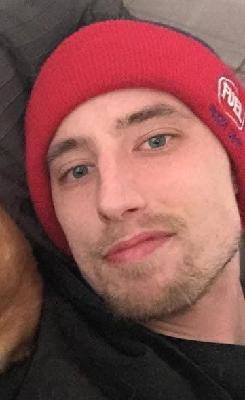
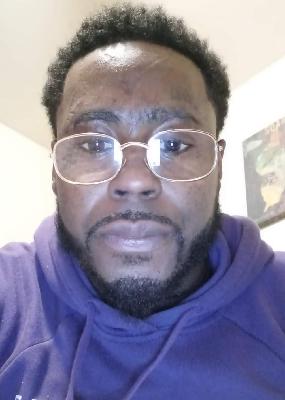
David Costello Colbert Jr. was a 20-year-old Black male from Charlotte, North Carolina, known to family and friends by the nicknames “Da Da” and “Lil David.” He grew up in a large, close-knit family, surrounded by sisters, cousins, and elders who watched him move from boyhood into a young man beginning to find his place in the world. Loved ones remember him as respectful, full of life, quick to smile, and generous with whatever he had; if he could help someone, he did.
He worked alongside his father on real estate projects, learning painting and carpentry, and people who saw him on the job talk about how seriously he took the craft, like someone quietly building a future he expected to have decades to enjoy.
He was born on September 28, 1987, and much of his life unfolded within Charlotte’s churchgoing community. His funeral would later be held at Chappell Memorial Baptist Church, with visitation before the service and burial at Gethsemane Memorial Gardens, a resting place that now holds not just his body but the weight of his family’s grief and memories. Obituary and memorial pages list a long roll of relatives: his parents, multiple sisters, nieces and nephews, and a “loving and devoted friend” who stood especially close to him. In guestbook entries, relatives describe how family gatherings changed after his death, how the house felt emptier and conversations turned again and again to stories about him, as though saying his name out loud might keep him present a little longer.
On Sunday evening, October 21, 2007, everything ended violently. According to contemporaneous crime reports, David was shot in the 700 block of Eastway Drive, in Charlotte’s Eastway Division. Wounded and unable to save himself, he was rushed not to a hospital first, but to the nearest Charlotte-Mecklenburg Police Department substation on North Tryon Street by a witness desperate to get him help. There, outside the doors of the police station, he was pronounced dead. The stark detail that his life slipped away on the threshold of the very institution charged with protecting the city has lingered in the few public accounts of the case, underscoring how sudden and brutal the attack was and how little time there was to intervene once the bullets were fired.
In the immediate aftermath, police announced that they were searching for suspects and asked anyone with information to contact Crime Stoppers. Early reports did not name a person of interest, describe a vehicle in detail, or outline a clear motive; they simply stated that investigators were looking for whoever had shot David and left him mortally wounded. As months and years passed, no follow-up coverage surfaced in local newspapers or public court records to indicate that an arrest had been made, that charges had been filed, or that a suspect ever stood trial for his killing. Modern crime and cold-case databases list him only as a murder victim under the jurisdiction of the Charlotte-Mecklenburg Police Department, with no accompanying suspect information, suggesting that his case remains officially unsolved.
Meanwhile, his story has lived on most clearly in the words of those who loved him. Online guestbooks are filled with messages from cousins who felt more like brothers, from co-workers who met him at a fast-food job and found in him a steady friend, from teachers and school staff who remembered a boy who lit up the halls with his energy. One family member wrote about gathering to mark what would have been his twenty-first birthday and described the first year without him as “long” and “painful,” a stretch of time survived only through faith and the hope for eventual closure. Another commenter recalled seeing him shortly before his death and hearing him talk about how his life was changing for the better, how he was trying to surround himself with positivity. There is a sense, reading these fragments, of a life that was just beginning to turn a corner when violence cut it short.
Nearly two decades later, the public record still tells a starkly simple story: a young man shot on a Sunday in Charlotte, a frantic drive to a police station, and a death declared outside its doors, with no publicly documented arrest or conviction to follow. What fills in that bare outline are the memories preserved by his family and friends—stories of a smiling, generous son, brother, cousin, and friend whose absence reshaped the lives around him. In those memories, David Costello Colbert Jr. is not just a homicide statistic or a name on a cold-case list, but a person whose unfinished future still haunts the people who expected to grow old with him.