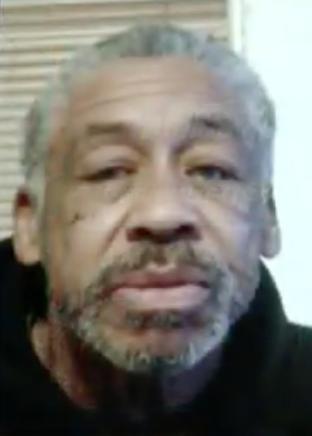
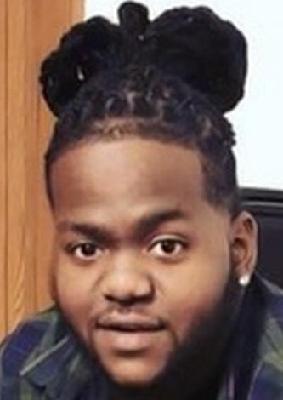
On the late afternoon of Monday, August 8, 2011, Kiontae Ramone Atkins, a 34-year-old Black man, was on Carlin Street near his mother’s home in Detroit, Michigan. At approximately 5:00 p.m., his life was violently and senselessly stolen in a drive-by shooting. Kiontae Atkins was not the intended target; he was the tragic victim of a brutal gang war he had no part in, caught in a spray of bullets fired in his direction. His death became one of many that year in a city struggling with street violence, but it would not go unanswered.
The investigation into the homicide revealed that Kiontae was an innocent bystander killed as a direct result of a gang conflict. The perpetrators were members of the Detroit chapter of the Rollin' 60s Crips, a violent national street gang that had established a presence in the city around 2006. The leader of the local sect, Jerome Hamilton, had issued a "green light" to murder rival members of the Playboy Gangster Crips.
This order unleashed a wave of violence that included a non-fatal shooting and the firebombing of a rival Blood gang member's house. The directive culminated in the drive-by shooting that claimed Kiontae’s life.
The case was pursued by a collaborative law enforcement task force operating under the "Detroit One" initiative, a program uniting federal, state, and local agencies like the ATF, FBI, and the Detroit Police Department to target the city's most violent offenders. Investigators methodically dismantled the Rollin' 60s Crips, which boasted approximately 150 members operating primarily on Detroit's west side near Seven Mile Road and Tracey Street. The gang was responsible for a vast criminal enterprise involving assaults, carjackings, robberies, and the trafficking of narcotics and firearms.
Through the Detroit One investigation, law enforcement identified the key players responsible for Kiontae Atkins's murder. In February 2016, a sweeping federal indictment was brought against 12 members of the gang on racketeering and firearms charges. Among them were Jerome Hamilton, the gang's leader, and another member, Roderek Perry. The evidence showed they were directly involved in the homicide that occurred five years earlier.
In May 2017, both men pleaded guilty to federal charges. Jerome Hamilton, then 24, pleaded guilty to racketeering conspiracy and the use of a firearm during a crime of violence causing death. As a condition of his plea, he admitted to issuing the "green light" order and took specific responsibility for his role in the drive-by shooting that killed Kiontae Atkins. Roderek Perry, then 22, also pleaded guilty to racketeering conspiracy and firearms charges, admitting his direct participation in the fatal shooting. In total, more than a dozen members of the gang were convicted on various charges.
In January 2018, justice was formally delivered. A federal court sentenced Jerome Hamilton to 30 years in prison for his leadership role and for causing the death of Kiontae Atkins. Roderek Perry’s plea agreement recommended a sentence of 30 to 35 years in prison for his part in the murder and other violent crimes. The successful prosecution was hailed as a major victory for the Detroit One initiative, which was credited with significantly reducing homicides in the city by systematically dismantling its most violent criminal organizations. Though Kiontae Atkins's life was stolen by a conflict he was not involved in, the extensive law enforcement effort ensured that the men responsible for his death were held accountable.