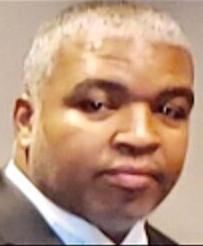
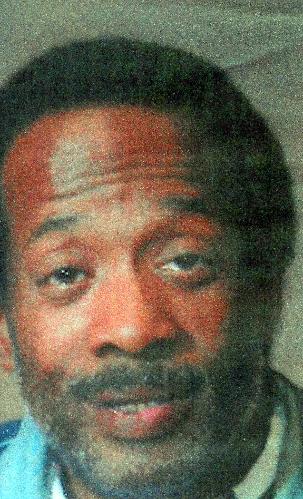
Andrew Copeland was a 16-year-old Black male from Baltimore, Maryland, when his life was taken on May 3, 2010.
The record anchors his death to the 1500 block of West Fayette Street, a stretch of West Baltimore that, like so many city blocks, holds a thousand ordinary moments inside it—people coming and going, doors opening and closing, lights in windows at dusk—until a single violent act splits time into “before” and “after.” One day a teenager is here, and the next he is not, leaving a silence that doesn’t behave like silence at all. It presses into the rooms where he should have been. It follows the people who loved him down hallways, onto sidewalks, into every ordinary routine that suddenly feels unfamiliar.
Sixteen is an age built for beginnings. It’s supposed to be crowded with plans that change every week and jokes that don’t make sense to anyone else, with the small courage of learning who you are and the stubborn hope that the world will make room for you. Whatever Andrew carried with him—his voice, his laugh, the way he moved through his neighborhood, the way he took up space—was cut off mid-sentence. For the people closest to him, grief wouldn’t arrive as one clean moment. It would arrive in waves: the first shock, then the slower, heavier realization that tomorrow will not fix this, and that time will keep moving even when their hearts refuse to.
What’s especially hard about his story, even in the starkness of the public record, is what isn’t there. No publicly available summary, no named suspect, no clear motive laid out in the open, no visible trail of charges that might suggest a resolution. The world outside his circle can glance at a date and an address and keep going, but a family can’t. They live inside questions that don’t close: Who did this? Why did it happen? What did he feel in those last moments? Did he know how loved he was? And in the absence of public answers, the imagination becomes its own kind of torment—filling the blanks with possibilities no one wants to picture, replaying scenarios, searching for a detail that might finally make it all make sense.
When there are no known arrests to point to, no courtroom scene to mark a turning point, the loss can feel doubly cruel—first the violence, then the uncertainty that stretches on afterward. It leaves the people who cared about Andrew holding not only sorrow, but a kind of suspended breath, the feeling that the story is unfinished and the ending stolen. Even years later, a name like his can be spoken softly, like a prayer, because saying it is a way of refusing to let him become only a statistic. The address and the date may be what survives in public, but Andrew Copeland was more than a location on a map. He was a boy with a future that should have had the chance to unfold, and a life that mattered enough to be remembered with tenderness—especially when the world has offered so little clarity in return.