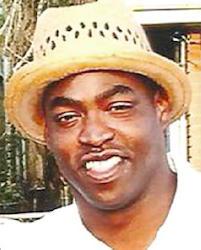
Miguel Mayen was 35 years old when his life ended on May 16, 2012, in New Orleans, Louisiana. He was a Hispanic/Latino man, and what remains in this telling is anchored to what you’ve shared: his name, his age, the day he died, and the city that held the last chapter of his story. When information is scarce, the absence itself becomes part of the weight of the tragedy, because it leaves a person defined by a single date instead of the countless ordinary moments that make up a life.
New Orleans is a place of loud beauty and deep history, of neighborhoods that carry their own rhythms, their own songs, their own griefs. Somewhere within that sprawling, complicated city, Miguel’s story came to a stop. A date like May 16, 2012 is not just a marker on a calendar. It is the day before, when everything was still possible. It is the day of, when time divides into “before” and “after.” It is the day after, when the world keeps moving even though, for the people who loved him, it never moves the same way again.
There is a particular cruelty to losing someone in a way that leaves unanswered questions. When details are missing, people fill the silence with imagination: the last phone call that didn’t come, the last door that didn’t open, the last time a name was spoken in a room without anyone knowing it would be the last. A death is already a theft, but the lack of a clear story can feel like a second theft—stealing context, stealing closure, stealing the ability to point to a chain of events and say, this is what happened, this is why, this is how the world changed in that instant.
Miguel Mayen’s death belongs to that hard category of loss where the heart wants something solid to hold onto: a timeline, an explanation, a face, a reason. Instead, what stands out most sharply is the simple truth that he is gone. Whether Miguel was a father, a son, a brother, a friend, a coworker, a neighbor—whether he was the kind of person who laughed loudly or kept his warmth quiet—his absence would have been felt in the small ways that don’t make headlines. An empty seat at a table. A phone that doesn’t ring with his number anymore. A name spoken in past tense before the mouth is ready to shape it that way.
A man does not live only as the sum of the worst thing that happened to him. He lives in the ordinary details that don’t get recorded: the places he liked to go, the food he craved, the music that could change his mood, the people he checked on, the habits he carried, the hopes he kept to himself. Yet a violent or untimely death has a way of compressing everything down to one final fact, and it takes deliberate human effort—memory, storytelling, love—to refuse that compression. To insist that Miguel Mayen was more than a date, more than an entry, more than a tragedy.
When a life ends at 35, there’s an unspoken sense of interruption. Thirty-five is old enough to have weathered storms and learned a few lessons the hard way, but still young enough that the future should have stretched out wide. There should have been more years to make amends, to build, to dream, to settle into the person he was becoming. Whatever Miguel had already survived, whatever he had already accomplished, whatever he was still reaching for—May 16, 2012 cut the thread too soon.
For the people left behind, grief does not follow a clean line. It can hit hardest in the most unexpected moments: a random street corner, a familiar scent, a song on the radio, a date that arrives like a wave you can’t outrun. Sometimes the mind circles back to the same questions again and again, as if repetition could unlock an answer. Sometimes anger and sadness trade places, each taking turns at the front of the heart. Sometimes the most painful part is the silence where details should be—because details can be faced, but silence offers nothing to confront, nothing to resolve, only the ache of not knowing.
And yet even in the absence of a fuller public narrative, Miguel’s name still matters. Speaking his name is a way of refusing to let him disappear into anonymity. It is a way of saying that his life counted, that his death mattered, that he was not just someone who died in New Orleans on May 16, 2012, but someone who existed fully and irreversibly in the lives of others. There is tenderness in that insistence: a quiet kind of justice that begins with remembrance.
Miguel Mayen’s story, as provided here, is incomplete in the way so many real stories are. But the heart of it is clear: a man died too young, in a city full of life, leaving behind a space that could never be perfectly filled. Whatever the circumstances, whatever the unanswered questions, the human truth remains that a life ended and people were changed forever. If there is any comfort to be found, it is in the act of keeping him present through words—allowing his name to be spoken, allowing his age to be remembered, allowing that single day in May to be marked not only by loss, but by the enduring fact that Miguel Mayen lived.