

How to Find Missing Persons: A Practical U.S. Guide
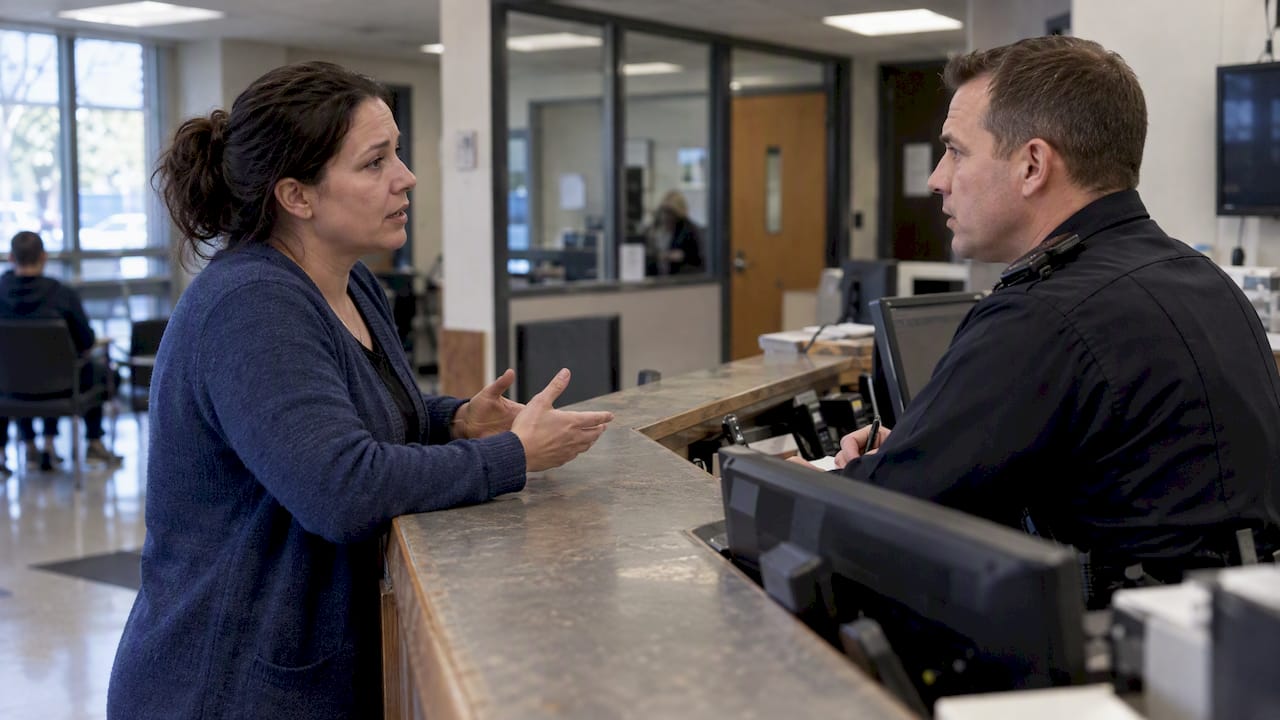
If someone you love is missing, start with one call: your local police or 911. Then work through the federal systems, state resources and community tools that can widen the search. There is no 24-hour waiting period, and the first hours matter most. This guide covers what to do in order, which national databases exist, what each one can and cannot do, and how our own searchable case database fits in.
TL;DR
- Report the disappearance to law enforcement immediately. For anyone under 21, agencies must enter the record into NCIC within two hours.
- NamUs is free and national, but it needs an active law enforcement report, and staff verify every case with the investigating agency before it goes public.
- Adults have the legal right to leave, so police response varies by jurisdiction. Keep records and push for follow-up in writing.
- Once the report is filed, a searchable database, flyers and community attention can extend the search. Look after your own health too, because this can last a long time.
Table of Contents
- Start with the report, not with the internet
- Children, adults and the gap in between
- The national databases that matter
- What you can do yourself, safely
- Our perspective: why long-term visibility matters
- Taking care of yourself during a long search
- Where our database fits in
- FAQ
- Sources
Start with the report, not with the internet
The most common mistake is waiting. Many families hear that you must wait a day before police will take a report. That is not a national rule. The FBI’s 2025 NCIC missing person statistics note that federal law requires agencies to enter records for missing persons under 21 into the National Crime Information Center within two hours of receiving a report (42 USC 5779(a) and 42 USC 5780(3)). In 2025, 498,038 missing person records were entered into NCIC.
NCIC is the database police officers across the country can check during a traffic stop, a hospital inquiry or a welfare check. A missing person who never makes it into NCIC is invisible to most of them. The Department of Justice also states that an entering agency must have an active missing person report on file to support an NCIC entry. So the report is what unlocks everything else.
If you are unsure how reports work, our guide What Is a Missing Persons Report? walks through it step by step.
What to bring or say when you call
Have these ready, but do not delay the call to gather them:
- Full name, nicknames, date of birth, height, weight, hair and eye color
- Scars, tattoos, glasses, dental work, medical devices and medications
- A recent clear photo, ideally a few
- What they were wearing, what they were carrying, and what vehicle they use
- Phone number, carrier, email and social media accounts
- Where and when they were last seen, and by whom
- Any worries: a medical condition, a mental health crisis, a threat, a dispute
Ask for the report or case number and the name of the officer or detective assigned. You will need both for every later step.
Children, adults and the gap in between
The system treats age groups differently, and knowing that helps you advocate.
Under 21. The two-hour NCIC rule applies. The federal family guide from OJJDP, When Your Child Is Missing: A Family Survival Guide, treats the first 48 hours as a critical investigative window and says quick action from parents helps drive quick action from police. For more, see our article on missing children.
Adults. The picture is less uniform. According to a Department of Justice guide for families of missing adults, adults generally have the legal right to be left alone, so there is no standard national response protocol for people over 21. Some departments act quickly. Others treat a missing adult as someone who may have left voluntarily. If you feel dismissed, the same guide encourages families to work with advocacy organizations.
Practical ways to push back politely and firmly:
- Explain exactly why this is out of character: missed work, an unused phone, medication left behind, a pet not fed.
- Ask whether the case has been entered into NCIC and request the date of entry.
- Follow up by email after each call so there is a written trail.
- Ask to speak with a supervisor or a detective unit if a patrol officer takes the report and nothing happens.
- Keep a log: date, time, name, what was said.
Our article on common delays in missing persons reports explains where these stalls usually happen.
The national databases that matter
Once a report exists, three layers of searching open up. Here is how they differ.
| Layer | Who can use it | What it does |
|---|---|---|
| NCIC | Law enforcement only | Instantly shared record across agencies; kept until the person is located or the entering agency cancels it |
| NamUs | Families, law enforcement, medical examiners, coroners | Public repository of long-term missing, unidentified and unclaimed persons cases, with cross-matching |
| State clearinghouses | Families and the public, varies by state | State-run bulletins and contact points, such as Indiana’s missing person bulletin |
The FBI notes that records in the NCIC Missing Person File are retained indefinitely, until the person is located or the entering agency cancels the record. Families cannot enter NCIC records themselves, which is why the police report matters.
Using NamUs without wasting weeks
The NamUs User Guide explains that it supports long-term missing and unidentified human remains investigations and holds a central repository for professionals. Families can also register and enter a case. Before it is published, an administrator verifies the report with the investigating law enforcement agency.
The guide recommends waiting to enter a case until all 18 required fields are available, since without them the case cannot be published and stays inaccessible to other users. Those fields include the case’s basic identifiers and the investigating agency’s name. So before you sit down at the form, collect:
- The police report number and agency name
- The investigator’s contact details
- Date and place of last contact, and circumstances
- Physical descriptors, including whether the person went missing from tribal land
If you run into technical problems, NamUs has a contact form for website and lockout questions. Note that NamUs is not an emergency line. Call police first.
Searching by state
Missing persons cases are handled locally, so a state-by-state view is often how families find the right agency, nearby cases and similar patterns. Our article 88,093 Active NCIC Records: Where to Find U.S. Missing Persons by State shows where to look in each state, and Missing Persons Search: 3 Federal Resources explains what families can share publicly and what to leave to investigators.
What you can do yourself, safely
Police lead the investigation, but families do real work around it.
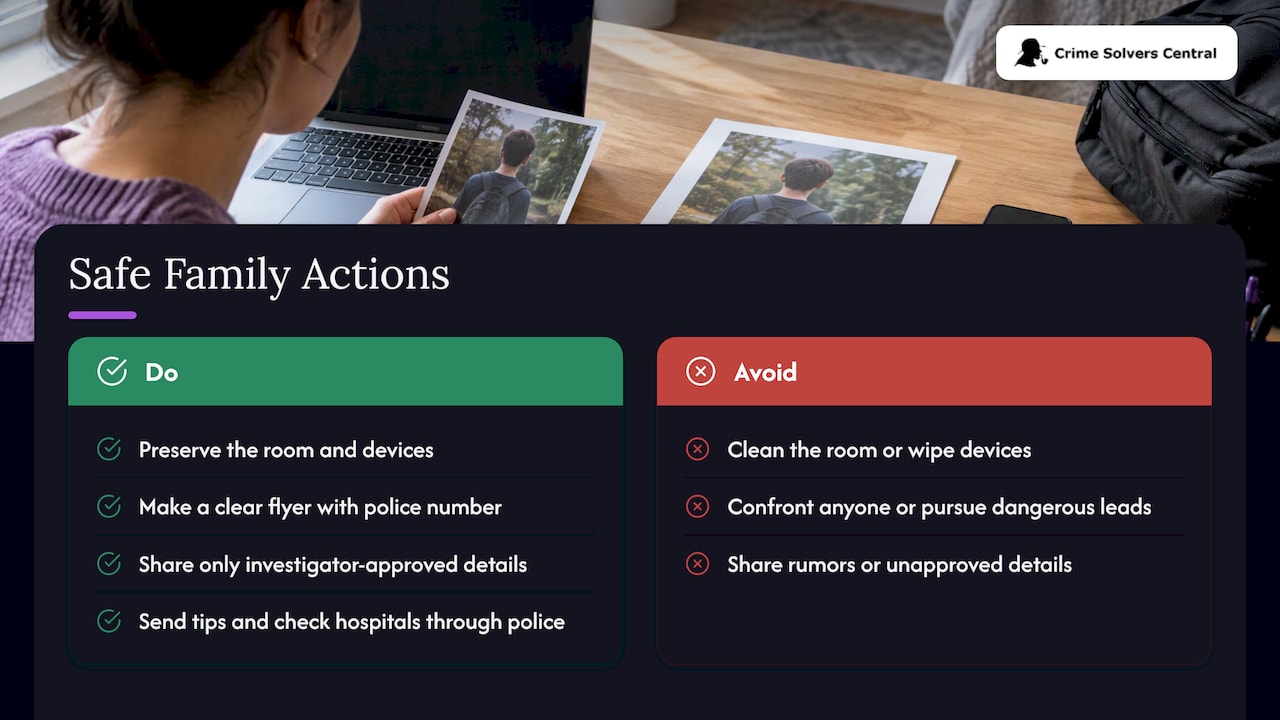
Preserve, do not disturb. Do not clean the person’s room, wipe their devices or change their passwords. Tell investigators about devices, accounts and cloud backups so they can pursue them properly.
Make a flyer. A clear photo, a short physical description, last-seen location and the investigating agency’s phone number are enough. List the police number, not only your own. A cluttered flyer gets ignored.
Use social media carefully. Posts spread fast, and so do rumors and false sightings. Share only details that investigators have approved, and read Recent Missing Persons Cases: Verify Before You Share before you repost anything.
Channel tips to police. Do not confront anyone or investigate dangerous leads yourself. Pass names, photos and sightings to the assigned detective.
Check in with local hospitals only through police or with their guidance, since privacy laws limit what staff can tell you.
For a longer checklist, see Missing Person Tips for Families and Investigators and Common Mistakes in Missing Persons Searches to Avoid.
Tribal communities
If your missing loved one is American Indian or Alaska Native, the Department of Justice has a dedicated guide, When a Loved One Goes Missing, with steps for searching, coping with trauma and finding assistance. Jurisdiction can be tangled between tribal, federal and local agencies, so ask in your first call which agency has authority.
Our perspective: why long-term visibility matters
We built Crime Solvers Central around a simple observation: most missing persons cases do not end in the first week, and the ones that stretch into months or years lose attention fast. Official systems are essential, but they are built for professionals and for verified records. Families often tell us they feel like they are shouting into a void once the first news cycle passes.
That is why we keep a national database of more than 264,000 cold cases, including missing persons, unsolved homicides and unidentified or unclaimed remains, sorted by state and situation. A case that is easy to find is a case that can be recognized by a stranger, a retired detective, a student or a relative in another state. Our members also use digital evidence boards, forums and volunteer coordination to keep a case from going quiet.
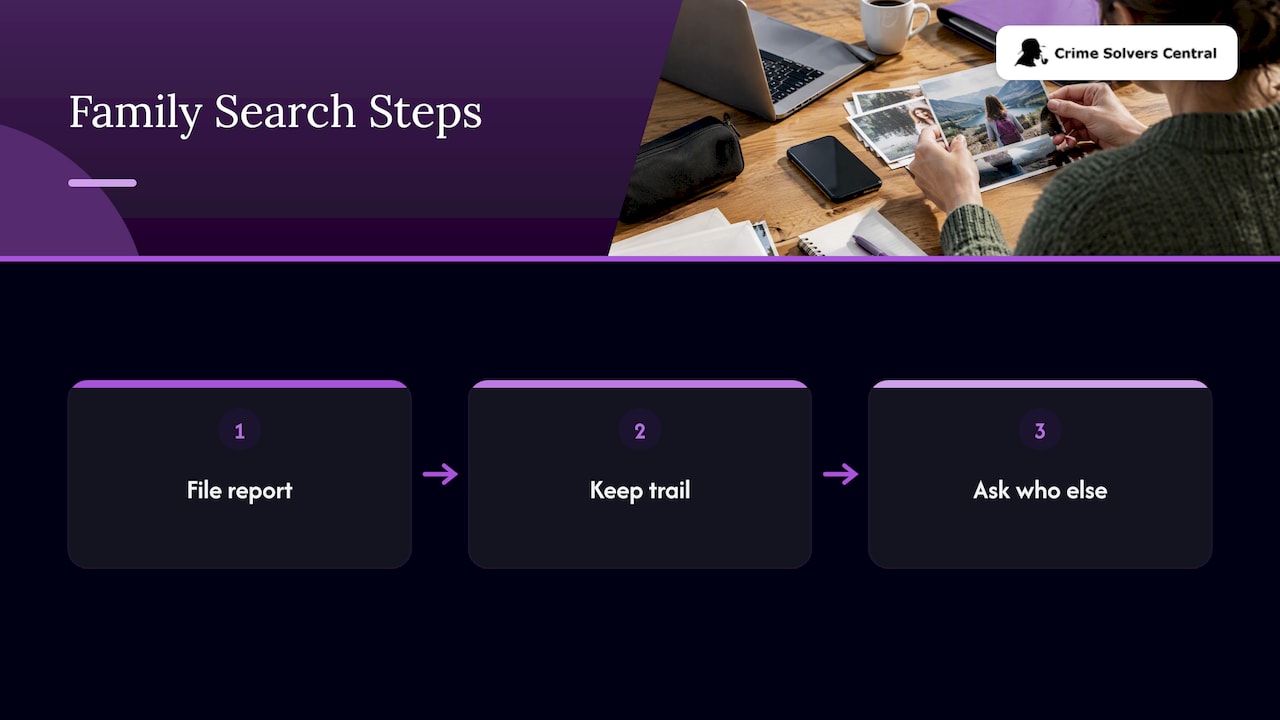
We are not law enforcement, and we do not replace the police report, NCIC or NamUs. We work alongside them. Our advice to every family is the same: file the report first, keep the paper trail, and then ask who else could be looking.
— Crime
Taking care of yourself during a long search
The OJJDP survival guide frames this as a marathon, not a sprint. Its advice is plain: keep basic routines such as changing clothes or opening the curtains, and stay away from alcohol or drugs, which can worsen anxiety and make it harder to advocate for your loved one. If you notice you are isolating, it recommends professional mental health support and peer networks. One example it names is Team HOPE, which connects people who have had a missing or exploited child.
If you are in a crisis yourself, call or text 988, the Suicide & Crisis Lifeline, or contact your doctor or a licensed therapist. This is not a sign of weakness. You cannot search well when you are exhausted.
Family communication matters too. Patty Wetterling, a family advocate quoted in the same guide, stresses regular, calm family meetings, particularly when rumors or media attention surface. Give siblings words to respond to hurtful questions so they do not feel isolated or afraid. For related guidance, see our family action guide on missing and murdered people.
Where our database fits in
If the case has been open for a while, or if you want to see how other families and volunteers have approached theirs, you can browse our cold case database by state at no cost to see case summaries. Full case files, sources, videos, forums, a flyer builder, digital evidence boards and A.I. image tools are available to members.
Plans on the pricing page:
| Plan | Monthly | Yearly |
|---|---|---|
| Jr. Detective | 3.97 USD | 39 USD |
| Sr. Detective | 9.97 USD | 99 USD |
| True Crime Influencer | 39.97 USD | 399 USD |
You can also join the conversation in our community forums or read about us first. Membership supports the platform. It is never a substitute for the official report.
FAQ
Do I have to wait 24 hours before reporting someone missing?
No. There is no national waiting period. For anyone under 21, agencies must enter the record into NCIC within two hours of receiving a report. For adults, procedures vary, but reporting right away still gives investigators the most time.
Can I enter a missing person into NamUs myself?
Yes, registered users can enter cases, but NamUs needs an active law enforcement report and verifies each case with the investigating agency before publishing. Gather all 18 required fields first so the case is not stuck unpublished.
What if the police will not take my adult relative’s case seriously?
Adults have the right to leave, so response varies by department. Document why the absence is out of character, ask for the report number, confirm whether an NCIC entry exists and follow up in writing. Ask for a supervisor or detective unit, and consider working with a family advocacy organization.
Is it safe to post about a missing person on social media?
It can help, but only with accurate, police-approved details. Include the investigating agency’s contact number, and avoid posting unverified rumors or inviting people to look on their own.
Sources
- 2025 NCIC Missing and Unidentified Person Statistics, FBI
- Fact Sheet: How to Enter Missing Person Records, U.S. Department of Justice
- When a Loved One Goes Missing: Resources for Families of Missing American Indian and Alaska Native Adults, U.S. Department of Justice
- When a Loved One Goes Missing, Operation Lady Justice guide
- When Your Child Is Missing: A Family Survival Guide, OJJDP
- NamUs User Guide: Entering Missing Person Cases
- Contact Us, NamUs