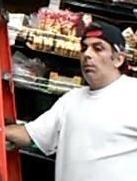
Marlon D. Lee was a man walking a line between a difficult past and a future he was determined to change. A 36-year-old African-American man, he was described by his mother, Rosalind Lee, as outgoing, outspoken, and fiercely loyal to his family and friends, which included three children. His family acknowledged his history; he had been in and out of jail since he was 12 and had convictions for attempted murder, firearms, and drugs. His mother said he had been a “thug” and a “gang banger,” but that he was also a man who found a new sense of purpose trying to undo the harm he had once been a part of. That purpose was his work with CeaseFire, a Chicago violence prevention program.
For about a year and a half, Marlon dedicated himself to being a "violence interrupter" in the same South Side communities he grew up in. His director at CeaseFire Illinois, Tio Hardiman, remembered him as being “really passionate about the work.”
Marlon was effective, known for his ability to step into tense street confrontations and de-escalate them before they exploded into violence. Hardiman recalled one incident in June 2011 when Marlon single-handedly talked down two large, hostile groups of young men. “They would listen to Marlon,” Hardiman said. “Whenever I called him, he was there.” His sister, Je-Ree Scott, said he was so committed that he would sometimes sleep at the CeaseFire office in case he was needed. Though he had been laid off in late 2011 due to budget cuts, the desire to make amends remained. “He was trying to make amends for the wrong things he did in the community while being brought up,” his mother said.
On the morning of September 25, 2012, the violence Marlon had been working to stop found him. At about 10:00 a.m., while driving in the Woodlawn neighborhood, he was shot in the back on the 1200 block of East 65th Street. Gravely wounded, Marlon kept driving, his car finally coming to a stop on the 6100 block of South Woodlawn Avenue. His CeaseFire director believed he was trying to drive himself to Jackson Park Hospital for help. But his sister thought his final destination was more personal. “I felt like he knew that that was it for him,” she said, believing he was trying to get back to Kimbark Avenue, the street where he was born and had often said he would die. Emergency responders arrived and transported Marlon to Northwestern Memorial Hospital, where he was pronounced dead at 10:45 a.m.
The Chicago Police Department investigated the homicide. Marlon’s death came during a year of sharply rising violence in the city. In the Grand Crossing police district, where Woodlawn is located, homicides were up 45 percent and shootings had increased by 43 percent compared to the same period in 2011. In the wake of the shooting, Tio Hardiman announced that CeaseFire would hold a prayer vigil to honor Marlon’s work and would actively try to prevent any retaliatory violence that might follow his murder.
Marlon’s family was left to grieve the loss of a second son to the streets; his brother, Devon, had been killed by gun violence in 2002. His sister believed Marlon had stayed in Woodlawn, despite its dangers, to feel closer to his late brother. “His soul was there,” she said. His mother, Rosalind, while heartbroken, found a small measure of comfort at his funeral. A young man approached her and told her that it was Marlon who had convinced him to leave the violent street life behind. “There are some who have yielded,” she said, “who have listened.”
The investigation into the murder of Marlon D. Lee remains open. No arrests have been publicly announced, and no suspects have been named. His case is a painful reminder of the challenges faced by those who try to escape a violent past and dedicate themselves to creating a more peaceful future. As of late 2021, his death is still considered an unsolved homicide, leaving his family and community waiting for answers and for justice.