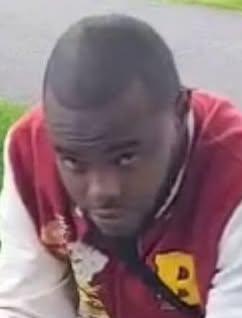
On a summer evening in Boston, fifteen-year-old Black / African American male Germaine Rucker was riding his bicycle in Dorchester, carrying a knapsack filled with necklaces he was selling. It was August 10, 2003, and the young man would not make it home that night. A group of youths from the Dudley Street neighborhood approached him on Wendover Street in an unprovoked attack. They knocked him to the ground and began to beat him.
One of the assailants demanded, "where's the bag," and ran off with it. As Germaine lay on the ground, sixteen-year-old Kentel Weaver shot him twice, once in the back and once in the head, before fleeing down Humphrey Street.
The investigation into Germaine's murder led police to Kentel Weaver. A witness saw the shooter stumble while running away, dropping a gun and a distinctive Detroit Tigers baseball hat. The shooter picked up the gun but left the hat behind. An officer testified that Weaver had been wearing the same unique hat when he was arrested for an unrelated crime just two weeks prior. DNA testing on the hat further linked it to Weaver. After police questioned him at his home, Weaver’s mother confronted him. Following a long prayer session with his mother, a crying Weaver was taken to the police station where he confessed, "I shot Germaine Rucker," even before the detective could finish reading him his Miranda rights.
In April 2006, a Suffolk Superior Court jury convicted eighteen-year-old Kentel Weaver of first-degree murder and unlawful possession of a firearm. He was sentenced to the mandatory term of life in prison without the possibility of parole. Weaver's conviction was followed by a series of appeals. The defense argued that his confession was coerced by his mother and that his lawyer had been ineffective. The case eventually reached the U.S. Supreme Court, which upheld the conviction. However, a 2013 Massachusetts Supreme Judicial Court ruling invalidated mandatory life-without-parole sentences for juveniles. This decision made Weaver eligible for parole. After being denied parole in 2019, Kentel Weaver was granted parole in 2022.