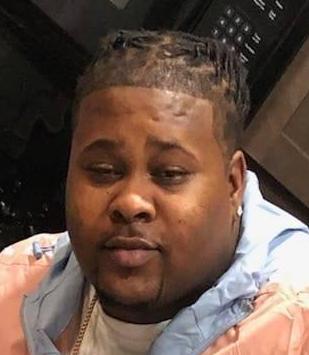
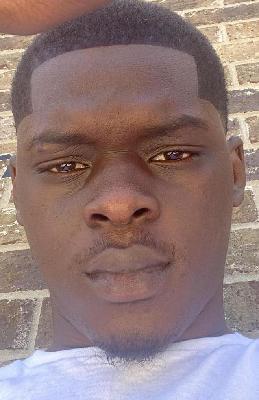
On the night of April 6, 2019, in West Memphis, Arkansas, JuWuan McClendon, a Black man and aspiring rapper better known by nicknames like “Wuan Wuan” and “Wuan Hunned,” joined friends for a concert at a familiar neighborhood spot. The venue was 2nd Chance Automotive Repair and Body Work on East Broadway, an auto shop that transformed after hours into a packed nightclub, drawing a young crowd from both sides of the Mississippi River.
Loved ones later described him as a devoted father to his daughters, a hardworking barber and forklift operator, and a warm, funny presence whose easy smile made him stand out in any room.
That Saturday had been advertised on social media as a party and performance for Memphis rapper Kevo Money. Inside the makeshift club, people crowded near the front stage, drinking, talking, “just vibing” to the music as the night crept into the early morning hours. Around 1:30 a.m., witnesses recalled, the easy atmosphere shattered; an argument near the stage flared, and then a rapid series of gunshots ripped through the building. Patrons hit the floor or ran for the exit as panicked screams mingled with the noise of overturned chairs and the echo of continuing gunfire. When the shooting stopped, three men had been hit. Two of them—McClendon and another local man, Nathaniel “Kingboohead” Henderson—would not survive.
Police officers arriving at 2nd Chance found a chaotic scene outside and a grim stillness inside. Near the front of the club, just inside the doorway and close to the stage where the concert had been unfolding, Officer Martin Gill discovered McClendon lying on the floor, bleeding heavily from multiple gunshot wounds. He was still alive when the officer reached him but gravely injured, and he later died from those wounds at the hospital. Forensic testimony would later reveal that McClendon had suffered numerous gunshot injuries, with multiple bullets remaining in his body and many more having passed through, a pattern consistent with someone being shot repeatedly at close range. Deeper inside the club, officers found Henderson face up on the floor, a single gunshot to the head having ended his life where he fell.
In the days that followed, investigators pieced together what had happened inside the crowded building using security camera footage and eyewitness accounts. A surveillance camera pointed toward the stage captured the moment an argument near the front escalated into violence. The video showed people reacting to the first shots and scrambling toward the exit. On the floor near the front door, the camera picked out McClendon’s body to the left of the entrance. A man identified as Reginald Smith stepped into view, approached McClendon as he lay on the ground, pointed a handgun downward, and fired multiple shots into him before running out of the club. Seconds later, another man, Raheem Deshun Stackhouse, came into frame, raised a gun toward the rear of the club where Henderson had fled, and fired a single shot in that direction before also fleeing. Ballistics later confirmed that the bullet fragments taken from Henderson’s skull came from a different weapon than the one that fired the rounds lodged in McClendon’s body, supporting investigators’ conclusion that two shooters were responsible for the two deaths.
By the morning after the shooting, West Memphis police had named two 23-year-old men—Reginald Smith and Raheem Stackhouse—as suspects in the killings of McClendon and Henderson. Public appeals went out as both men remained at large, and the case was picked up by local media and crime bloggers who highlighted their criminal histories and the danger they posed. A regional manhunt followed. According to later reporting, Stackhouse was taken into custody first, surrendering about a week after the shooting, while Smith was arrested soon afterward. Both were booked on homicide charges connected to the deadly concert at Second Chance, and community leaders, including the city’s mayor, spoke publicly with the victims’ families and urged young people to see that violence was not the way to resolve disputes.
As the criminal cases moved through the courts, the roles of each gunman came into sharper legal focus. In Crittenden County Circuit Court, Smith admitted in testimony that he had killed McClendon, though he denied any part in Henderson’s death. Prosecutors, relying on the nightclub video and forensic evidence, charged him with murdering McClendon; later summaries of the case note that he pleaded guilty to second-degree murder for that killing and received a 30-year prison sentence. Stackhouse was tried separately for Henderson’s death. A jury saw the same surveillance footage showing him firing once toward where Henderson had been last seen and heard testimony from witnesses who described him fleeing the club with a gun in hand. He was convicted of the lesser-included offense of second-degree murder and sentenced to twenty-five years in prison, a verdict and sentence that were upheld on appeal in 2022.
While court proceedings determined who was legally responsible, McClendon’s family and community tried to hold onto the memory of the man they had lost. On online memorial pages, relatives and friends called him “down to earth” and “one of the realest,” remembering how much he loved his “beautiful baby girls” and how he lit up family gatherings by rapping and joking with cousins. Others wrote about him cutting hair, working long hours, and still finding the energy to be present for his children, describing him as a “great dad” and a “real family man.” His name now sits among hundreds of others on gun-violence memorial lists, but for those who knew him, the story of that early-morning shooting at a converted auto shop is inseparable from memories of a loved one whose ambitions and responsibilities were rooted in everyday life—and whose absence left a silence that no music in that crowded club could ever match.