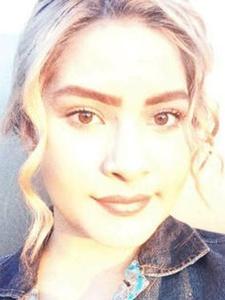
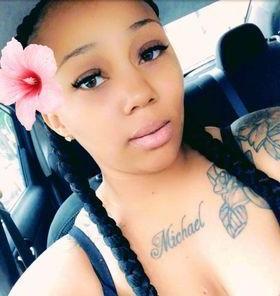
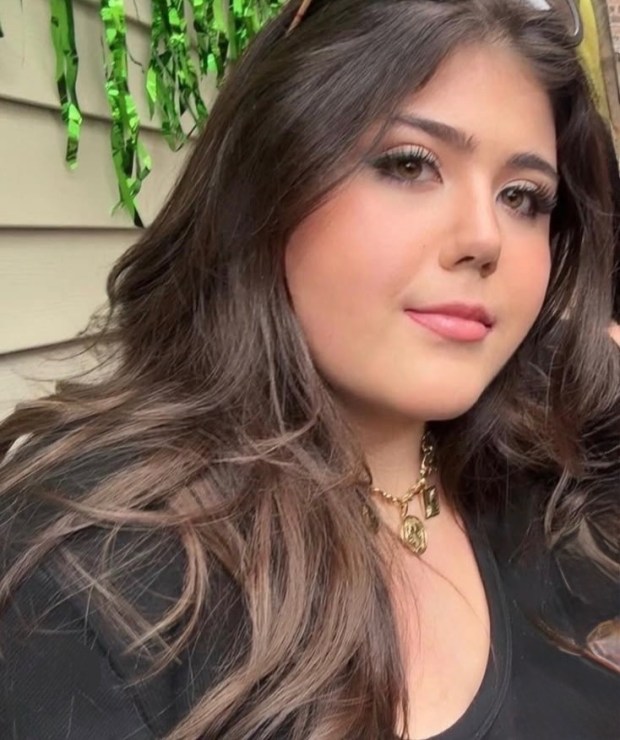
Kyra Young, a 17-year-old African-American female from Chicago, was spending the early evening of June 7, 2017, with friends when her life was cut short by gunfire on the city's South Side. She was known to those close to her by the nickname “Keira Murdaa,” a name that shows up in memorial listings after her death, and she made her home in the Bronzeville neighborhood, one of the historic heartlands of Black Chicago on the South Side.
Friends and relatives who later wrote about her online described a teenager with a big personality, remembered as silly, creative, and fearless, the kind of young woman who could light up a room and whose presence is still felt in the grief-soaked messages left in her memory.
That Wednesday, just after 5 p.m., Kyra was riding in a red Chevrolet Impala with two men along East 79th Street in the South Shore neighborhood, not far from the lakefront. According to police accounts summarized in news reports, the car was heading west when another vehicle pulled up alongside them. Someone inside that passing vehicle opened fire, sending bullets into the Impala in what investigators would classify as a drive-by shooting. In the chaos that followed, the Impala veered off course and smashed into a light pole in the 1800 block of East 79th Street, transforming a sunny early summer evening into a scene of twisted metal, shattered glass, and panic.
The attack left devastation inside the car. Kyra was struck in the body by at least one of the rounds fired into the Impala. Police and paramedics rushed to the scene, and she was taken to Advocate Christ Medical Center in Oak Lawn, a major trauma center that receives many of Chicago's gunshot victims. Despite emergency efforts, she was pronounced dead at 6:33 p.m., less than two hours after she had set out on what should have been an ordinary ride with friends. A 20-year-old man in the front seat was shot in the face; although police initially believed he had died, later reports explained that he survived and was in critical condition at Northwestern Memorial Hospital. The third person in the car, a 25-year-old man, suffered injuries from the crash rather than the gunfire and was hospitalized with injuries that were not thought to be life-threatening.
Kyra's killing was not an isolated tragedy; it unfolded on a day of heavy violence across Chicago. That Wednesday, at least three people were killed and nine others wounded in shootings on the city's South and West sides, and the drive-by on 79th Street was described in news coverage as the latest homicide of the day. Gun-violence monitoring organizations later logged the incident as a drive-by shooting, “car to car,” another entry in a long list of roadway ambushes in which shooters use moving vehicles to attack and disappear before police can respond.
In the immediate aftermath, police publicly described the basic contours of what happened — the time, location, the red Impala, the shots from a passing vehicle, the crash — but available accounts did not provide a detailed suspect description, a motive, or any indication that someone had been taken into custody. News stories in the days that followed focused on the toll of shootings citywide rather than on developments in Kyra's specific case, and they likewise did not mention an arrest or charges tied to her death. Years later, online case summaries and memorial pages that gather information on unsolved homicides still describe her killing as a drive-by shooting and invite the public to provide tips or corrections, without listing any named suspect or outcome, suggesting that no resolution has been publicly recorded for the crime that ended her life.
As time has passed, Kyra has remained present in digital spaces dedicated to remembering victims of gun violence. Memorial pages list her name, age, and the date and place where she died, offering places to “light a candle,” leave a message, or simply write “R.I.P. babygirl,” as some have done. On remembrance sites that focus on Chicago's homicide victims, her picture appears among hundreds of others, and her nickname is recorded alongside her formal name, so that friends who knew her from the neighborhood and the online world can recognize her instantly. These short fragments — a few words about her personality, a handle she used among friends, the neighborhood where she lived — are all that the public record preserves of who she was, but together they paint a portrait of a teenager whose life was violently interrupted on a city street, and whose story is still waiting for justice.