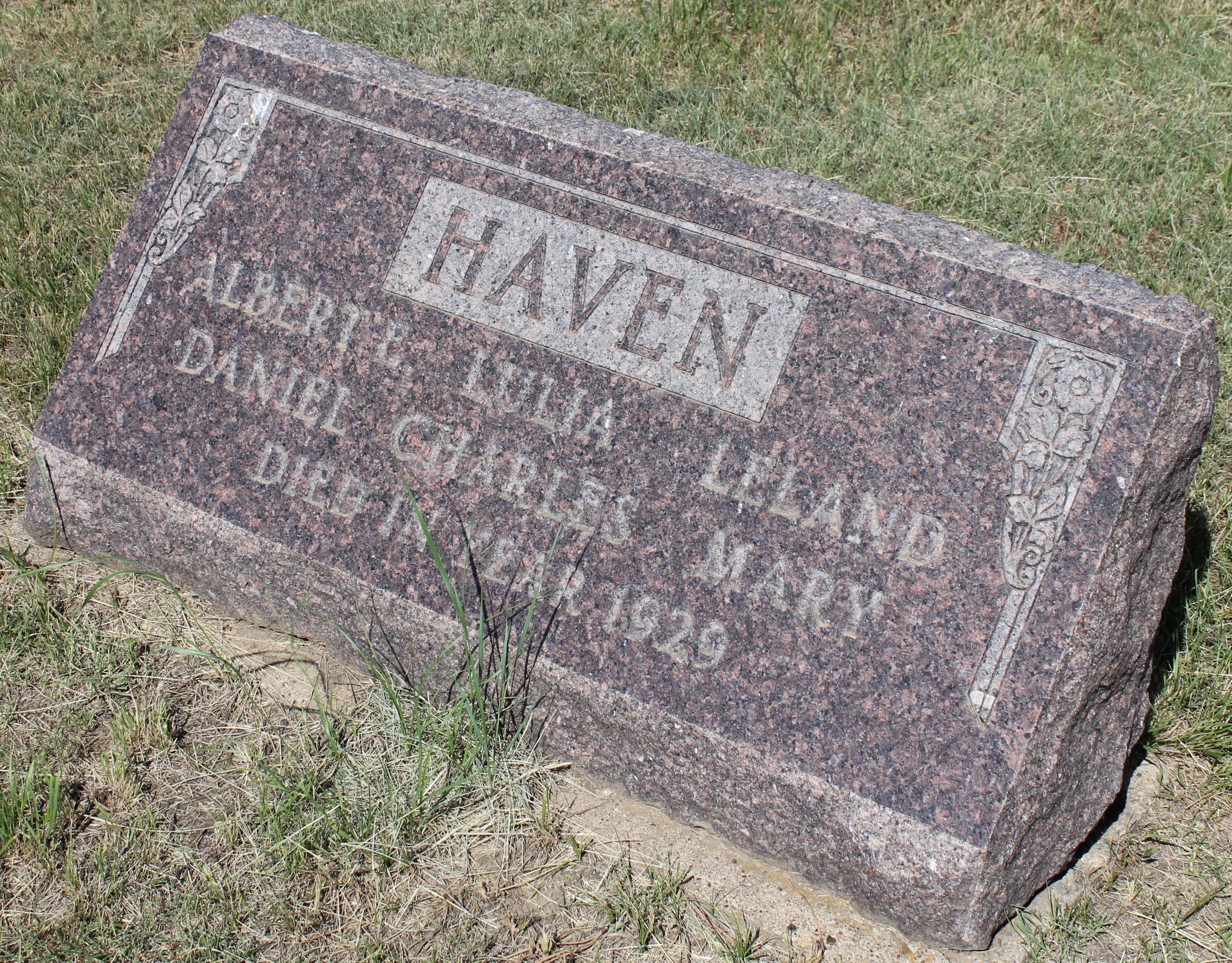
On a cold February day in 1930, tragedy struck the Haven family on their farm located about five miles east of Watford City, North Dakota. The entire family of six was murdered, including two-month-old Mary Haven, a female infant. Her family, consisting of her parents, Albert and Lulia, and her three older brothers, Daniel, Leland, and Charles, were all victims of a horrific act of violence that would become a dark chapter in the state's history.
For months following February 9, 1930, the disappearance of the Haven family was a mystery to their neighbors and the local postmaster, who noticed their mail piling up. A hired hand, 21-year-old Charles Bannon, remained on the farm, claiming the family had abruptly moved to Oregon and that he was now renting the property. Suspicions arose in the fall when Bannon began selling off the family's livestock and grain. This led to his arrest on larceny charges.
During questioning, and under the encouragement of his mother and attorney to tell the truth, Charles Bannon's story began to unravel. After a false confession where he tried to blame Mrs. Haven, he eventually admitted to the murders. Bannon claimed that he had accidentally shot the eldest son, Daniel, and when the rest of the family turned on him, he killed them all in a panic. His father, James Bannon, was also implicated as an accomplice.
Charles Bannon and his father were held in the McKenzie County jail, awaiting trial for the murders. However, justice would take a different, more brutal form. In January 1931, a large, organized mob of hooded men stormed the jail. They overpowered the sheriff and his deputy, cut the phone lines, and broke into Bannon's cell. The mob then took Charles Bannon to the Cherry Creek Bridge and lynched him. No one was ever identified or prosecuted for the lynching of Charles Bannon.