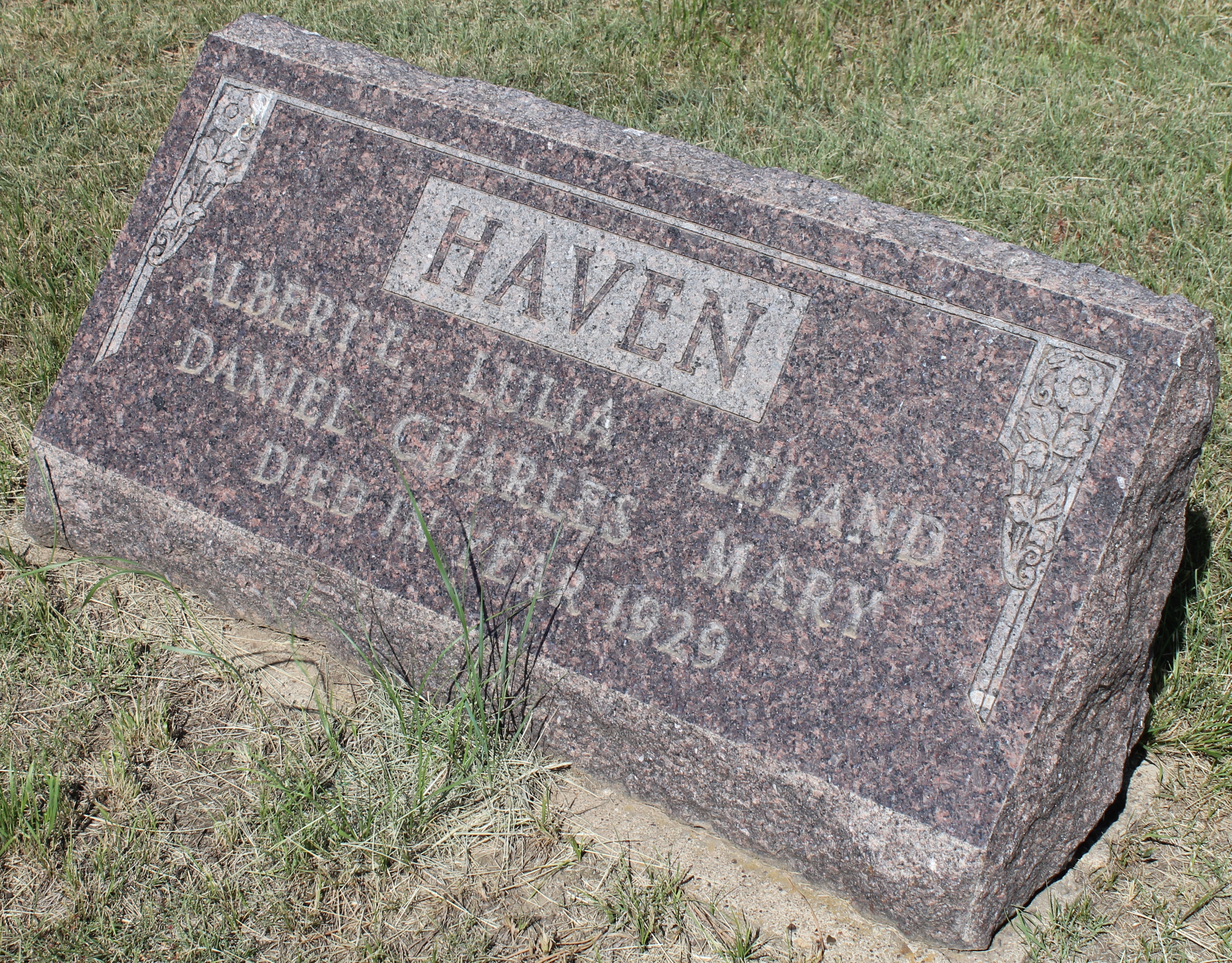
In the winter of 1930, on a farmstead near the small community of Schafer, east of Watford City, North Dakota, Lulia Haven, a 39-year-old woman, lived with her husband, Albert, and their four children. The family's life came to an abrupt and violent end on February 9, 1930, a day that marked their last appearance in the public eye. For months, their absence went largely unnoticed, until the piling up of mail and the concerns of relatives from Minnesota prompted an investigation by the local
sheriff.
When Sheriff C.A. Jacobsen arrived at the Haven farm, he didn't find the family but instead encountered Charles Bannon, a 22-year-old hired hand who had been in their employ. Bannon claimed the family had packed up and moved to Oregon, a story that quickly began to unravel as neighbors reported seeing him selling off the Havens' property and livestock. Suspicions mounted, and in December 1930, Bannon was arrested on grand larceny charges.
Under questioning, Charles Bannon's story crumbled, and he eventually confessed to the murders of the entire Haven family. His confessions varied in their details, at one point implicating a mysterious stranger and at another claiming the killings began after he accidentally shot the eldest son, Daniel. He then stated that in a fit of panic, he proceeded to kill Lulia, her husband Albert, and their other three children. Bannon's father, James Bannon, who had joined his son on the farm after the family's disappearance, was also implicated as an accomplice and was later apprehended in Oregon.
The gruesome discovery of the family's remains on the farm horrified the community. Before Charles Bannon could be brought to trial, public outrage reached a fever pitch. In the early morning hours of January 29, 1931, a mob of masked men stormed the Schafer jail, where Bannon was being held. They seized him from his cell, drove him to a nearby bridge, and hanged him, an event that would be recorded as the last lynching in North Dakota's history. James Bannon was later tried and convicted for his role in the murders, receiving a life sentence.