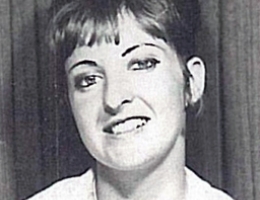
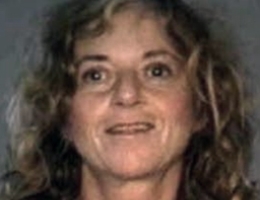
Do you know who murdered Nicole? Nicole Weis, a 21-year-old White woman, was killed in January 2000 after having lost contact with her family following a move from Michigan to the West Coast. Investigators later said they believed Nicole had been living in Los Angeles around the time of her death. In the early hours of January 24, 2000, authorities were called to the parking lot of College Avenue Baptist Church near College Avenue and El Cajon Boulevard in San Diego after a fire was reported.
When police and firefighters arrived, they discovered Nicole’s body engulfed in flames. She had been wrapped in cardboard, the wrapping secured with rope, and then set on fire. At the time, investigators had no way to determine who she was.
The autopsy revealed that the fire was only part of an especially violent attempt to conceal what had happened. Nicole had been stabbed and strangled to death. Both of her hands were missing, along with a portion of her left calf. Police believed those parts had been deliberately removed by the killer in an effort to prevent identification, particularly because fingerprints could not be obtained from the missing hands. With the remains badly burned and identifying features deliberately destroyed, investigators were left with an unidentified homicide victim and few immediate clues about the circumstances that brought her to the church parking lot. An artist’s reconstruction was eventually released in hopes that someone would recognize her, but her identity remained unknown for roughly two decades.
Nicole’s family, meanwhile, did not know what had become of her. Her sister, Kimberly Beach, recalled that Nicole had experienced difficulties as a teenager and had run away from home in Michigan. The family went through counseling, but over time Nicole moved farther away and contact was lost. By the late 1990s she had gone to the West Coast. Years passed without her relatives knowing that the unidentified homicide victim discovered in San Diego in 2000 was their missing family member. Investigators eventually developed the belief that Nicole was probably residing in Los Angeles when she was killed and that her remains may have been transported to San Diego before being left and burned at the church.
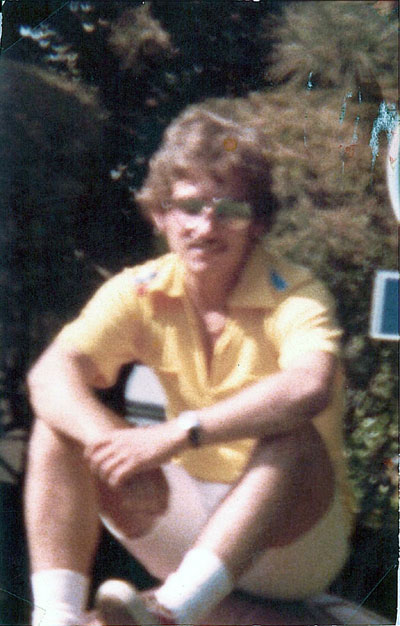
The major break came through investigative genetic genealogy. In 2019, San Diego cold-case investigators enlisted genetic genealogist Barbara Rae-Venter and began using DNA from the unidentified victim to search genealogical databases and build possible family connections. The process initially produced distant relatives, requiring detectives to work through family trees and eliminate possibilities. Then Glen Stevenson, an adoptee who was trying to learn the identity of his biological relatives, uploaded his own DNA information to a genealogy database. His profile proved to be a close genetic match to the unidentified victim, and investigators determined that the two shared a biological father. Stevenson had unexpectedly discovered that he had a half-sister—and that she was the victim of an unsolved homicide.
Detectives used that connection to trace additional relatives and located Kimberly Beach. Investigators obtained her DNA and compared it with the unidentified victim’s genetic profile, confirming that they were biological sisters. That comparison finally gave the long-unidentified victim a name: Nicole Weis. Police completed the identification through genetic genealogy in 2020, and her identity was publicly announced in 2021. For Nicole’s relatives, the discovery ended decades of uncertainty about where she had gone, but it also revealed the brutality of her fate. Her sister remembered Nicole as funny, free-spirited and someone she still loved and missed, while the newly discovered half-brother was left confronting the fact that his search for biological family had simultaneously introduced him to relatives and revealed a homicide that had gone unsolved for decades.
Identifying Nicole did not identify her killer. Police renewed their investigation after learning her name, hoping that reconstructing her life in Los Angeles and locating people who knew her before January 2000 might explain how she ended up in San Diego and who was responsible. Authorities specifically sought information from anyone who had known Nicole, indicating that understanding her associations and activities before her death could provide the missing link in the case. Despite the genetic-genealogy breakthrough, investigators have not publicly identified a suspect in the killing. No arrest, criminal charge, trial or conviction connected to Nicole’s homicide has been publicly reported. The San Diego Police Department continues to list the homicide as a cold case and continues seeking information about the person responsible, leaving the central questions—who killed Nicole, where the killing actually occurred, and why her remains were transported, mutilated and burned—unanswered.