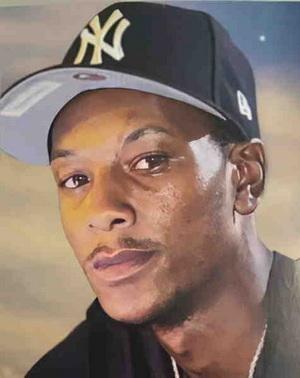
Thomas Ellis, a 23-year-old Black male, was killed in Philadelphia on December 7, 2011, in a life-ending act of violence that left behind more questions than answers. His death was recorded on the 1800 block of East Hart Lane, a place that became permanently tied to the final moments of a young man whose life ended far too soon. At just twenty-three, Thomas was still at an age when so much of life should have been ahead of him: more birthdays, more memories with family and friends, more chances
to grow, laugh, work, love, and become the man he was still in the process of becoming.
The public information available about what happened to Thomas is painfully limited. His name appears among Philadelphia’s homicide victims from 2011, with his date of death listed as the same day he was assaulted. The available records indicate that he was fatally shot, but they do not offer a full picture of the moments leading up to the violence. There is no clear public account explaining whether Thomas was approached by someone he knew, whether the shooting followed an argument, whether it was connected to a robbery, or whether he was simply caught in a sudden and senseless act that took his life without warning. What remains is the stark reality that a young man was alive one moment and gone the next, leaving his loved ones to live with the grief and uncertainty that followed.
His death came during a year when Philadelphia was facing a devastating level of violence. Behind every homicide number was a person, a family, and a circle of people forced to absorb a loss that could never truly be repaired. Thomas was not just a statistic in a citywide count. He was a son, a brother, a friend, and someone whose absence continued to be felt by those who cared about him. The fact that his case is remembered publicly in only a few brief details makes the loss feel even heavier, because a life as young as his deserved more than a line in a record or a short entry in a homicide list.
No publicly available information identifies a suspect in Thomas Ellis’s killing. There are no clear online reports of an arrest, charges, trial, or conviction connected to his death. That absence of information leaves the case with the painful weight of uncertainty. For the people who loved Thomas, the lack of a publicly reported resolution likely meant there were no easy answers, no complete explanation, and no clear sense that justice had fully arrived. When a homicide case remains publicly quiet, the silence can become another part of the grief, forcing family and friends to mourn while also wondering who was responsible and why it happened.
What can be said with certainty is that Thomas’s death mattered. He was only twenty-three years old, and his life was taken in a violent moment that ended his future and changed the lives of those close to him. A remembrance left online for him spoke with the kind of love that official records cannot capture, describing him as “big bro” and saying he was missed every day. That short message gives a glimpse of the person behind the public record: someone loved, someone missed, someone whose presence remained important long after his death.
Thomas Ellis’s story is heartbreaking not only because of how young he was, but because so little has been publicly told about the circumstances surrounding his death. The lack of detailed reporting does not make his life any less meaningful, and it does not make the pain of his loss any less real. His name remains attached to a tragedy in Philadelphia, but it should also be remembered as belonging to a young man whose life had value, whose absence created sorrow, and whose loved ones were left carrying memories instead of sharing more years with him.