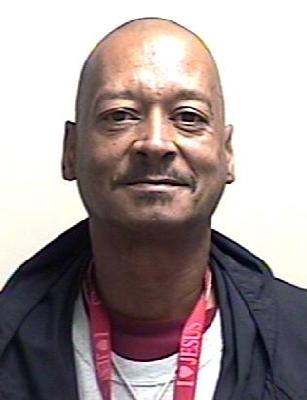
A quiet spring Saturday in Dayton, Ohio, was shattered by a violent act that ended a life and left a case that remains unsolved more than two decades later. On April 28, 2001, Eddie L. Jackson, a Black man, was killed in the city. His death became another entry in the grim ledger of homicides for the year, a personal tragedy that has since transformed into a stubborn and frustrating cold case, filed away by the Dayton Police Department and the state of Ohio.
Publicly available information about the specific circumstances of Eddie Jackson’s death is scarce. The exact time of the incident, the location within Dayton where he was found, and the nature of his injuries have not been detailed in accessible records. What is known is that on that day, his life was taken by homicide. For his family and any friends he left behind, the absence of answers has compounded their grief, turning it into a prolonged state of uncertainty.
Who he was as a person—his work, his passions, his relationships, and the sound of his laugh—remains held in the memories of those who knew him, unshared with the wider world. His case is a stark reminder that behind every statistic is a human being whose story has been irrevocably cut short.
The investigation into the homicide was launched by the Dayton Police Department. In the initial hours and days, detectives would have canvassed the area for witnesses, collected physical evidence, and pursued any immediate leads. In any homicide investigation, this early period is critical, as memories are fresh and evidence is less likely to be contaminated or lost. Detectives work tirelessly to piece together the victim’s final hours, seeking a motive or a person of interest who may have had reason to cause them harm. However, in Eddie Jackson’s case, these initial efforts did not lead to an arrest or the public identification of any suspects.
As days turned into weeks and then years, the investigation transitioned into a cold case. Such cases are not forgotten but await the crucial piece of information that can break them open. This might be a new witness finally coming forward, a change in a relationship that frees someone to speak, or an advance in forensic technology that allows old evidence to be re-examined in a new light. The case, number 537, is now listed in the Ohio Attorney General's Unsolved Homicides database, a public-facing tool designed to bring fresh attention to cases that have stalled.
This database, maintained by the Ohio Bureau of Criminal Investigation (BCI), serves as a silent vigil for victims like Eddie Jackson. By keeping these cases in the public eye, law enforcement hopes to generate new leads from people who may have been reluctant to speak at the time or who have only recently learned a piece of information they did not realize was significant. The BCI offers investigative resources to local law enforcement agencies, providing access to specialized forensic analysis and experienced investigators who can offer a fresh perspective on the evidence.
The city of Dayton, like many American cities, has grappled with its share of violent crime, and each unsolved case leaves a scar on the community. For law enforcement, an unsolved homicide is a constant, nagging reminder of a duty yet unfulfilled. For the community, it can breed a sense of unease and a feeling that justice has not been served. The passage of time does little to diminish the hope that, one day, a tip from the public will provide the key to unlocking the truth.
As of November 2026, the homicide of Eddie L. Jackson remains an open and unsolved investigation. The Dayton Police Department and the Ohio Attorney General's office continue to seek information that could lead to the person or people responsible for his death. Anyone with knowledge about this case is encouraged to come forward, as even the smallest detail could be the missing link that finally brings closure to a family that has waited far too long for answers and for justice.