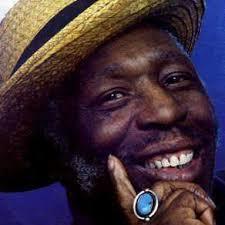
Mitchell Hooks was a 28-year-old African American male who lost his life in Detroit, Michigan, on July 29, 2013. The incident occurred at a residence located at 5420 Seneca Street, a residential area on the city's East Side within Wayne County. This location sits in a neighborhood near Gratiot Avenue, an area that has seen various challenges with public safety over the years. His death was classified by authorities as a homicide, contributing to the violent crime statistics that plagued the city during that particularly turbulent summer.
Law enforcement officers from the Detroit Police Department responded to the scene on that late July day, marking the beginning of an investigation into the circumstances surrounding his untimely death. Reports indicate that the case was categorized as a death by force or murder, though specific details regarding the exact cause of death—such as whether it was a shooting or another form of violence—have not been widely disseminated in public crime logs beyond the classification of homicide. The incident left a void in the community, with those who knew him describing him as a well-loved individual whose loss was deeply felt by friends and family.
Despite the passage of time, the investigation into the death of Mitchell Hooks has not yielded a resolution. As of the last available updates from cold case databases and crime solving organizations, no suspects have been identified, and no arrests have been made in connection with the crime. The case remains open and unsolved, with investigators and community members continuing to seek information that could lead to the identification and prosecution of the person or persons responsible. The lack of witnesses or the reluctance of individuals to come forward has been noted as a potential hurdle in solving the case, a common difficulty facing detectives in Detroit during that era.
There have been no charges filed, no trials held, and consequently, no convictions related to the killing of Mitchell Hooks. His name remains on lists of unsolved homicides from 2013, maintained by organizations dedicated to seeking justice for victims of cold cases. The Detroit Police Department continues to hold the file, and crime stopper initiatives have periodically included his information in hopes of generating new leads that might finally provide answers to his grieving family.