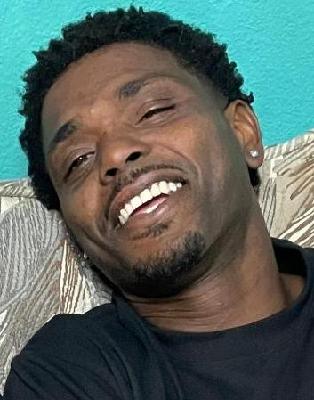
Joshua Clayton George, a 22-year-old Black man from New Orleans, Louisiana, was the kind of young person whose life felt like it was finally clicking into place. He was bright, disciplined, and quietly driven—someone who didn’t need to announce his ambitions because his work spoke for him. On April 18, 2012, the same day he was recognized for excellence and inducted into Delgado Community College’s Phi Theta Kappa Honor Society, he died.
The contrast between what that day began as and what it became is part of what makes his story so painful: in only a handful of hours, celebration and promise gave way to grief that would settle over his family, his friends, and the people who had watched him build a future one careful step at a time.
He had earned that honor with a 3.99 grade point average, not as a fluke or a streak of luck, but as proof of how seriously he took the life he was trying to create. He was moving steadily toward graduation, and he had plans—real plans, the kind that are detailed enough to feel reachable. Music wasn’t a hobby to him. It was his path. He intended to pursue a music scholarship, to keep learning, to let his talent and determination carry him further than the streets and struggles so many young men are told will define them. That vision wasn’t just his, either. It was shared by the people around him who believed in him, who spoke of his character with the kind of certainty that only comes from knowing someone deeply.
Those who remembered Joshua spoke less about drama and more about decency. He was described as polite, loving, and respectful—someone who didn’t chase conflict and didn’t try to be larger than life. If anything, he was steady. The kind of person who made others feel safe by the way he handled himself, the way he treated people, the way he stayed focused. It’s one thing to mourn a death. It’s another to mourn the loss of a spirit like that—someone who carried possibility and kindness at the same time, someone whose presence made the world around him feel a little more grounded.
Joshua’s story didn’t begin in New Orleans, but New Orleans helped shape who he became. He was born in Houston on August 18, 1989, and moved to New Orleans as a toddler with his mother and his brothers, including his twin, Jeremy, and another brother, Jason. Growing up with a twin is its own kind of bond—an unspoken closeness that exists even in silence—and the thought of that relationship being torn open by death is hard to hold in the mind without feeling the weight of it. His childhood included the familiar rhythm of school days and growing pains, attending McDonogh #39 and McDonogh #35, moving through the public spaces where young lives form, sometimes quietly, without anyone realizing they’re witnessing someone becoming extraordinary.
As he got older, he kept reaching for more. He spent time at Texas Southern University, and then continued his education at Delgado Community College, continuing to prove—through grades, through commitment, through effort—that he wasn’t drifting. He was going somewhere. To classmates, teachers, and friends, he wasn’t just another face in a hallway. He was a person with momentum, someone whose accomplishments were stacking into a story of persistence. A 3.99 GPA doesn’t happen by accident. It happens when someone chooses, again and again, to show up, to study, to sacrifice, to keep pushing even when no one is watching.
And then, in the cruelest turn, the day meant to honor his achievements became the day people would forever associate with his death. Less than four hours after his induction into the honor society, he was gone. That detail—the nearness of recognition to loss—feels like a wound in itself. It speaks to how fragile the boundary is between ordinary life and tragedy, between a day you would have kept as a treasured memory and a day that splits time into before and after.
What remains publicly available about his death does not provide official details of what happened, and it does not identify a suspect or suspects. There is no published information confirming arrests, charges, a trial, or a conviction connected to the circumstances of his passing. In the absence of those answers, what rises to the surface instead is who he was—because when the how and why are unclear or unspoken, the heart clings to the truths that are known. And what is known, from the way he was described and the life he was building, is that Joshua was loved, admired, and deeply respected.
In the days that followed, grief gathered where grief always does—in the places families turn to when they need to hold each other up. A visitation and funeral service were held at Tulane Memorial Baptist Church on Paris Avenue, a setting that speaks to community and faith and the shared rituals of mourning. There, people who had known him in different seasons of life—family, friends, classmates, neighbors—came together to name the loss out loud, to look at one another and try to understand how someone so young could be taken so suddenly. Afterwards, he was laid to rest at Lake Lawn Cemetery, a final resting place that becomes, for the people left behind, both a location and a symbol: a marker of what was, and what can never be again.
The voices people left behind in remembrance painted the picture of a young man who didn’t just succeed academically, but who carried himself in a way that made others better. They spoke of his kindness and his gentleness, of his respectful nature, of how he treated people. Those are the kinds of qualities that don’t always get attention in the world until they’re gone, when everyone realizes how rare they were. It’s one thing to remember a person for what they achieved. It’s another to remember them for how they made people feel, how they moved through life with care. Joshua’s memory holds both.
His story, as it can be told from what is available, is not filled with courtroom scenes or public resolutions. It is filled with the ache of an unfinished future and the tenderness of people trying to keep him close through words and remembrance. It is a story of a young man who worked hard, who loved music, who earned recognition, and who was taken far too soon. And even without full public clarity about the circumstances of his death, the shape of his life still shines through: a life marked by quiet excellence, a steady heart, and dreams that deserved more time.