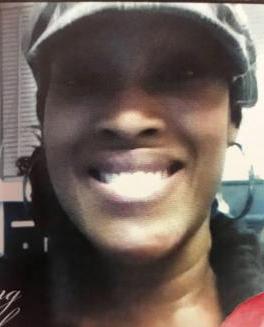
A woman is shot dead at a Days Inn in Merrillville, IN In the early morning hours of March 3, 1989, a sense of unease settled over the Days Inn in Merrillville, Indiana. Twenty-four-year-old Margaret Mary 'Peggy' Gill, a Caucasian female, was working the overnight shift as a night auditor, a job she had held for a year and a half to help pay for her studies at Sawyer Business College. Described by those who knew her as soft-spoken, quiet, and shy, Peggy was the youngest of four children and lived with her parents in the Ross Township area.
Her shift that night, however, would be her last. When her sister, Betty Pierce, tried to call her and received no answer, a feeling of dread prompted a call to the Merrillville Police Department at 5:51 a.m. to report her missing.
Upon their arrival, police officers discovered a disturbing scene at the hotel located at 8290 Louisiana Street. The cash drawer at the front desk had been forcibly pried open, and money was missing. A search of the premises led them to a vacant wing on the second floor. At the far end of the hall, near a fire exit, they found Peggy's nude body. She had been sexually assaulted and shot twice behind her left ear with a. 22 caliber pistol. Her Days Inn uniform was found neatly folded and stacked beside her. The brutal nature of the crime sent shockwaves through the community, which was unaccustomed to such violence.
The investigation into Peggy Gill's murder quickly revealed a chilling connection to another crime that occurred on the same night. Fifty-two miles south on Interstate 65, another Days Inn night auditor in Remington, Indiana, Jeanne Marie Gilbert, had been abducted. Her body was later found on a rural road. Ballistics tests confirmed that the same. 22 caliber handgun was used in both murders, and DNA evidence linked the same perpetrator to both sexual assaults. This began the terrifying reign of the 'I-65 Killer,' a serial murderer who targeted women working at motels along the interstate corridor. For decades, the case remained cold, a haunting mystery for the families of the victims and the investigators who tirelessly sought answers.
Decades after the tragic events of that night, a breakthrough finally emerged with advancements in forensic technology. In 2019, investigators utilized investigative genealogy, a method combining DNA analysis with genealogical research, to generate new leads. This cutting-edge technique led them to a man named Harry Edward Greenwell, who had an extensive and violent criminal history. A DNA match with a close family member confirmed with a probability of over 99 percent that Greenwell was the man responsible for the attacks. Greenwell, however, would never face justice for his heinous crimes. He had died in 2013 at the age of 68. The identification of the I-65 Killer brought a long-awaited, albeit bittersweet, sense of closure to the families who had waited more than three decades for answers.